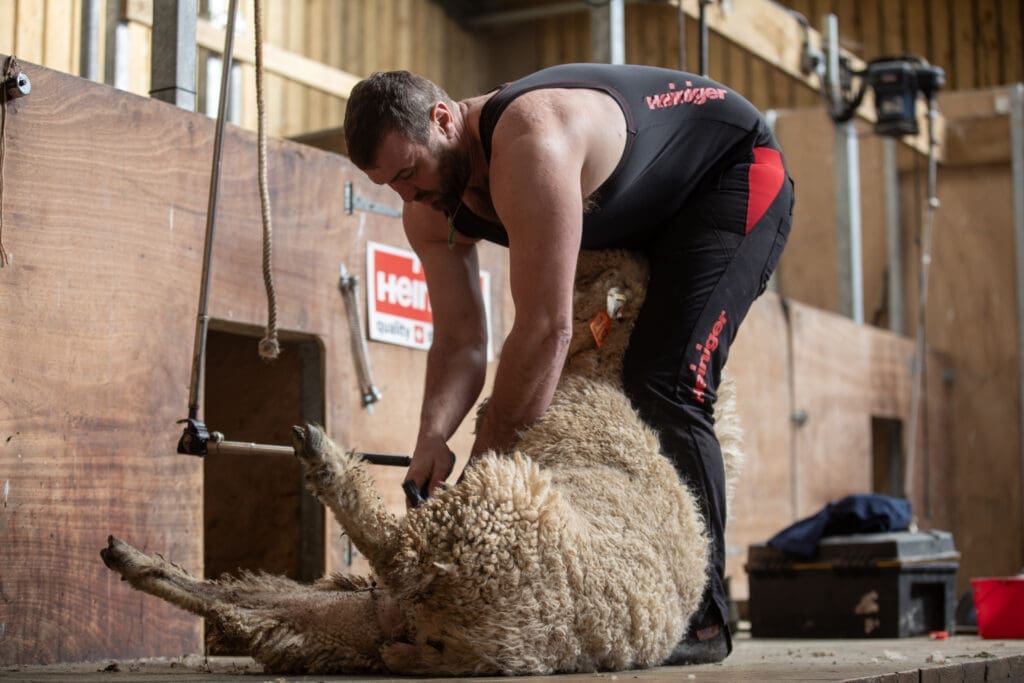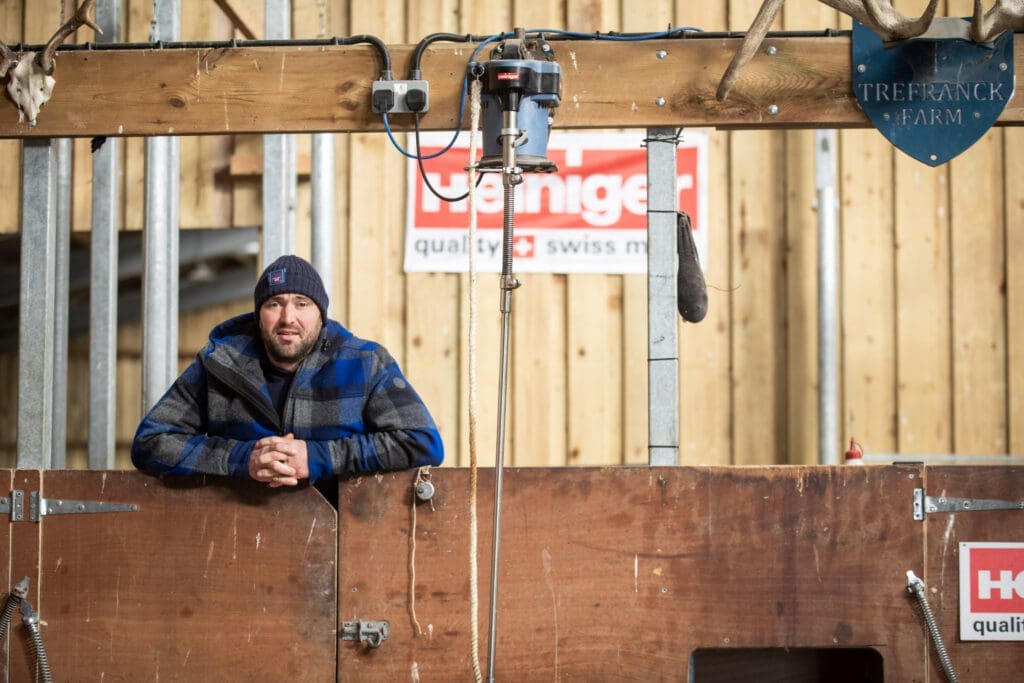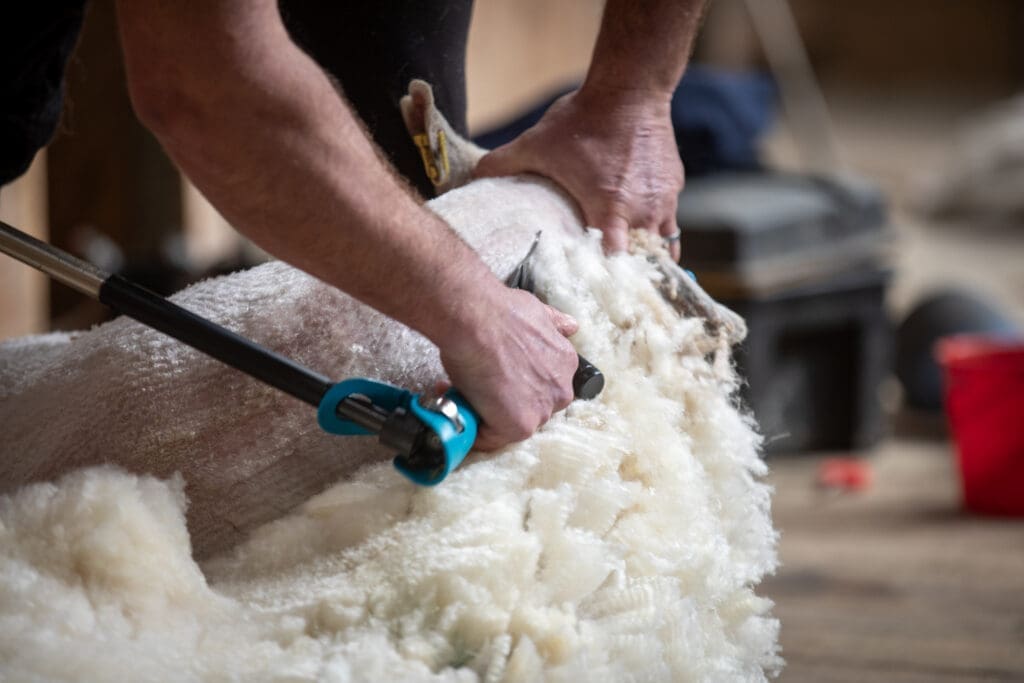
From the woolsheds of rural New Zealand to the world stage of competitive shearing, Matt Smith’s journey has been shaped by hard work, travel and a deep-rooted passion for the wool industry. Now farming sheep and cattle in Cornwall and representing England at the highest level, Matt combines global experience with hands-on knowledge of British farming. As one of our ambassadors, he’s committed to championing the fibre, supporting fellow farmers and helping drive the industry forward. We caught up with Matt to talk about his background, his World Championship ambitions and why he believes British wool has a strong future ahead.
Can you tell us about your background in farming and the wool industry?
I was brought up on a sheep and beef farm in New Zealand. With Dad being a shearing contractor, I was always around the woolsheds. I started having a go at shearing when I was 13. Before that, I was wool handling and pressing, just learning the ropes.
I started full-time shearing at 15 and first came over to the UK for the summer when I was 17. After that, I worked between the UK and New Zealand until I was 19, then headed over into Eastern Europe. At 20, I went to America and ended up running a seasonal crew there for 10 years which I loved.
I found travelling the world very interesting as I would be involved in, not just shearing, but day to day farming practices. I enjoyed talking to farmers about why and how they do things differently in the different environment and climates.
Whilst travelling I met my wife Pip. In 2014 we took on her family farm in Cornwall, farming Sheep and Cattle.
How many times have you represented England in the World Champs?
This is my second time representing England, which I’m really pleased about. I feel like I’ve got a bit of unfinished business this year, so I’m looking forward to getting back out there and giving it everything.
What’s your preparation for the World Champs?
It’s about getting the right balance between training, mental preparation and physical fitness – they’re two different sides of it, and both matter.
I’m really looking forward to being back in New Zealand and getting some more relevant sheep under my belt. In the weeks leading up to the World Champs, I’ll have nine competitions to go to, which should sharpen me up and get me properly ready.
How does it feel representing England the World Stage?
I’m very proud to represent England. Our kids are extremely passionate about shearing and they love their country, so seeing their dad wearing the English singlet means a lot to me and them. Hopefully it inspires them that if they work hard, one day it may be them pulling on the English singlet. That’s something I’m proud of.
How did you first become involved with British Wool, and what led to you becoming an ambassador?
When I first moved over to the UK in 2014, we held a few World Record attempts, and British Wool really got behind me and supported it – and anyone else who wanted to do something positive for the industry. That meant a lot to me, because the industry only moves forward if there’s proper backing and a bit of drive behind it.
Off the back of that, I was invited to run some shearing courses down South. Taking on this role has given me the chance to make sure people are getting the right information and that standards are kept where they should be.
From your perspective, what makes British wool (fibre) special and worth championing?
We’ve got a real mix of breeds in our wool flock here in Britain, which means we’ve got a place in the market for all those different types. It gives us a wide range of wool to work with and a good variety of product to offer.
What do you see as the biggest challenges currently facing our industry?
The main challenge is getting it into the market. I do think we’re coming to the end of the negativity around wool, which is encouraging.
If we can find a more cost-effective way of turning it into finished goods, I believe we’ll see more people using it. At the minute, it’s very much seen as a premium product because of the cost of production, and that can put some buyers off. Bringing those costs down would open the door to a much wider market.
Are there particular opportunities you’re excited about for the future of British wool (fibre)?
The bedding sector is really starting to take off, and that’s exciting to see. There’s growing interest, and once people try the product and see the benefits for themselves, it more or less sells itself.
We held depot open days last year – why do you feel these events are important for both farmers and the public?
We both need the chance to see both sides of the production process, from farm right through to the finished product. It’s a really positive story to tell, especially with the Royal Visit showing there’s strong backing behind wool.
The more people who see that and understand it, the better. Positive word of mouth goes a long way, and once it starts spreading, it builds momentum of its own.
How can farmers make the most of British Wool’s services and support?
We probably just have to accept that, at the minute, wool isn’t always going to be financially beneficial. That’s the reality of it. Markets go in cycles, and we’re in a tougher spell right now.
But that doesn’t mean it hasn’t got value. It’s still a quality, natural product with a strong story behind it. Sometimes you have to take the longer view and keep backing it, improving it and finding better markets. If we keep pushing it in the right direction, the returns will come back around in time.
What’s the most rewarding part of being an ambassador?
It’s about setting a few records straight and being open to talking with farmers. Now that people know the role I’m in, they’ll often come up to me with questions. I’m able to give them straight answers, and if I don’t know the answers, I know the right people to ask.
That bit of communication is important – if people understand what’s going on and why, it clears up a lot of confusion.
In three words, how would you sum up British Wool?
Growing, Challenged, Innovative