
Carbon Footprint of British Wool
Robust, independent insight for a more transparent textile supply chain
Understanding the carbon footprint of wool is critical for brands, retailers and manufacturers navigating increasingly rigorous sustainability requirements. Credible, traceable data enables informed material choices, strengthens sustainability reporting, and supports tools such as Environmental Product Declarations (EPDs), which are now widely requested across the global textiles supply chain.
Our latest Carbon Footprint of British Wool Study provides the most comprehensive dataset of its kind for British wool.
Access the Full Report
The full Carbon Footprint Report is available upon request.
To receive the report:
- Complete the short information form below
- Submit your company details
- The report will be sent directly to your inbox
This ensures the data is shared with relevant industry stakeholders and allows us to understand how the sector is using the findings.
Carbon Footprint Data Request
The Study
This independent research was carried out by the BioComposites Centre at Bangor University.
It brings together:
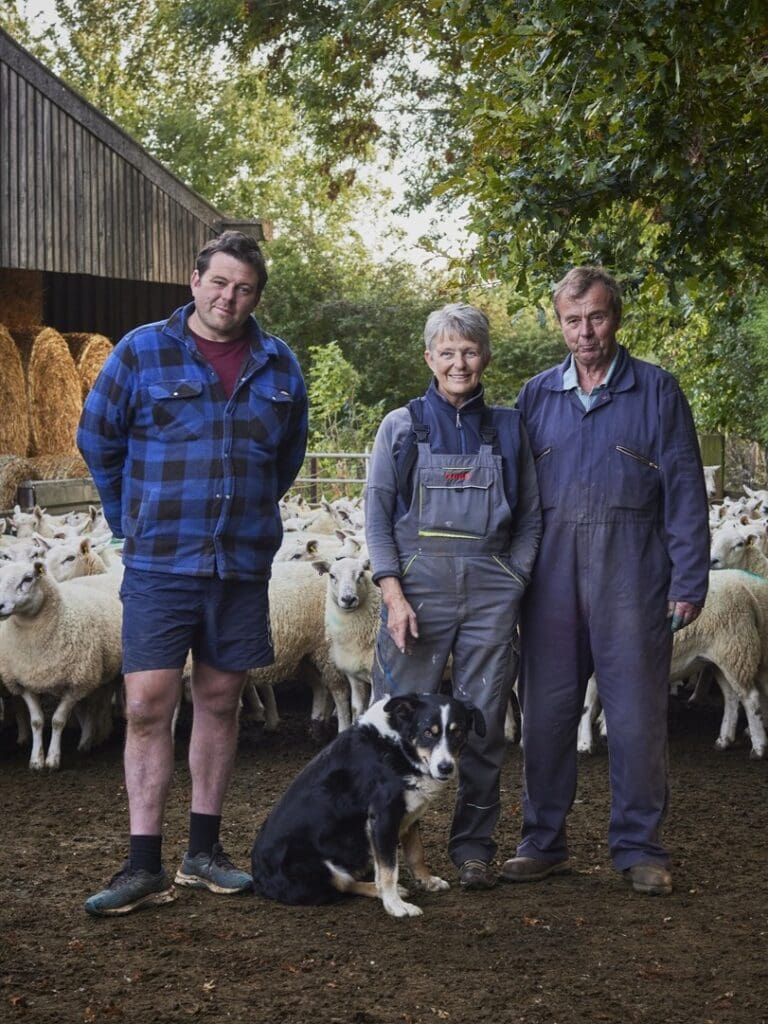
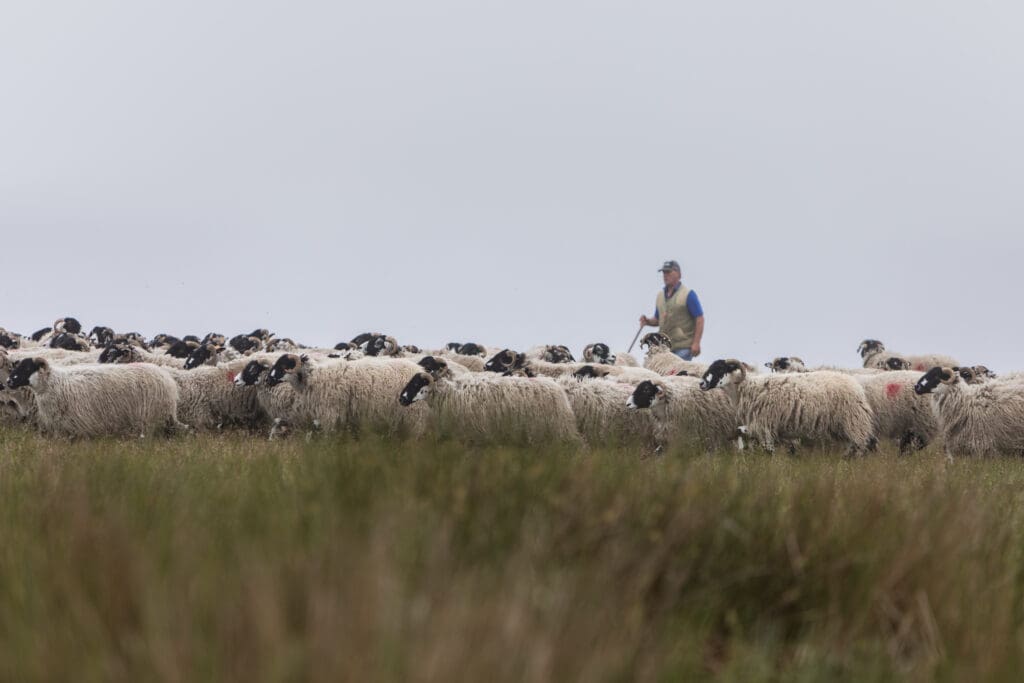
- On-farm data from 3,856 unique British farms
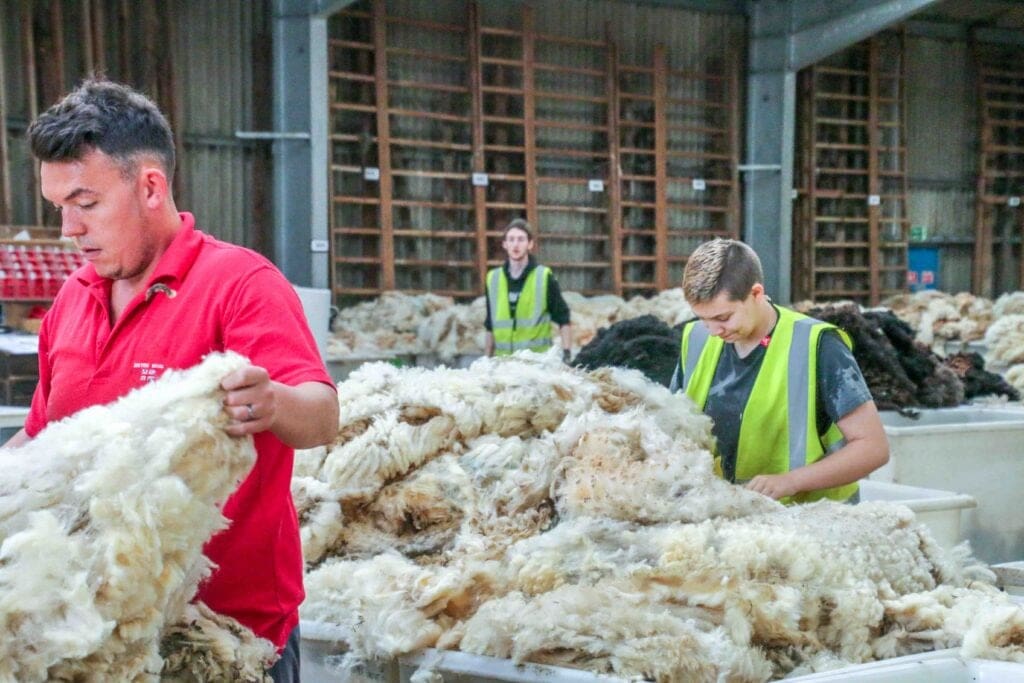
- Operational data from our national collection and grading network
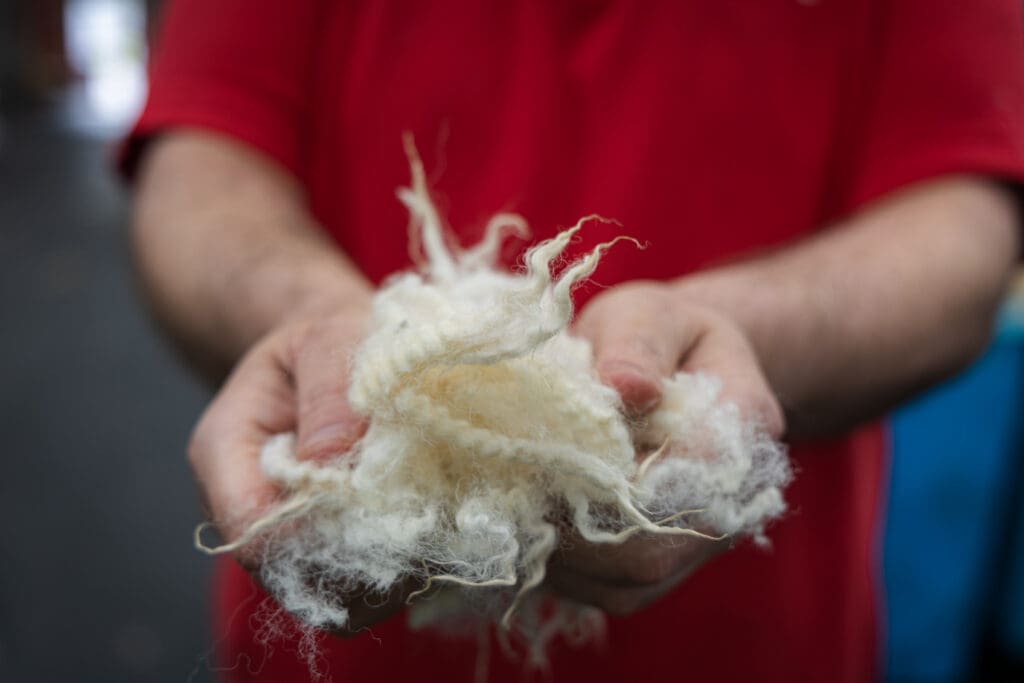
- Processing data from a UK scouring facility, Haworth Scouring
To our knowledge, this represents the largest carbon footprint study of wool conducted to date.
The scale and granularity of the dataset provide a robust evidence base for environmental benchmarking and reporting.
Scope: What the Carbon Footprint Covers
This study assesses the carbon footprint of British wool from greasy wool leaving the farm gate through to key processing stages.
The system boundary includes:
- Farm gate onward (including potential drop-off points)
- British Wool depots for grading, baling and sale
- Transport to a UK scouring plant
- Processing outputs including:
- Scoured wool
- Scoured, carded and combed wool
- Material packed and ready for shipment
This cradle-to-processed-fibre scope provides meaningful, supply-chain-relevant data for downstream users.
Why This Matters
As environmental scrutiny increases across textiles, reliable primary data is essential. This study demonstrates that:
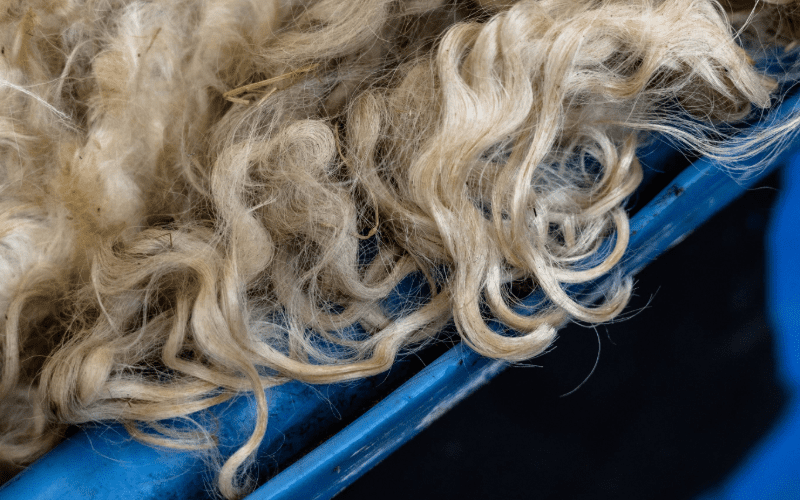
- British wool has a low carbon footprint relative to many alternative materials
- Wool’s environmental performance strengthens its position as a natural, renewable and biodegradable fibre of choice
- Brands and manufacturers can use this dataset to support:
- Sustainability reporting
- EPD development
- Procurement decisions
- Scope 3 emissions accounting