British Wool shearing courses are built on one thing above all else, exceptional instructors with real shed and competition experience.
Our experienced team of instructors delivers a comprehensive training programme designed to build confidence, skill, and industry-standard technique. Running from April to August, the programme features more than 95 courses, offering a wide range of training opportunities in machine shearing, blade shearing, and wool handling. With flexible course options available, there’s something for everyone, from beginners to advanced shearers.
What the Training Covers
Our shearing courses are designed to develop best practice and strong technique from the outset. You will learn every key aspect of shearing, including:
-
Health and safety requirements and safe working practices
-
Preparing and managing the shearing environment
-
Selecting the right equipment and maintaining it effectively
-
Developing efficient shearing technique
-
Ensuring high standards of wool care and handling
This training helps you build the skills needed to work safely and confidently while improving both speed and quality.
Who the Courses Are For
Our courses are internationally recognised and tailored to suit all levels of experience. They are ideal for:
-
Complete beginners starting with Blue Seal training
-
Intermediate learners looking to refine their technique
-
Advanced shearers working towards Gold Seal accreditation
-
Farmers wanting to improve efficiency when shearing their own flock
-
Individuals planning a career in shearing
-
Competitors preparing for high-level and international standards
Whether you are aiming to improve your day-to-day shearing skills or build a pathway into professional shearing, the training provides clear progression and structured development.
Why choose British Wool?
-
Industry leading instructors
-
Proven training pathway from beginner to open level
-
Strong focus on technique, efficiency and animal welfare
- Certified by Highfield
Whether you’re starting out or looking to refine your skills, our courses provide the foundation, confidence, and standards needed to progress in the shearing shed.
Learn from the best. Train with British Wool.
Course Options
We offer both machine shearing and wool handling courses that cater to every trainee level. Each course is designed to deliver practical, hands-on experience with expert guidance and feedback. You’ll receive training in real-world conditions, helping you apply new skills immediately and confidently.
Book a course after the 9th of February click here
Alternatively, for more information contact our shearing team:
Shearing Team – 01274 688666 – [email protected]
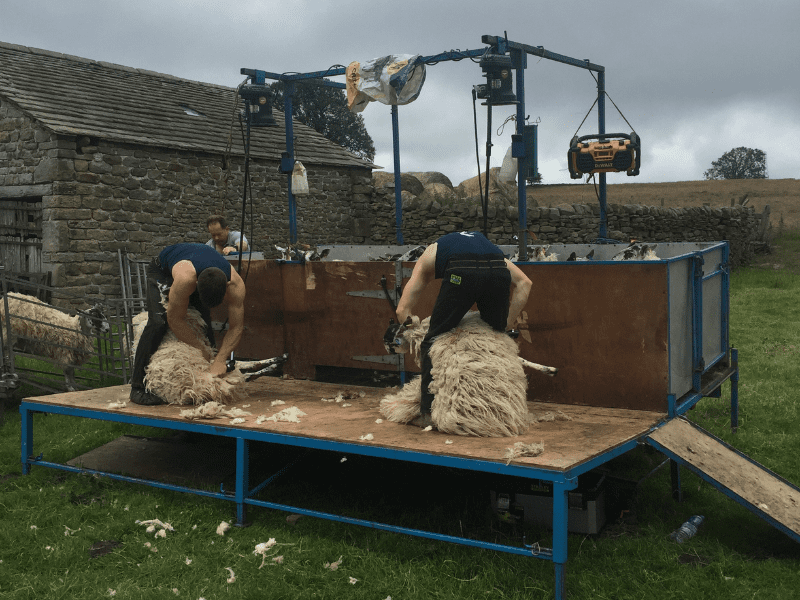
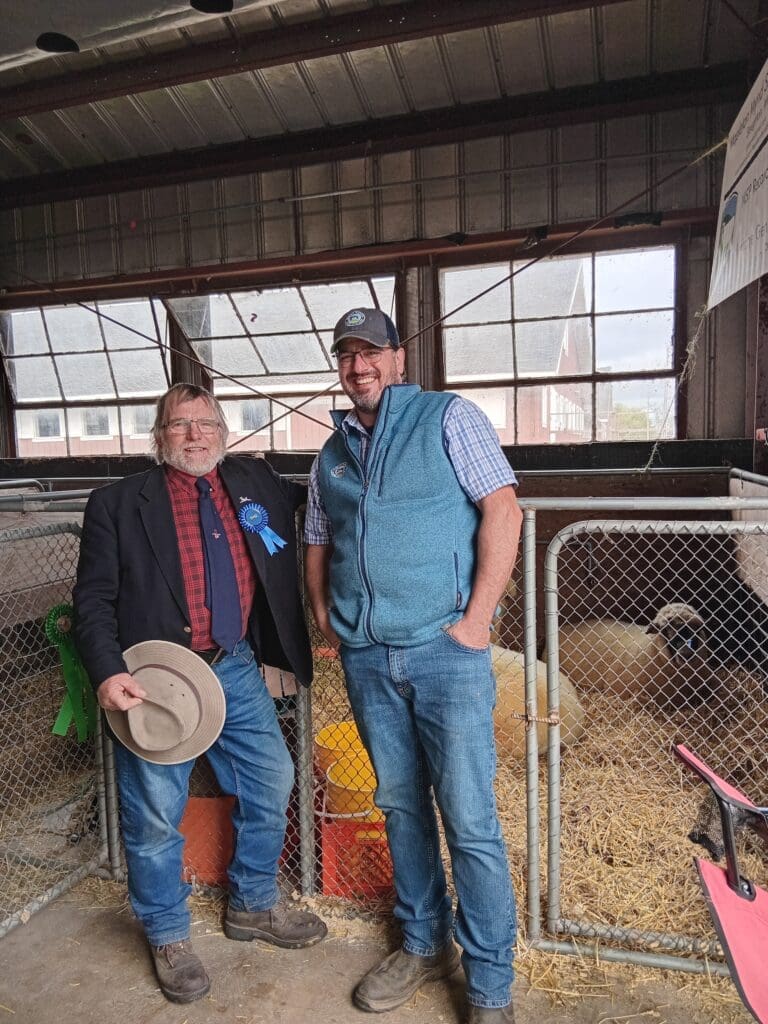
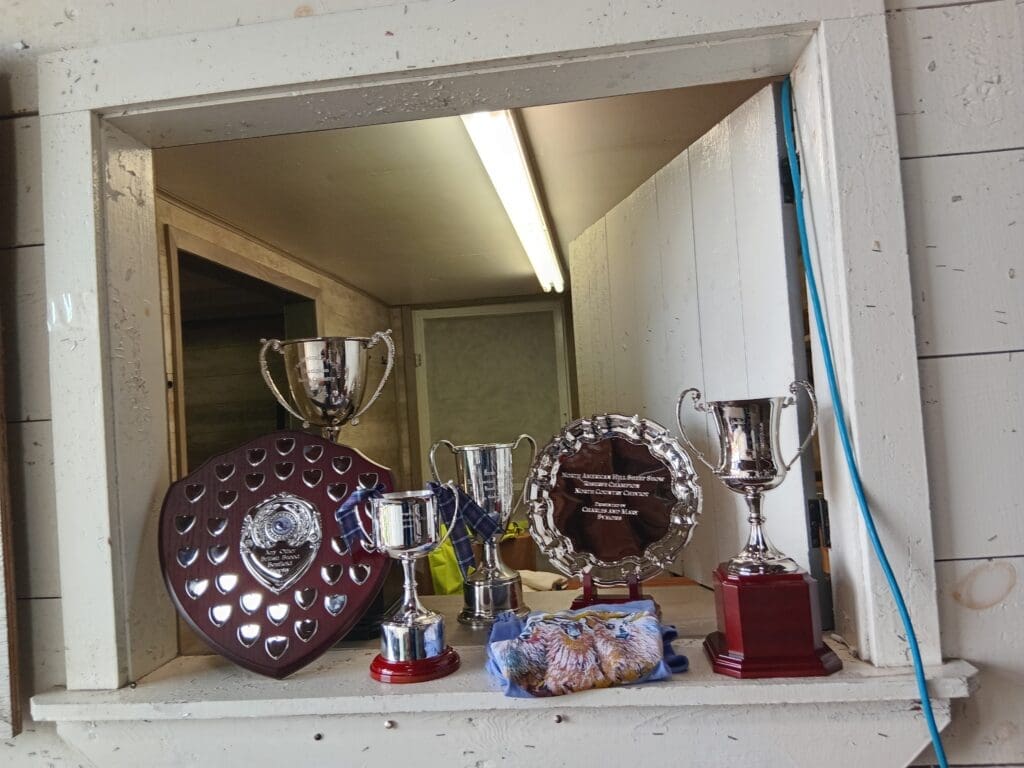
Our Board Member for the English Central region travelled to the USA. Richard served as a judge at the inaugural North American Hill Sheep Show, proudly representing our organisation on the international stage.
Can you share a bit about your background and how you’re involved in the wool industry?
I’m a fourth-generation farmer, with the fifth and sixth generations already following in our footsteps. Like many of my generation, my introduction to sheep came early—on a medium-sized Midlands farm with a bit of everything. One of my first jobs, at around age four, was to bottle-feed the lambs.
In the early 1970s, I studied Agriculture at Reading University, where my interest in sheep really took hold. I was fascinated by the new and emerging breeds and crossbreeds, names like ABRO Damline and Colbred (now gone), and Finn, Friesland, Cambridge, and Meatlinc, the latter developed by Henry Fell and now successfully continued by his son and grandson, George. It was an exciting time, though my focus back then had to remain on our dairy herd rather than sheep.
That changed in 2009 when the dairy herd left the farm, giving me time to direct my energy toward new interests. Sheep replaced cows, and as I began reading the annual publications from British Wool, I noticed there was no Derbyshire County representative at the Central Region. One thing led to another, I became Chairman of the Central Region and, much to my surprise, am now a Board Member. Having seen first-hand the consequences of the Milk Marketing Board’s demise, I’m determined to support British Wool and protect our industry from a similar fate.
What inspired your trip to the USA, and what were your main goals for going?
I hadn’t planned the trip to the USA at all. Through organising local Sheep Fairs to promote the sheep industry in all its forms. I met an excellent Cheviot breeder, James Metcalf, who organisers invited to judge at the inaugural North American Hill Sheep Show in 2024. Their aim is to breed British-type sheep. For the 2025 show, they were looking for a judge for the “Any Other British Breed” category.
They surprised me with the invitation. I accepted with both excitement and a fair amount of trepidation, but with a firm resolve to judge by UK standards.
How would you describe your experience while you were in the USA?
Our hosts treated the four judges with extraordinary hospitality, truly “like royalty.” One evening, around 10 p.m., while walking back to our condo. We passed a members’ club, and two men invited us in, one of whom turned out to be the mayor of Escanaba. He insisted that drinks were on his tab all night!
That level of generosity and kindness continued throughout the week. We always had a car and driver available, often from one of the large local families. Many families in the area live simply, no TV, no mobile phones, until the children are working. With an average of around ten children, all homeschooled. It was inspiring to see so many polite, hardworking, and confident young people who were eager to talk and engage.
Escanaba, on the northwest coast of Lake Michigan. A rural area with modest farms and strong support for Donald Trump. The sheep we judged over three days were, with very few exceptions, of a remarkably high standard. Many would have held their own against serious competition in the UK.
There are about five million sheep in the USA, but lamb and mutton remain unpopular. The story goes that during the world wars. American troops stationed in the UK were fed poorly cooked mutton, and that bad experience still lingers. Attendees travelled anywhere from 3 to 48 hours to reach the show. Which had a wonderfully social, friendly atmosphere quite different from most shows in the States.
What key takeaways or positives did you bring back from the trip?
Wool, for many in the USA, is something of an embarrassment. Many exhibitors process their own wool at home, it’s a small-scale, cottage-style industry, often run by family members. Despite that, the quality of the yarns and the natural dyes they produce were impressive.
There’s real potential for a gradual introduction of British genetics to help improve carcass quality in American flocks. Thanks to John Royle of the NFU, I’m now in regular contact with John Wilkes of AHDB in the USA and have reconnected with Cody Heinke, one of the key figures driving progress in their sheep sector.
How do you see your experience influencing your work in the wool industry moving forward?
The biggest takeaway for me, as a Board Member, was the reminder of how fortunate we are in the UK to have a functioning auction system, where buyers actively compete for our wool, recognising its quality. As Cody said, rather ruefully, in the US much of their wool is simply “left in a corner until I can find a use for it.”
That contrast has strengthened my resolve to continue standing up for and promoting British Wool. We have an incredible product and a system worth protecting.

AGM Highlights Sector Confidence as Prices Reach Nine-year High
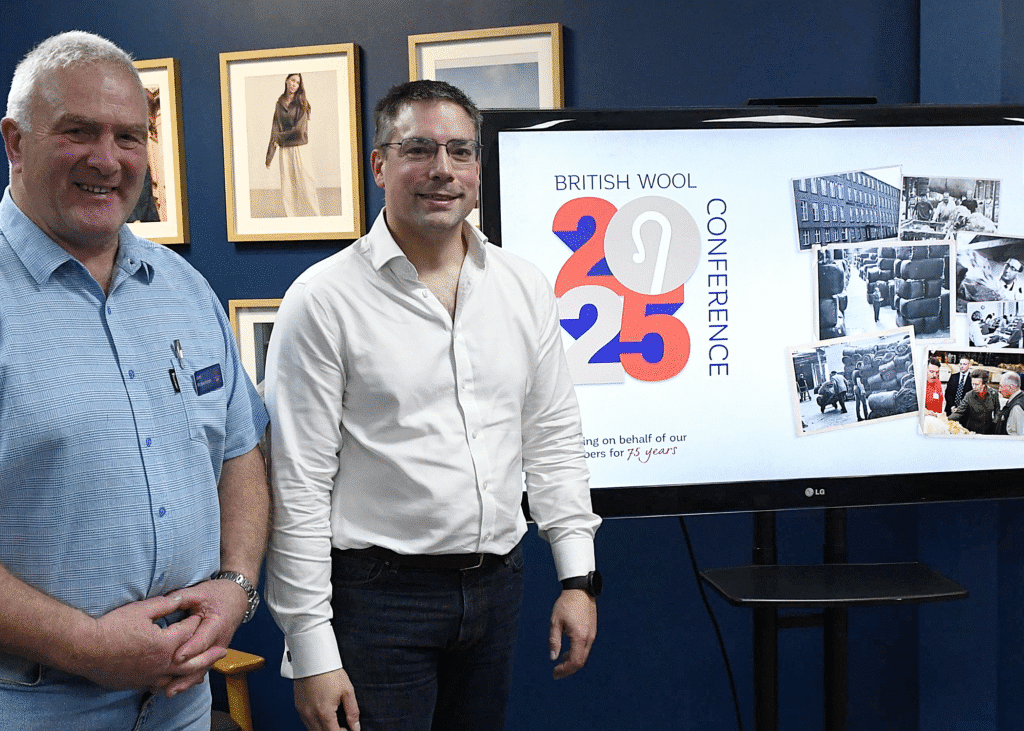
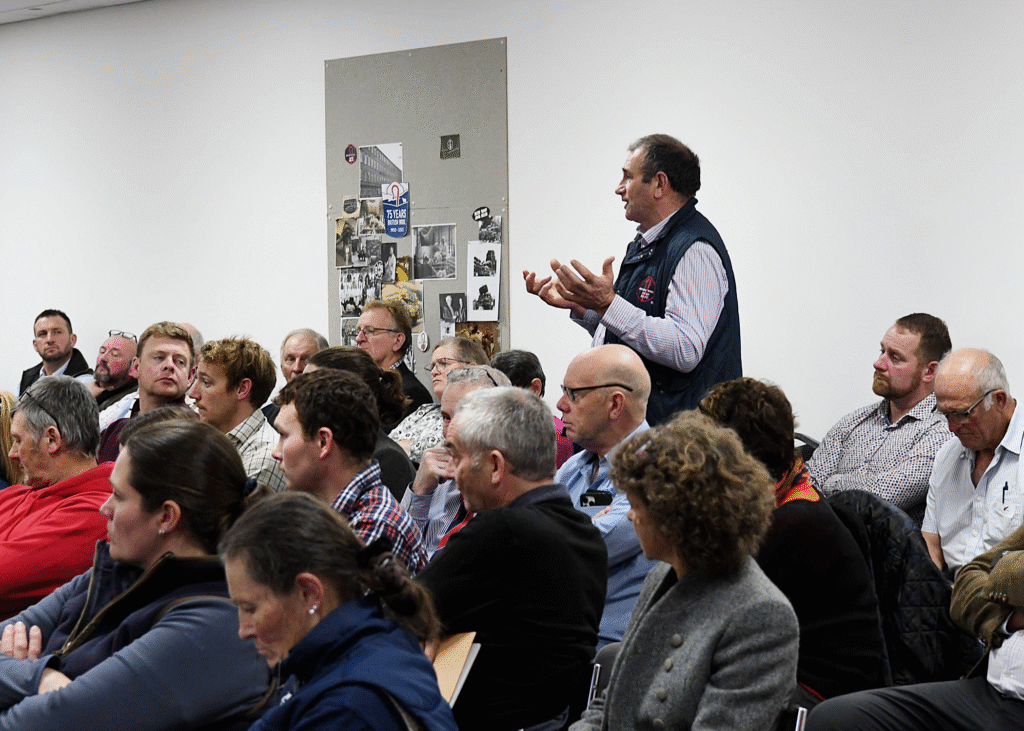
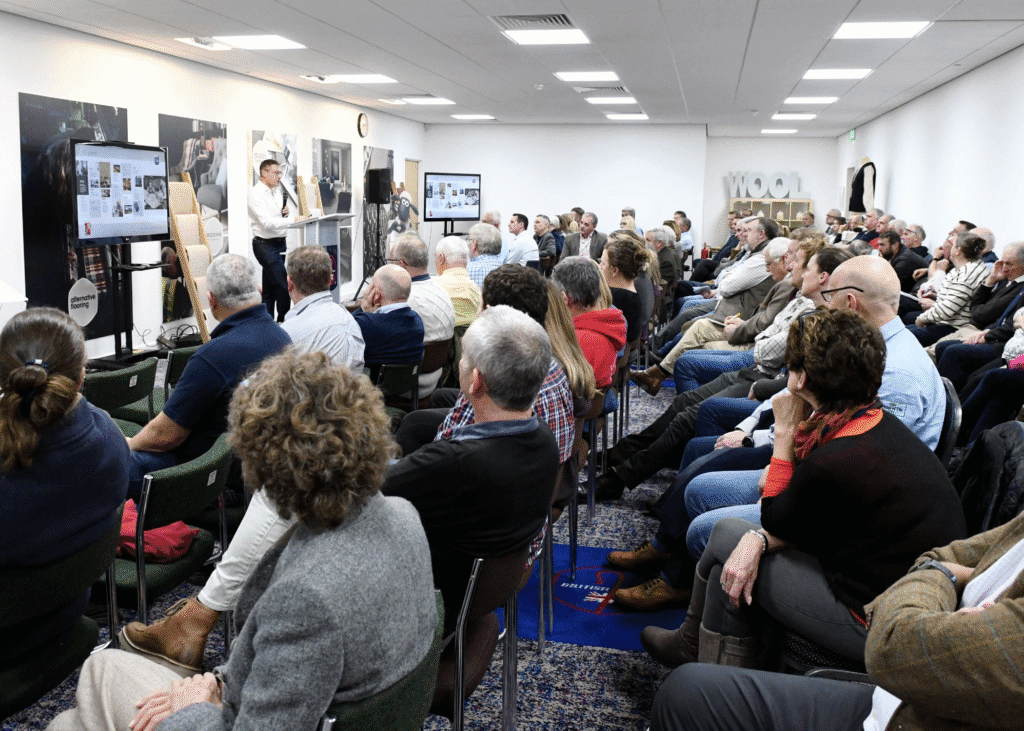
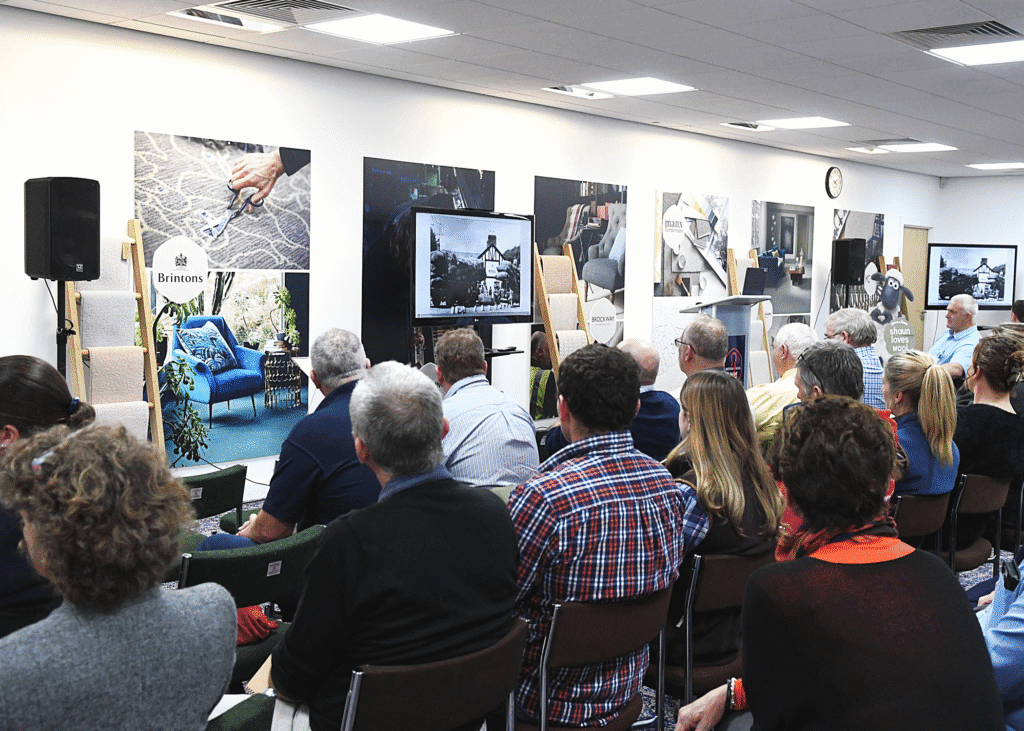
We have celebrated a year of positive progress at our Annual General Meeting and Conference, reflecting renewed confidence across the UK wool sector, with rising wool prices, stronger consumer engagement and continued improvements in services for our farmer members.
Stronger returns
We confirmed that in the latest auction, held on 4 November, achieved the highest average prices for nine years, with the index up 27% in the past two months. The average auction price reached £1.21 per kg, compared to £1.00 per kg last season, marking a significant boost for producers across the UK.
“All core types are now trading at significantly higher levels than last season,” said Andrew Hogley “If current trends continue, our members can expect stronger returns in the year ahead.”
Supporting farmers and strengthening services
The AGM also showcased a series of service improvements designed to make it easier for farmers to deliver and market their wool, including more convenient collection centres and enhanced support at regional depots.
We paid tribute to our team and community, with long-serving Head of Shearing, Richard Scholfield, honoured for his outstanding contribution to the industry upon his retirement.
Driving demand through marketing and partnerships
In our 75th anniversary year, our focus on consumer engagement has also delivered impressive results. Our nationwide open days attracted widespread attention, with coverage on BBC, ITV, GB News and numerous radio outlets.
A visit from HRH The Princess Royal to the South Molton depot in October further underscored our heritage and importance to the UK’s rural economy.
“Our 75th anniversary celebrations have been an excellent platform to tell the story of British wool – sustainable, traceable and proudly homegrown,” added Andrew.
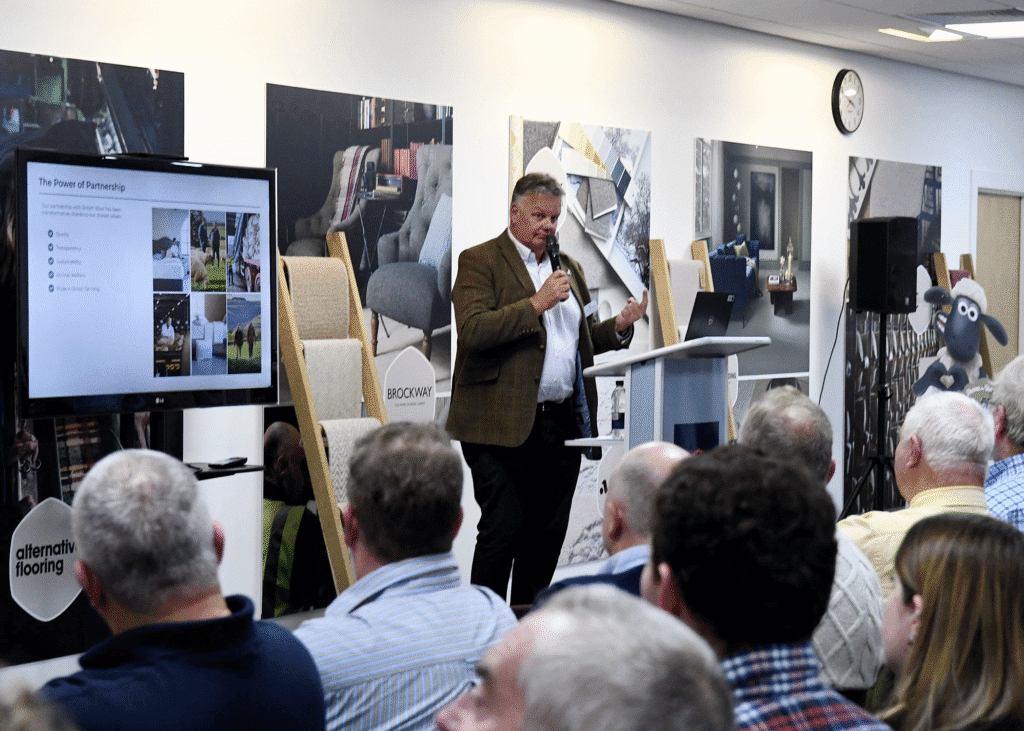
Speaking at the conference, Chris Tattersall from The Woolroom reinforced the commercial importance of British Wool’s traceability and sustainability from a customer perspective.
“British wool plays a key role in our products, and we’ve seen strong growth in both domestic and export markets thanks to its provenance and quality,” he said.
Highlighting the efforts that we are taking to engage consumers of all ages about the benefits of wool, Andrew pointed to a successful initiative to engage primary school children and their parents.
He said: “Our creative partnership with Aardman and Save the Children saw more than 800 primary school pupils submit designs for a Christmas jumper for Shaun the Sheep made from British wool. The competition was judged by Gyles Brandreth, with the winning design now being made into 100 limited-edition jumpers to raise funds for charity.”
Overall, the AGM reflected a positive outlook for the sector, with optimism for continued growth into 2026.
Market Update
Recent auction sales have seen strong competition for wool and a significant increase in prices. All of the main buyers of British wool have been active. UK, European, and Chinese-focussed buyers competing to secure wool supplies. All core types of British wool are now trading at significantly higher levels than we saw last season. Prices are at their highest levels in almost a decade. This should help support returns for British Wool members this season if prices hold.
The British Wool index has increased by 27% over the last two months. The average auction price reached £1.21 per kg in the sale on 4th November. Sale prices last season averaged £1.00 per kg.
The trend mirrors the price rises that have been seen in New Zealand, with global demand for quality cross-bred wool outstripping supplies.
Operational Update
British Wool’s depots are still open to receive wool this season. The greater the volume of wool handled by your cooperative the lower the overall operating costs per kilo will be at year end.
Andrew Hogley, CEO: “After positive talks with the trade, our sales team expects strong demand to continue through the season.
“Recent sales in New Zealand have been very competitive. Global demand for quality cross-bred wool still exceeds supply.”
This season’s wool is also generally of a higher quality than last season’s wool. The dry spring and summer resulted in whiter wool this season with more of the clip being classed as a No. 1 grade.
Andrew says: “Test results for new season wool continue to be significantly better than last year for colour, and continues to produce a greater proportion of No. 1 grades in the core types.”
We have received a large quantity of wool from new and returning members this season, but the overall volume handled to date is running around 2% to 3% below last year.
“Improved prices in 2024 encouraged many farmers to sell wool they had been holding or using on-farm this year.,” says Andrew.
“As a co-operative, we aim to maximise returns for sheep farmers. With prices improving, we encourage members to send in any wool before winter.
“If you still have wool on-farm, contact us to arrange delivery or collection. By marketing the clip together, we can promote British wool and help drive better price.”
Celebrating 75 Years of British Wool
Throughout 2025, we have been celebrating 75 years of representing sheep farmers and collectively marketing the UK clip.
To mark this milestone, we opened our doors and hosted several open days, including a special visit to our South Molton depot in Devon.
Royal Visit Highlights Milestone
Her Royal Highness The Princess Royal, President of the UK Fashion and Textile Association (UKFT), visited our South Molton depot during October. Which carried special significance as it took place during Her Royal Highness’s own 75th birthday year. Bringing together two landmark milestones that honour a shared commitment to sustainability, craftsmanship, and rural communities.
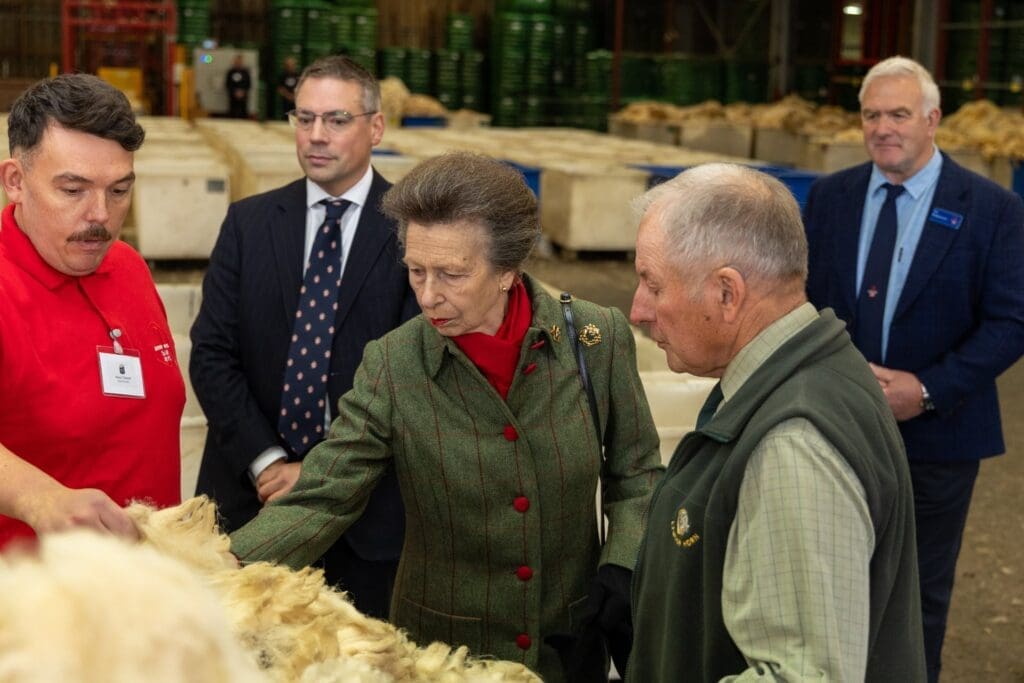
During the visit, The Princess Royal toured the depot’s grading facilities. Met with local farmers, staff, and innovators from across the region. Learnt more about how we are driving forward the use of natural, traceable fibres in fashion, furnishings, and beyond.
Andrew Hogley, CEO, said: “It was an enormous honour to welcome Her Royal Highness The Princess Royal to our South Molton depot in this milestone year. Her Royal Highness’s lifelong support for British farming. Her deep understanding of the UK’s fashion and textile sector made this a truly special day for everyone involved.”
Honouring People Who Shaped the Industry
During September and October, across its UK, several Open Days were hosted. Offering a behind-the-scenes tour of the grading and sorting operations. While exploring the many uses wool is used for from high fashion and interiors to garden products, pet beds, and even tennis balls.
The events also shone a spotlight on the people and stories that have helped shape the wool trade over the years, including:
- Trevor Richards and Frank Langrish (ex Chairmen) are both long-standing figures in the history.
- Alun Evans, ex-Chairman from 1985-2000. At 92 years of age, Alun still helps on his family farm, which has now been passed down to his son.
- Former, long-standing employee, Dewi Jones – who retired in 2013 after clocking up 48 incredible years at the Brecon Depot
- Gareth Jones, Head of Member Engagement who started his career in 1990.
- Gethin Havard – Welsh-based sheep farmer from Sennybridge whose family has been farming for 960 years! Gethin was a Board Member for 12 years and ex-Vice Chairman
- Billy Hewitson, former Depot Manager at Irvine, who is now Head of Operations – after starting as a temporary worker in the 80s!
- Area Manager, David Swinton, who started his career in 1984 as a Trainee Wool Grader
- Chairman and farmer to his own 950-sheep flock, Jim Robertson
The Value and Future of British Wool
Gareth Jones, Head of Member Engagement, said: “Owned by more than 30,000 sheep farmers in the UK. We collect, grade, market and sell British wool on behalf of our members. To the international textile industry for use in flooring, furnishings and apparel.
“British wool isn’t just a legacy fibre. It’s a material for the future, and is gaining new relevance in a world increasingly concerned with environmental impact. Every fleece tells a story. By choosing British wool, the UK is backing a thriving industry that values people and the planet.”
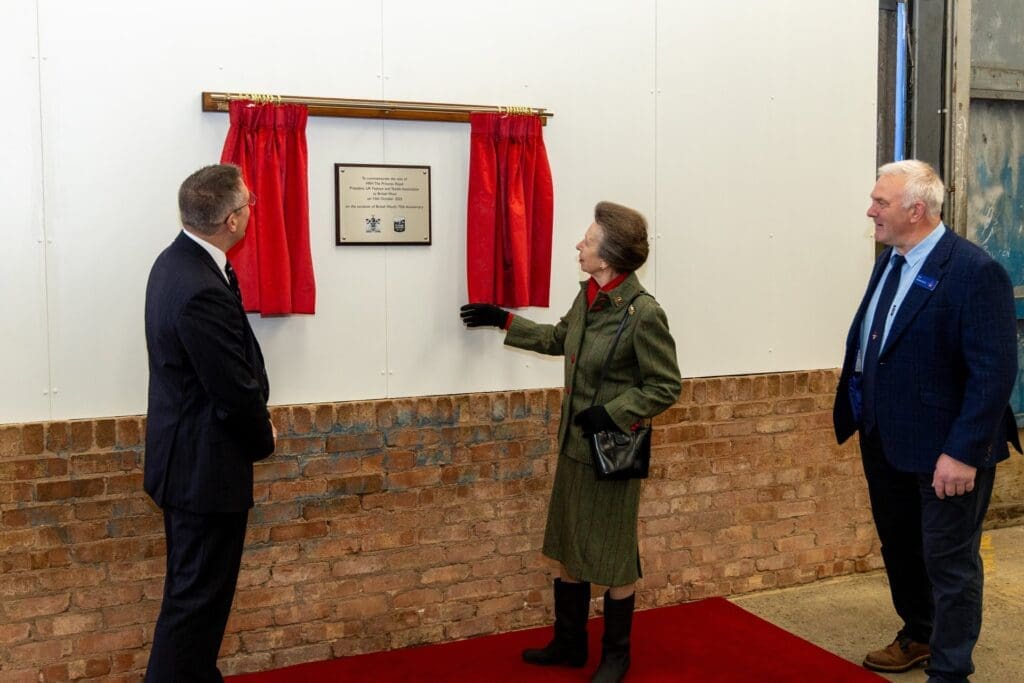
Her Royal Highness The Princess Royal marks 75th Anniversary with visit to our South Molton Depot
Her Royal Highness The Princess Royal, President of the UK Fashion and Textile Association (UKFT), visited our South Molton depot today to mark our 75th anniversary. Celebrating three-quarters of a century championing UK sheep farmers and promoting the value of British wool.
The visit carried special significance as it took place during Her Royal Highness’s own 75th birthday year. Therefore bringing together two landmark milestones that honour a shared commitment to sustainability, craftsmanship, and rural communities.
During the visit, The Princess Royal toured the depot’s grading facilities, met with local farmers, staff, and innovators from across the region. While also learning more about how we are driving forward the use of natural, traceable fibres in fashion, furnishings, and beyond.
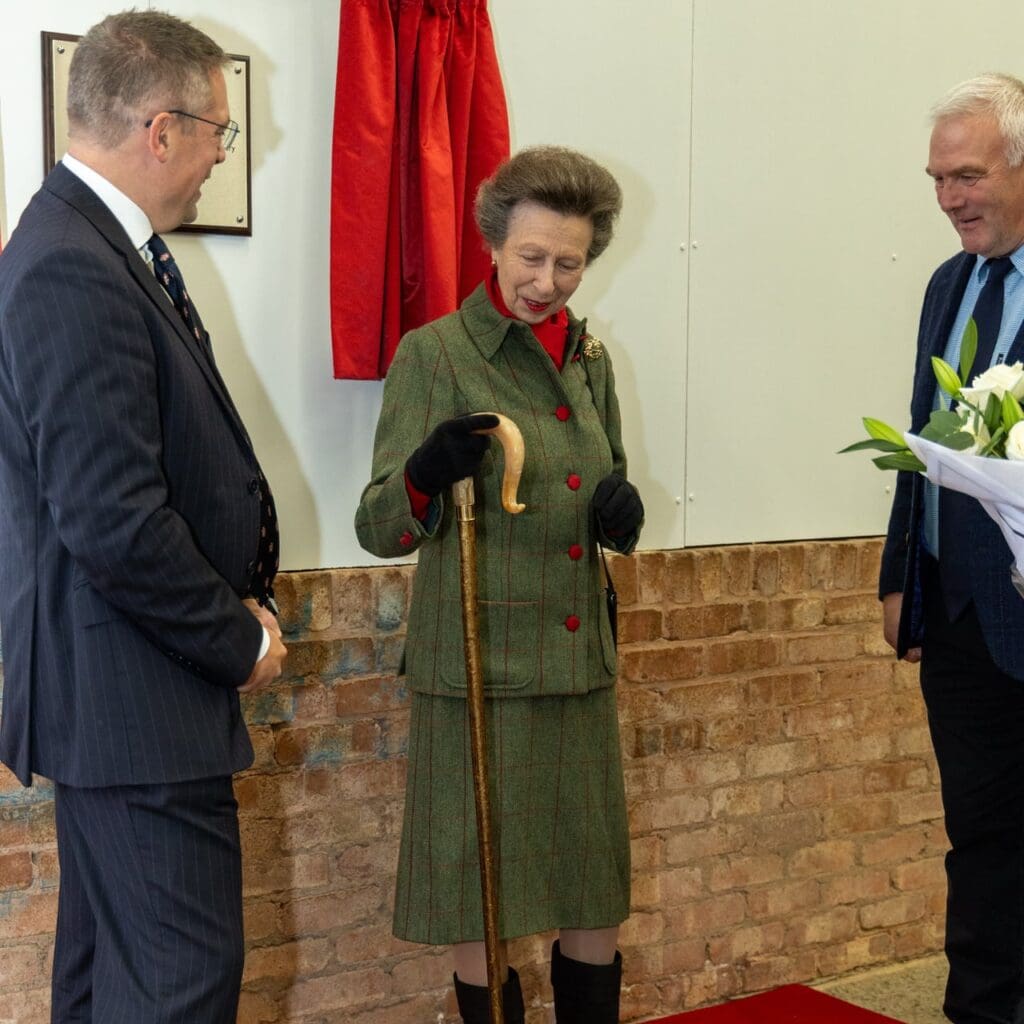
To commemorate the occasion, Her Royal Highness unveiled a special plaque at the South Molton site, officially marking 75 years of British Wool.
The Princess Royal was also presented with a handcrafted shepherd’s crook by Jim Robertson, Chairman. Further symbolising the organisation’s heritage and enduring connection to the UK’s farming community.
Andrew Hogley, CEO, said:
“It was an enormous honour to welcome Her Royal Highness The Princess Royal, to our South Molton depot in this milestone year. Her Royal Highness’s lifelong support for British farming and her deep understanding of the UK’s fashion and textile sector made this a truly special day for everyone involved.
British wool has been woven through generations of farmers and makers since 1950, and it continues to play a vital role in sustainable fashion and interiors today. The Princess Royal’s visit is a fitting tribute to an industry that is both proud of its past and optimistic about its future.”
The South Molton depot is one of our eight key regional centres operated across the UK. Collecting and grading fleece from thousands of sheep farmers.
Her Royal Highness’s visit forms part of a wider series of 75th anniversary celebrations held across our network of depots this autumn. Each event honouring the people, skills, and stories that have shaped the UK’s wool industry for generations.
The gallery of images from Her Royal Highness’s visit captures the spirit of the celebrations. And an institution that has stood at the heart of the UK’s wool industry for decades.
British Wool’s shearing training programme earns recognition across the UK and internationally. setting high standards in both skill development and animal welfare. As part of this commitment. all shearers who achieve Silver and Gold Seal awards we also reward a land-based Highfield accreditation.
Why Highfield Certification Matters
Highfield is one of the UK’s leading awarding organisations for skills training and compliance. Its certificates receives recognition across a wide range of industries. Giving assurance of professional competence. For shearers, this external accreditation adds an extra layer of credibility to the skills. Demonstrated through the British Wool programme.
The certificate shows that their training and assessment meet nationally recognised standards. This is particularly valuable for those looking to:
- Work abroad: Many countries require shearers to show evidence of formal qualifications. When applying for seasonal or skilled work visas. The Highfield certificate provides this recognised proof. Confirming that the holder has completed training and assessment to national standards. By presenting this certificate alongside their British Wool Silver or Gold Seal. Shearers can demonstrate their competence to visa authorities and potential employers. Making the visa process smoother and increasing their chances of securing overseas work.
- Secure employment in the UK: Farmers and contractors can be confident that a Highfield-certified shearer. Not only meets British Wool’s high standards but also an industry-recognised qualification.
Benefits for Shearers and Employers
- Enhanced career opportunities. The certificate is a valuable addition to any CV, especially for those considering seasonal work abroad.
- Recognition of skill and welfare standards. Certification underlines that shearers work to best-practice levels, ensuring sheep are handled responsibly and wool is harvested efficiently.
- Portability of qualification. Because Highfield is widely recognised, shearers can use the certificate across different agricultural and land-based sectors.
Raising the Standard of Shearing
By offering Highfield certificates alongside Silver and Gold Seals, British Wool ensures our training is not only robust but also benchmarked against wider vocational standards. This approach benefits the whole industry, from individual shearers looking to progress their careers, to farmers who can rely on a workforce trained and certified to a nationally accredited level.
For shearers, the certificate is more than a piece of paper. It is a mark of professionalism, dedication, and achievement. This sets them apart in a competitive and highly skilled industry.
British Wool reports sharpest price increase in a decade
In our recent auction we saw the most intense level of competition in the last decade. All of British Wool’s main buyers were active, with UK, European and Chinese-focussed buyers competing to secure wool supplies. All core types traded significantly higher. The main grades of carpet wool trading close to 20% higher towards the end of the catalogue.
Prices in the sale on the 7th of October increased by 14.2% over the mid-September sale. Over the month the prices achieved in the our auctions have increased by 22.5%. The trend mirrors the price rises that have been seen in New Zealand with global demand for quality cross bred wools outstripping supplies.
The average sale price achieved on behalf of our members was £1.18 per kg. A marked increase over the average sale price for the 2024 season. Sale prices last season averaged £1.00 per kg.
Andrew Hogley, CEO, British Wool:
“Following some very positive conversations with the trade, our sales team is confident the strong demand will continue throughout the selling season.
“Sales in New Zealand over the last few weeks have also been very competitive with global market demand for quality cross-bred wools outstripping supply.”
This season’s wool is also generally of a higher quality than last season’s wool. The dry spring and summer resulted in whiter wool this season with more of the clip being classed as a No. 1 grade.
Andrew says:
“Test results for new season wool continue to be significantly better than last year for colour, and we continues to produce a greater proportion of No. 1 grades in the core types.”
We has received a large quantity of wool from new and returning members this season. But the overall volume handled to date is running around 2% to 3% below last year.
“Improved prices in the 2024 season encouraged many farmers who had been holding onto their wool, or using it on-farm, to present it for sale this year,”
“As a co-operative British Wool seeks to maximise the returns for all sheep farmers. With prices having shown a further improvement over recent weeks, we encourage any members who still have wool on farm to send it in before the winter.
“If you still have wool on-farm, please contact us to arrange delivery to one of our collection centres or arrange to have it collected. By collectively marketing the clip we can continue to promote British wool and drive demand to deliver improved prices for British wool.”
The World Shearing & Wool Handling Championships, held every few years in different countries, is the pinnacle event for the World of Sheep Shearing and Wool Handling. Previously the most recent championship was held at the Royal Highland Show in Scotland in 2023, while New Zealand will be hosting the next event in March 2026. The competition includes individual and team events for machine shearing, blade shearing, and wool handling.
Following a summer of strong competition, the teams representing England, Scotland, Wales, and Northern Ireland in 2026 have now been confirmed. The teams will be:
England:
Team Manager: Gavin Stephens
Machine Shearer: Matt Smith
Machine Shearer: Nick Greaves
Blade Shearer: George Mudge
Blade Shearer: Andrew Mudge
Wool Handling: Hilary Bond-Harding
Wool Handling: Jess Parkhouse
Scotland:
Team Manager: Willie Dickson
Machine Shearer: Gavin Mutch
Machine Shearer: Hamish Mitchel
Blade Shearer: Willie Craig
Blade Shearer: Murray Craig
Wool Handling: Katie O’Sullivan
Wool Handling: Rosie Keenan
Wales:
Team Manager: Rhys Jones
Machine Shearer: Gwion Lloyd Evans
Machine Shearer: Llyr Jones
Blade Shearer: Rhydian Evans
Blade Shearer: Elfed Jackson
Wool Handling: Sarah Rees
Wool Handling: Jessica Morgan
Northern Ireland:
Team Manager: TBC
Machine Shearer: Alex Butler
Machine Shearer: Graeme Davidson
Blade Shearer: Sam McConnell
Blade Shearer: Chris Coulter
Wool Handling: Rachel Murphy
Wool Handling: Ellen Murphy
The championships take place in Masterton, New Zealand, between the 4th and 7th March 2026.
Meanwhile Gareth Jones, Head of Member Engagement, said: “On behalf of British Wool, congratulations to all the shearers and wool handlers who have qualified for next year’s World Championships. This outstanding achievement reflects your exceptional skill, dedication, and professionalism. Wishing you every success as you represent your country on the world stage.”
Additionally, Graze will be meeting and publishing a profile of the four teams in the months running up to the Championships.
Meet the Team – Depot Ops
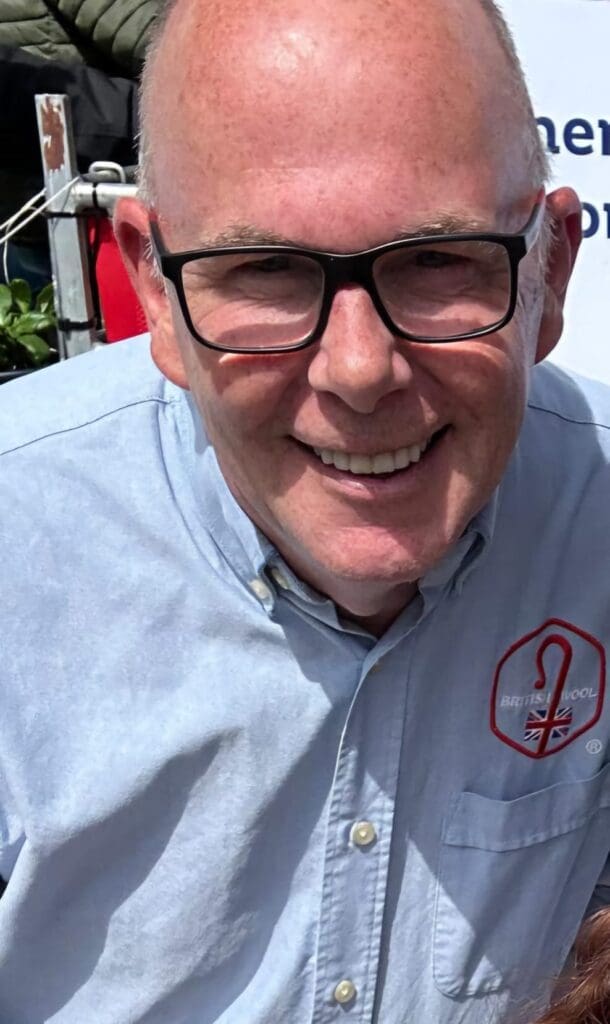
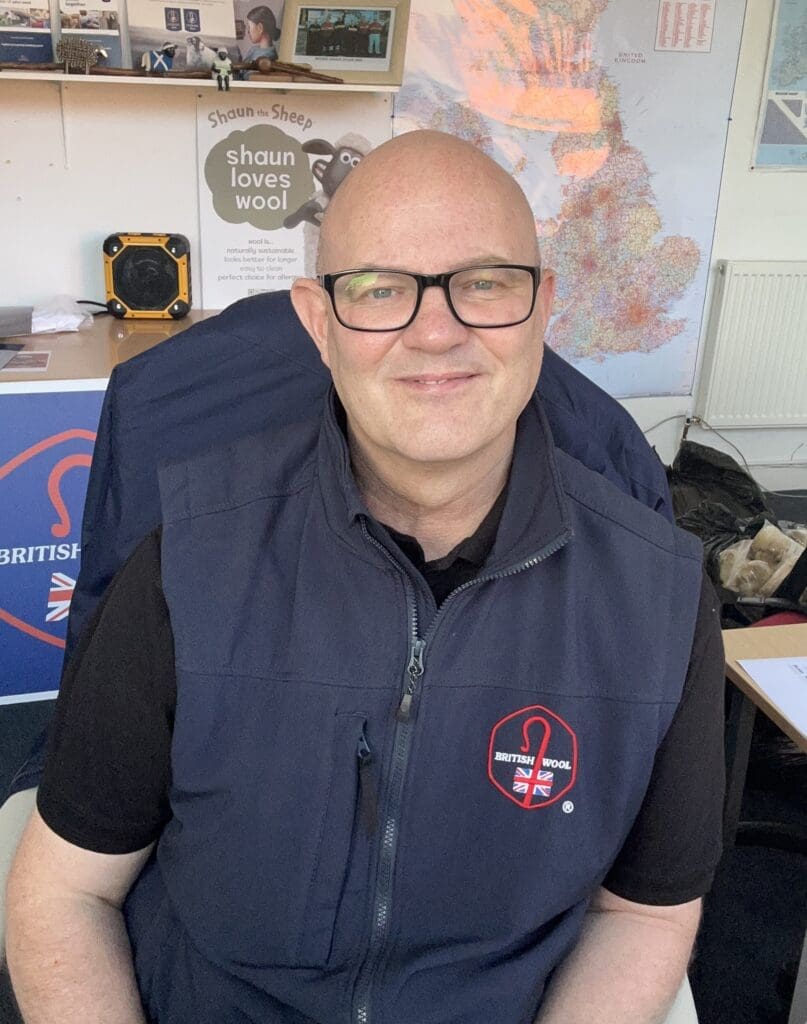
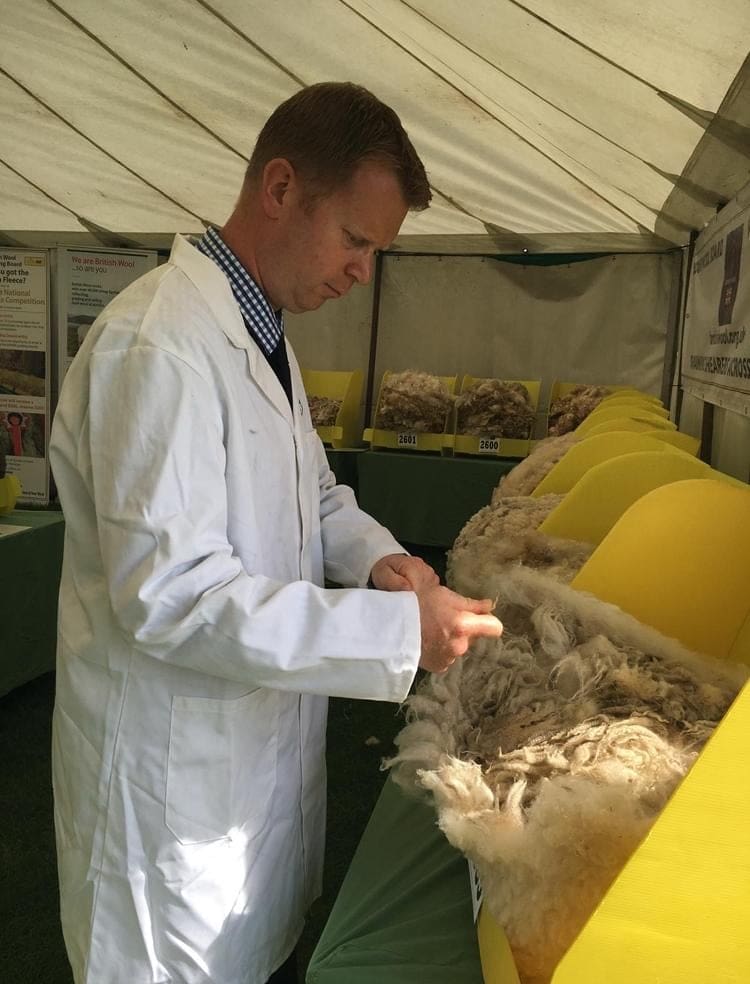
As part of British Wool’s 75th Anniversary, we caught up with the Depot Operations team who oversees the depot operations across the UK, including our eight grading depots. With 100 years of experience in the industry. We caught up with Billy Hewitson, Head of Operations, Colin Jarvis, Area & QHSE Manager, and David Swinton, Area Manager, to find out more about their work.
Firstly, introduce yourselves to us:
Billy:
I’m from Paisley in Renfrewshire and have worked for British Wool for 40 years. I started working for Scottish, English, and Welsh Wool Growers in 1985 at the main depot in Paisley.
Colin:
I grew up in a small village just outside Stamford. Starting in the wool industry in 1990 at Central Wool Growers (CWG), an independent grading depot, as a seasonal temporary worker. The plan was to stay for a couple of months before starting college. But soon realised how much I enjoyed the business and was interested in pursuing it further.
After working through the first busy summer season. I was offered a 5-year trainee Grader apprenticeship, which I gladly accepted. Growing up within the agricultural industry. My father working on Arable farms all his life. Before that, my grandfather was a shepherd in Norfolk. I feel I was always destined for a career in agriculture!
David:
I was brought up and spent all my life in the Tweed Valley. Living on a farm up to the age of 12 and then moved to the local mill town of Innerleithen. My family has a Fencing Contracting business in the area, which gives me a good knowledge of how farming works and the challenges involved.
When did you join British Wool?
Billy:
Starting work in 1985 in the main depot in Paisley. We then moved to Hillington in Glasgow in 1986, where I performed every job at the depot. From sweeping the floor, intake, packing, and grading. We were taken over by the British Wool Marketing Board in the mid-1990s and moved to Irvine. In the early 2000’s where I progressed to head grader. Moving onto depot supervisor and depot manager, a short time later.
Colin:
I was with CWG for 31 years until 2021, when it closed as part of the British Wool restructure. After completing my apprenticeship, I worked as a grader until 2003, then was promoted to Head Grader. Co-managing the depot from 2013, until its closure. In 2021, joined British Wool as a Quality Control Manager for Southern England & Wales. Which gave me responsibility for overseeing the grading and technical standards at our depots. It had always been an ambition of mine to reach this position.
David:
Starting my British Wool career on my 16th birthday in May 1984 on a 4-year apprenticeship at Stewart & Ramsden in Galashiels (part of the British Wool group). Following qualification, spent the next 18 years as a wool grader. Not only in Galashiels but also working at the Carlisle and Irvine grading depots and Ulster Wool in the late 90s and early 2000s.
Becoming an Assistant Manager at Galashiels in 2006, and then Depot Manager between 2009 – 2017. Managing the wool sorting side of the business. Completing 41 years of service to British Wool.
What did the role of being a Depot Manager entail? Describe a typical week in the role.
Colin:
My role was very hands-on, part of the grading team while also managing the day-to-day warehouse operation. Over the years, did all the different jobs in the warehouse, which helped in managing the staff. Involved in recruiting and managing the staff and ensuring we were working to British Wool’s grading standards.
David:
A typical week as a manager is organising the workflow for the grading team, making sure the wool is also managed into the depot during the busy summer months. Galashiels was the biggest depot in Scotland, and we managed the intake of wool from Northumberland, South Scotland, Fife, and Perthshire. Loving the challenge of always getting as much wool to the door, which could be as much as 1,000 sheets per day during the peak of July and August.
Tell us more about the role you are currently in and what this entails.
Billy:
As the years progressed and different management took over British Wool, my job changed. Firstly, took on the role of Wool Sales and Quality Control for the UK and Northern Ireland. After a couple of years, in 2021, took on my current role of Head of Operations, where I oversee the depot network, purchase our consumable stock, deal with any day-to-day issues at our sites, among other jobs!
Colin:
Involved in ensuring our quality standards are being met and ensuring our trainee graders are meeting our requirements. My role has moved into managing Operational activities across the network with Billy & David. Also work with our depots to ensure we are meeting our own Health & Safety requirements, adhering to our legal obligations, whilst also looking at new ways to update and streamline our processes.
David:
Current role is as Area Manager for Scotland, Northern Ireland, and Northern England. This is varied, from Quality Control visits to depots and trainee grader monitoring, which is every 6 months. Managing the UK collection centre network and am currently focused on finding new sites across the UK. Going from office work to hands-on, such as driving an FLT, to sometimes grading wool.
We are a small team covering the UK, so never stuck for a job to do!
Do you have an anecdote or experience to share from your time at British Wool?
Billy:
A funny story from my time as a depot manager. The depot was broken into early one morning, as the key holder and manager, I was called out. Once I arrived, there were police everywhere, and I asked to go into the depot to see if there was any damage. The police said I couldn’t go in as there may still be someone inside and they were waiting on the police dogs turning up. Police dogs arrived and duly searched the building and found no one on site. Police officer then asked if they could perform a 15-minute training session with the dog in the depot due to all the wool and agricultural smell of the depot, they wanted to hide in a skep of wool, cover themselves with wool, and let the dog try and find them, to which I agreed. After 15 mins of training, the police officer came out of the depot with dog, the officer was covered head to toe with wool. She must have chosen a skep of the hairiest, most kempy blackface I had at the depot. The dog did find her; she went away happy and rather woolly!
Colin:
A few months ago, I was offered the opportunity to appear on BBC’s Countryfile, the episode was centred around Bradford and the part it has played in the wool industry over the years. It was fantastic to be involved in, and Sean Fletcher and the Countryfile team made it a great experience. It took me out of my comfort zone, but sometimes you need that!
David:
I can’t think of anything but having a good sense of humour and being a team player goes a long way.
As we celebrate 75 years, how important is British Wool and the collective marketing of wool in the UK today?
Billy:
One of the greatest steps forward that I have seen in 40 years is the addition of our traceable system. This allows us to trace every member’s wool straight through our intake, grading, and packing system, and then allows the sales team to auction the wool as traceable, which generates a better return for our members.
75 years of British Wool is a fantastic achievement; British Wool plays a vital role in ensuring UK sheep farmers receive a fair return for their fleece. By operating a collective marketing system, it grades, packs into bales of the same type of wool, and sells wool on behalf of its members. This not only guarantees quality for buyers but gives members a better return and guaranteed payment than they may achieve elsewhere.
Colin:
British Wool role in the agricultural sector is as important as it was 35 years ago when I joined the industry, providing a reliable service whilst offering greater flexibility in how farmers can get their wool into us is vital. Our grading process remains largely the same over the years, but it remains a key part of ensuring consistency and instilling confidence for the onward supply chain.
David:
The British Wool auction system is the driving force, and as sheep numbers decrease in the UK, this will only increase demand and give confidence to farmers that British Wool works for them.