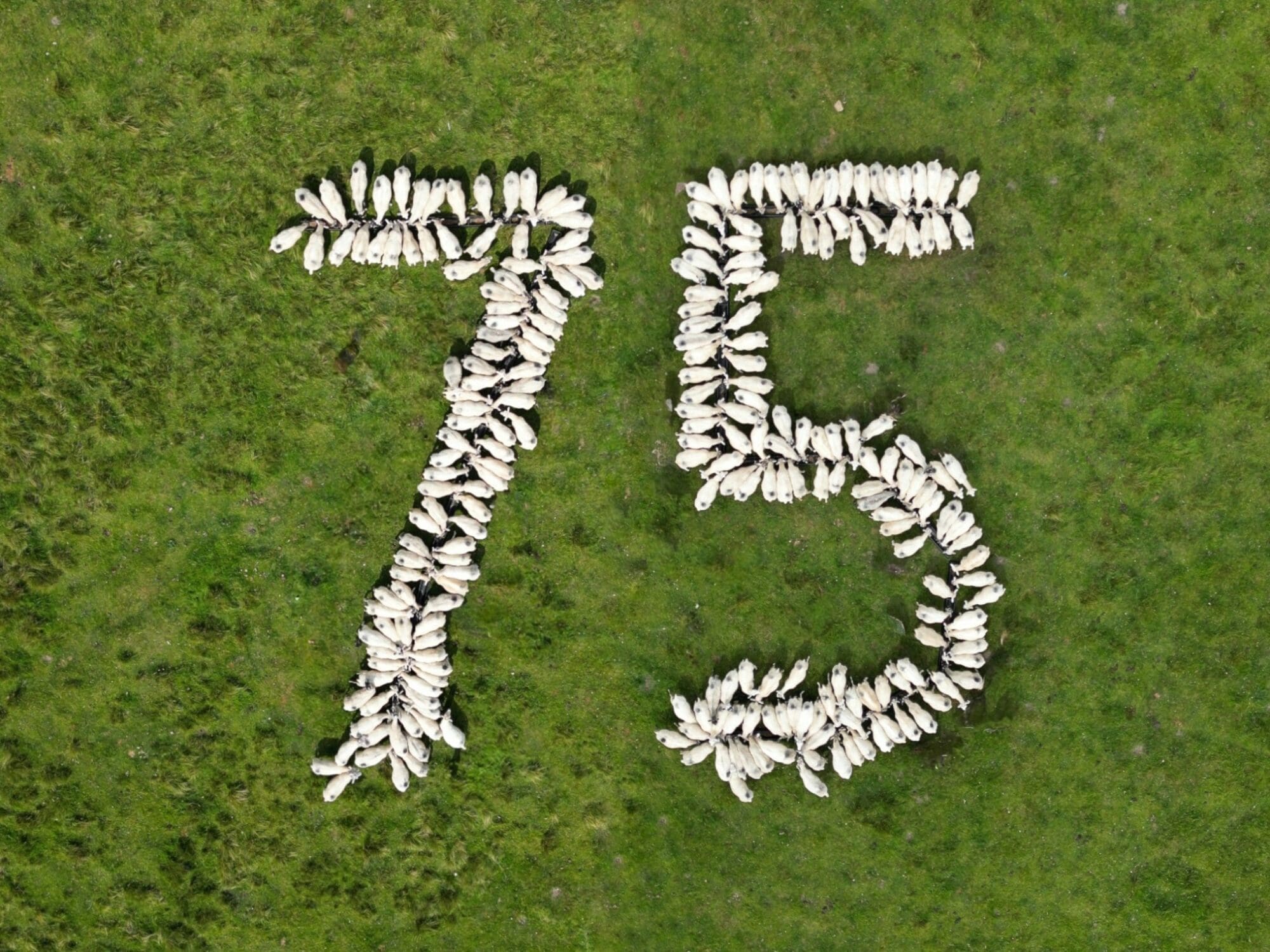
This September, we are marking 75 years of backing sheep farmers and championing wool.
Since 1950, British Wool has grown into a cooperative owned by more than 30,000 sheep farmers. Ensuring fair prices, quality, and the global promotion of UK fleece.
In that time, British sheep have produced over 2.5 billion kilograms of fleece, a reminder of the incredible scale of UK wool production.
To celebrate this milestone, across out 8 regional grading depots are opening their doors for a behind-the-scenes look at where the UK’s wool journey begins.
Andrew Hogley, CEO at British Wool, said:
“Whether you’re a sheep farmer, industry partner, student, or simply interested in the story of British Wool, join us for guided tours, demonstrations, refreshments, and a chance to learn more about how British Wool is working for farmers.
“Owned by approximately 30,000 sheep farmers in the UK, British Wool collects, grades, markets and sells British wool on behalf of its members to the international textile industry for use in flooring, furnishings and apparel.
“British wool isn’t just a legacy fibre, it’s a material for the future, and is gaining new relevance in a world increasingly concerned with environmental impact.”
Join us at an anniversary depot event throughout September and October. Spaces are limited, so be sure to book a place.
To learn more about the 75th celebrations and book a visit to a local open day, visit: britishwool.org.uk/corporate/75-years-of-british-wool/



Our Licensing Scheme Continues To Expand
Our licensing scheme continues to expand helping to drive new demand for members wool. Meet some of the new brands on board….
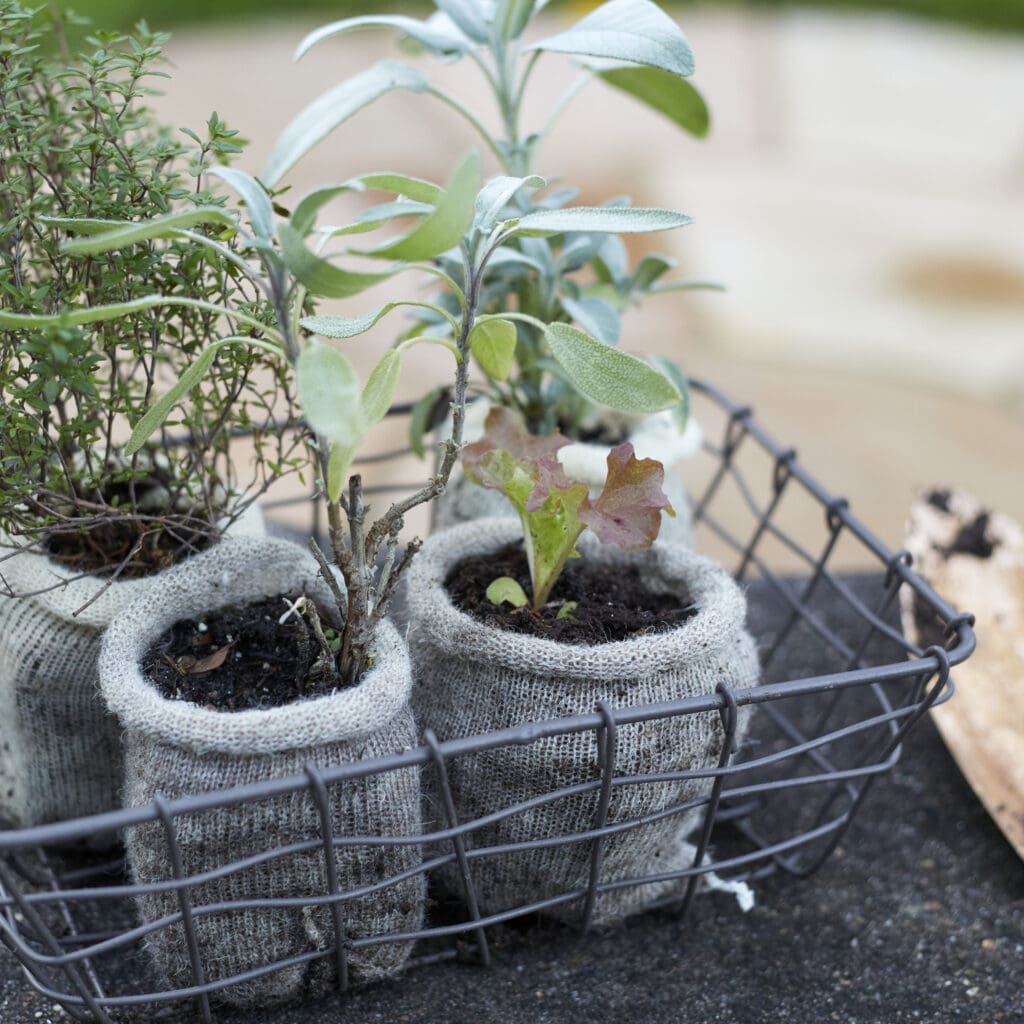
Championing the reduction of single use plastic in horticulture, Wool Pots was born in 2020 and won The Wool Innovation Award in 2022 and is going from strength to strength. The knitted pots allow more oxygen to the roots which promotes stronger root growth and plant health. The wool also insulated against heat, cold and retains water better, using 20-30% less water. With over 500 million plastic pots being sent to landfill in the UK every year and a black plastic pot taking 450 years to breakdown into microplastics- it is wonderful to see British wool help to combat this problem.
One of Huddersfield’s oldest active weaving mills. Born in 1782 as an artisan laboratory, today it produces fabrics using only naturally dyed and finished wool, without chemical additives. The range of products is wide, made up of various elements including Covert Twill, used in the past for the Upholstery of Rolls Royce.
Founded by knitwear designer/maker Jessye Boulton in 2021 who trained in fashion knitwear and knitted textile design at Winchester School of Art. Jessye take inspiration from the dramatic, rugged coastlines and raw, untouched moorlands of the surrounding landscapes of West Cornwall.
A contemporary British brand with a commitment to sustainability and social responsibility.
Their first collection includes their beautiful Richmond woollen throws and cushions as well as their Serenity bedding range.
Linwood is championing Romney sheep in their latest wool collection. The wool has been finished to give it a luxuriously soft texture, making it the perfect choice for upholstery as well as curtains. British wool makes for a durable, eco-friendly, stain- and fire-resistant by design, and it has been piece-dyed to provide an alluring array of colour. We look forward to seeing it pop up in interiors across the UK in the coming years.
A collaboration between London City Farms and Ossian Knitwear. This pilot project united 10 London Farms, combining their wool for commercial processing. The finished yarn and products are offered back to the farms at cost, generating vital funds to support their running costs.
Lanifico Luigi Zanieri (Italy)
Founded in 1952 and dedicated to producing premium-quality apparel fabrics 4. With a fully integrated, in-house production process—including dyeing, spinning, and weaving, ensuring the highest standards of quality and reliability.
Meet Mike Berry
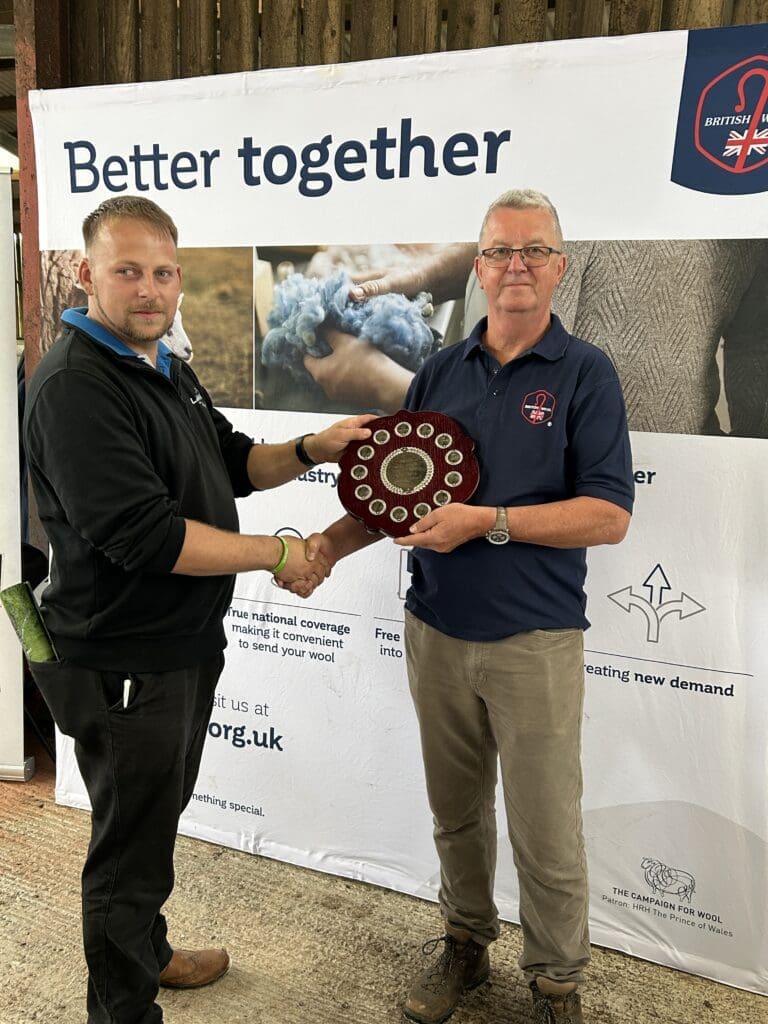
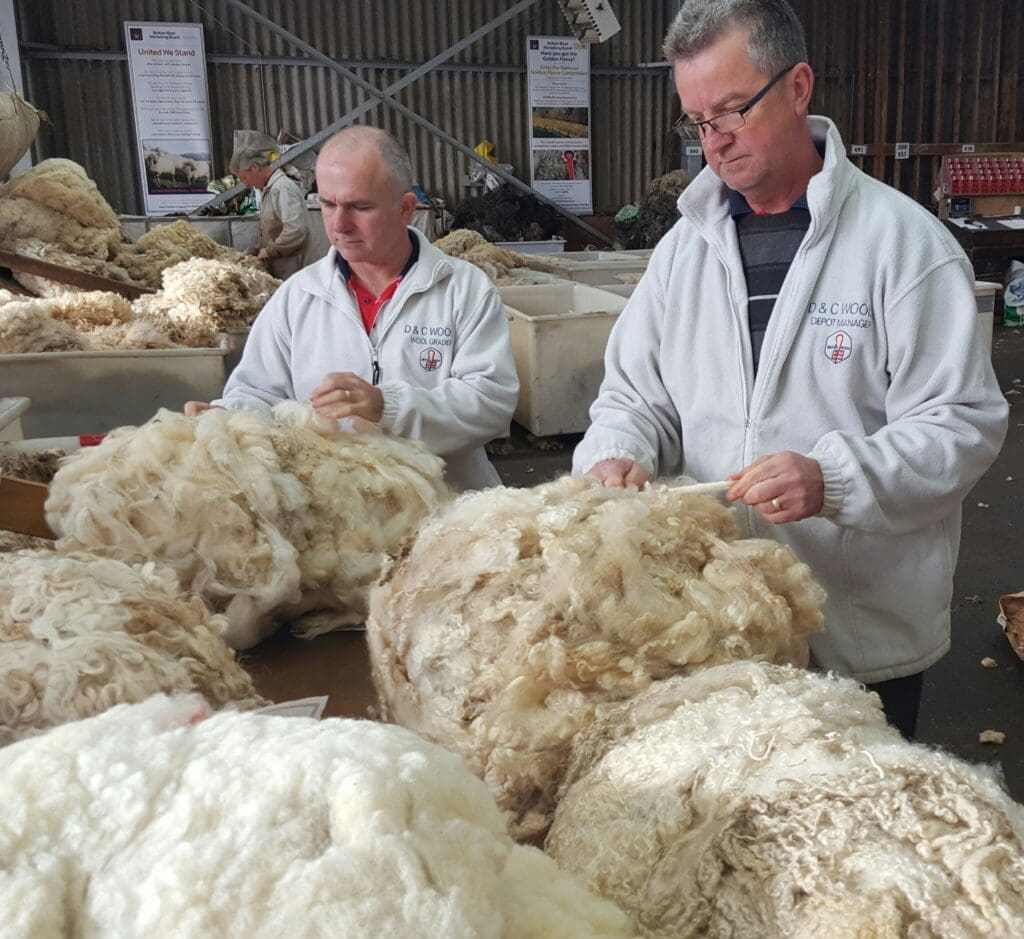
Mike Berry will be a familiar face to many farmers after 45 years working at British Wool in the South West of England. We met up with Mike to talk about his career in the wool industry.
Firstly, introduce yourself:
I was born on the 2nd of July 1960. Married Jackie in 1982, I have two boys, Nick (41) and Liam (39). Two grandchildren, Beatrice (12) and Spencer (5). I started with British Wool on the 14th of June 1976, my mum’s birthday. I retired after 45 years in 2021.
Tell us about your career at British Wool?
I started at the Buckfastleigh Depot as a casual, then I went on to run the bale store before becoming an apprentice grader around 1983.
The depot at Buckfastleigh closed in 1991 and I moved to the Liskeard Depot as a grader. I then moved to South Molton in 2007 as Depot Manager and retired at the end of August 2021.
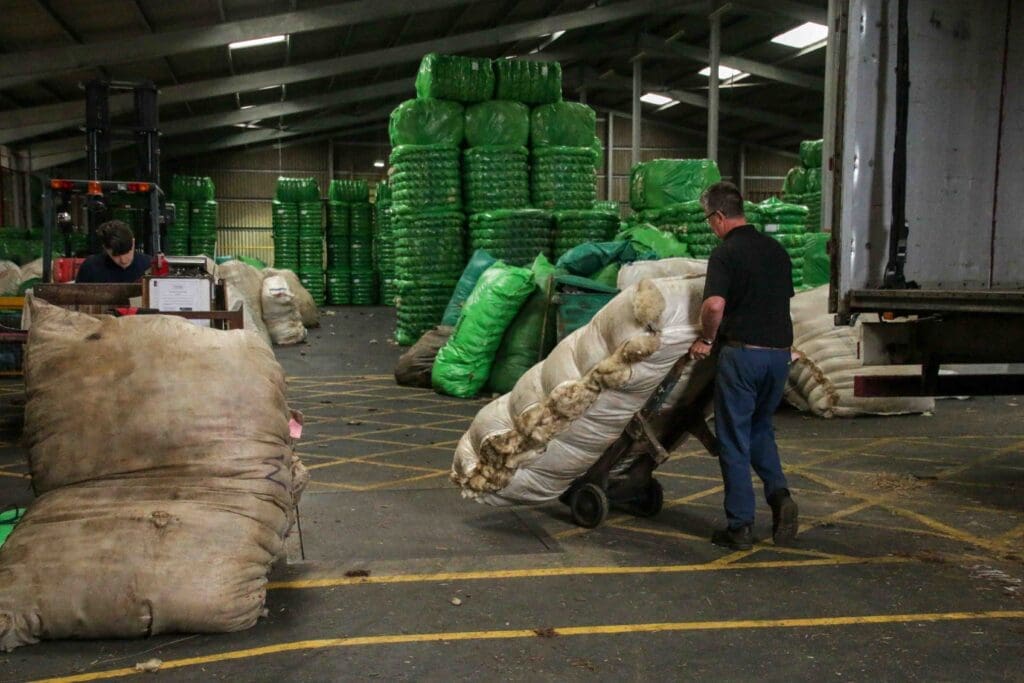
When I started at Buckfastleigh the drivers delivered wool loose in the back of trailers and we carried by hand to the grading table. Once we graded the wool back in the early days. We didn’t have lines like we do now but bins where the wool would be moved into. Once there was enough for a bale, the bailing machine staff moved it to the bin and filled with wool. Machinery in the depot has certainly improved for the better. The way we grade wool hasn’t changed from the first day I started. Which is very specialised and shouldn’t change
The Buckfastleigh Depot had three floors. The bottom floor was the bale store. The middle was for the grading. The top floor we used four times a year for wool bale samples from the South West Depots (South Molton, North Tawton, Liskeard, Launceston, Buckfastleigh) ahead of the auctions. The buyers would view the samples on a Monday and Tuesday. We held the auction on a Wednesday at a hotel in Exeter.
What did the role of being a Depot Manager entail? Describe a typical week in the role.
A typical week as a Depot Manager (certainly not 39 hours) was organising staff, dealing with hauliers delivering wool and collecting sale wool, speaking with members, making sure collection sites were running smoothly, dealing with contractors and grading wool daily.
I enjoyed most aspects of working for British Wool especially the shows, but most of all spending as much time as possible at the grading table. Being a Depot Manager, I found working on the production floor was the best way of getting the most out of your staff, my least favourite part was doing office work.
As British Wool celebrates 75 years, it couldn’t be more crucial that British Wool continues to provide a service for members and buyers. I believe if British Wool wasn’t there the UK wool trade would struggle to survive
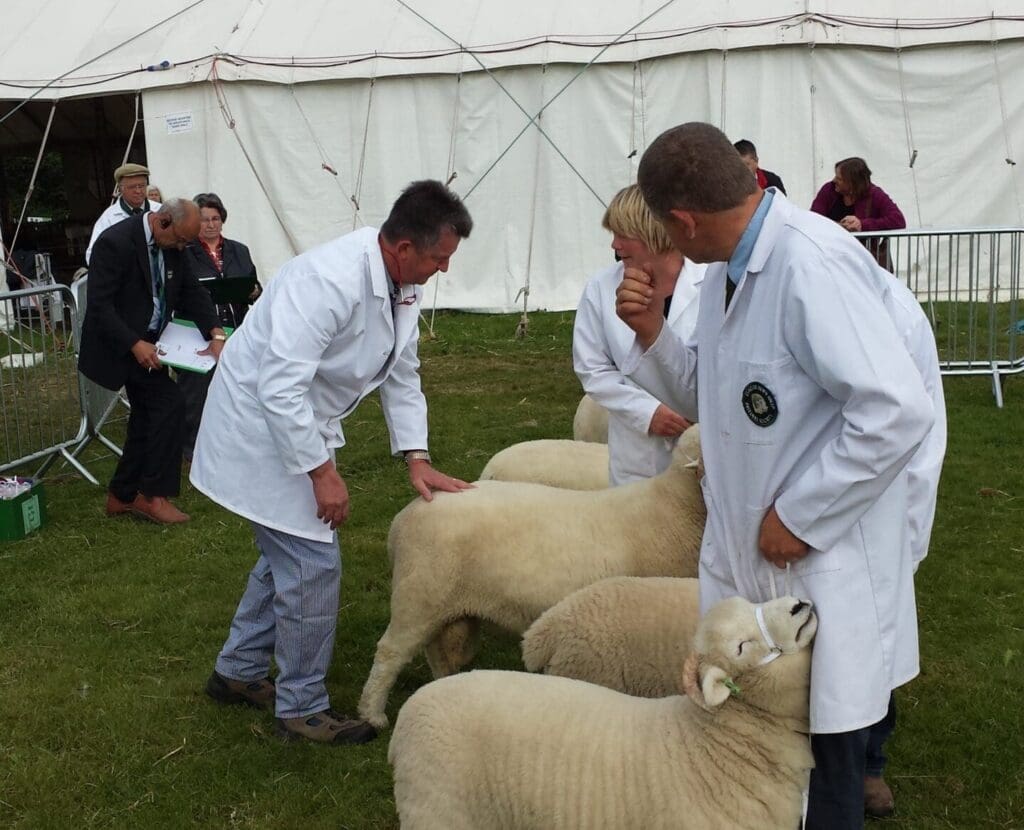
I still support British Wool by judging at shows and meeting the many farmers I have met and become to know over the years.
Fleece presentation is key in maximising value and ensuring a high standard of product for processing
Excellent fleece presentation is essential to maximising the value of wool to our members. This starts with shearing; It’s important to shear the wool to a high standard, for when the wool is ready for sale.
After Shearing, we have some useful tips on fleece presentation
- Include dry belly wool with the fleece before folding the flanks towards the centre.
- Turn in the britch end and roll the fleece firmly and neatly towards the neck.
- After rolling part the fleece, and without twisting, tuck the neck wool firmly into the body of the fleece.
- The finished fleece stays firm and secure and ready to place in the wool sheet.
Some other tips when packing the wool
- Don’t mix hill wool with lowland wool. Kemp from hill wools can cause cross-fibre contamination.
- Don’t mix coloured wool and white wool. This can also cause cross-contamination.
Ensure the wool meets a high standard of presentation is also key for our buyers and those processing the wool. Richard Alderson, Head of Wool Sales, explains more:
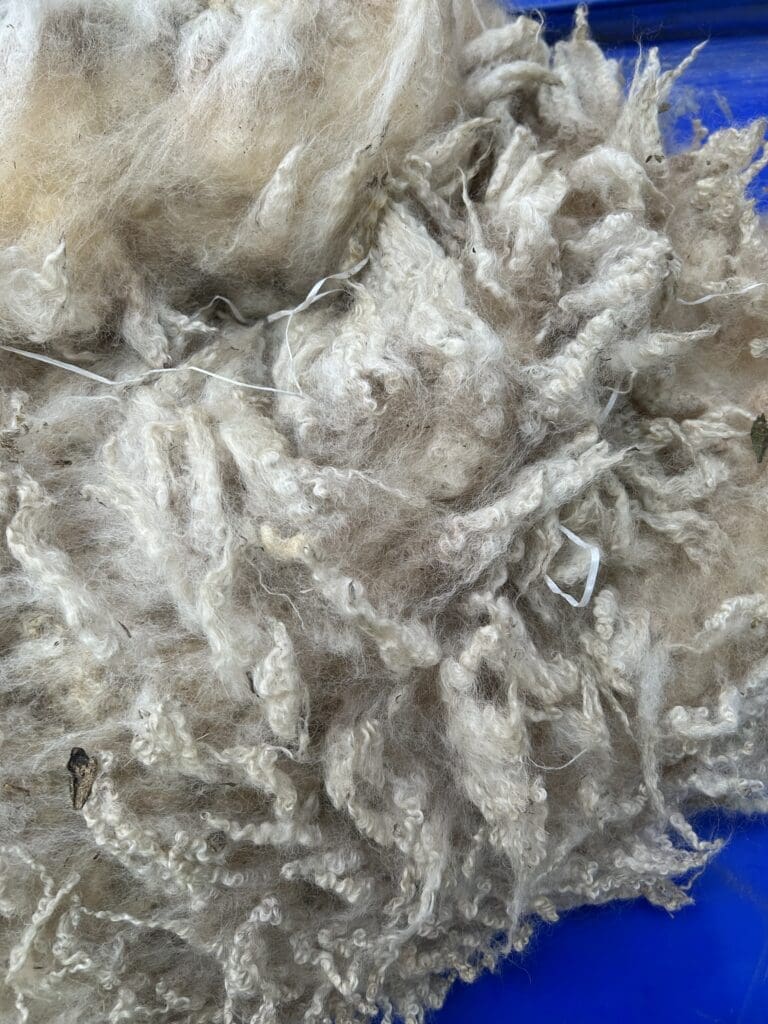
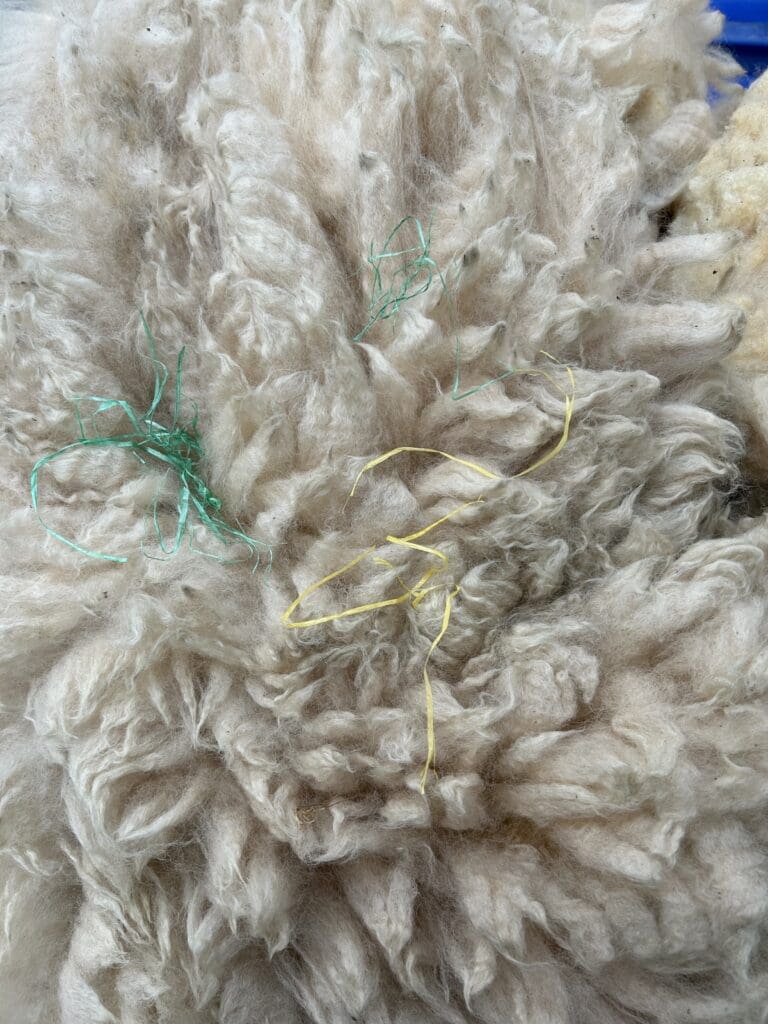
“Whilst instances of polypropylene contamination in the wool we receive from our members are relatively low compared to wools from other origins, we have recently seen an increase in complaints from some of our auction buyers. Polypropylene contamination causes huge issues throughout the textile production chain, as it spins and dyes differently from wool and can lead to large financial claims.”
Richard adds: “Please ensure that during the shearing and rolling process that the area used is clean and free from any contaminants and use the British Wool bags and are clean and intact. If you believe any of the bags supplied are in a poor condition and may lead to contaminating the wool, please do not use them and contact your local depot/collection centre for replacements.”
More information
What To Do (Step By Step) – British Wool
Summer show season is in full swing, and we are making the most of it, connecting directly with our members, trade partners, and consumers through a busy calendar of events.
One of the season’s highlights was the Great Yorkshire Show, one of England’s most prestigious agricultural events and conveniently close to our Head Office in Bradford.
Graham Clark, Marketing Director, said: “The Great Yorkshire Show is a key platform for British Wool. It allows us to speak directly with our farmer members and engage consumers with quality British wool products.
“We also invite local licensees to join our stand, giving them a chance to sell their goods and showcase the breadth of innovation and craftsmanship in British wool. It always generates great interest and strong sales.”
We also made an impression on the fashion stage, participating in the event’s live runway shows and demonstrating wool’s versatility in contemporary fashion. A crowd-favourite, the shearing competition stage attracted significant attention, including two live segments on BBC Breakfast News, offering valuable national exposure for British Wool and the wider wool industry.
This year marked our first appearance at Groundswell, the regenerative agriculture event drawing record attendance. Our Wool Hub, featuring licensees and product showcases, received strong engagement from attendees keen to explore wool’s sustainability credentials and traceability.
Across Europe, we continue to build influence in the fashion and textile sector, attending multiple apparel shows where sourcing decisions are being made for upcoming collections.
Graham said: “We’ve spent the last few years building relationships within the fashion industry. Our new British Wool Sourcing Guides have played a key role; they bring together certified British wool cloth and yarn ranges from all our partners, offering brands an easy, traceable way to source genuine British wool. It’s the first time such a comprehensive collection has been presented in this way.”
The guides have also helped overcome long-standing misconceptions about British wool being too coarse for apparel.
“We’re now working with brands that had never previously considered British wool in their collections. The sourcing guides are shifting perceptions and opening doors.”
As we continue the momentum into the autumn, with our 75th Anniversary celebrations and Wool Month in October, events remain central to our outreach strategy.
Graham concluded: “Taking part in shows and events is a vital part of our approach. It allows us to connect with a wide range of stakeholders — from farmers and brands to the general public. These face-to-face conversations are key to raising awareness of the value British wool offers as a fibre, as well as helping to drive demand. With a busy schedule ahead for our 75th Anniversary celebrations and Wool Month in October, we’re looking forward to keeping that momentum going.”

Meet our Chairman from 1999-2011
Continuing our celebration of 75 years of British Wool. Graze recently met with Frank Langrish FRAgS, who was Chairman for 12 years between 1999 and 2011.
Tell us about yourself:
I am a partner in a family farm running around 4,000 Romney ewes and over 400 cattle. The sheep and cattle run on a low-input lowland grazing system, with the sheep predominately Romney or Romney crosses. The cattle are a suckler herd of pedigree Sussex cattle and purchased in Stores.
I had a lifelong interest in wool, as I am old enough to remember when half of our income came from it. Taking wool into the local “A” merchant or grading depot was a very important day, and my interest was probably deepened by receiving a ten-shilling note from Mr.Strouts, who ran Gregory and Prentis in Ashford when I was six years old.
I learnt to shear on an early British Wool training course at 16. When I was 18, headed off to the Southern Hemisphere and worked shearing, crutching and as a Rousie in the wool sheds. I went on to become a contract shearer in the south east and used to compete in competitions, becoming a Senior shearer in the English team.
When did you join British Wool?
I joined the regional committee which covered all Southern England and eventually became the Chairman of the committee. I became a Board Member in the mid 90’s. Then Chairman of British Wool in 1999 until 2011.
I am probably one of the few people who have seen the various offices and depots. The administrative HQ was originally in London but moved to the Depot at Clayton in Bradford. This site was too small and was eventually sold for housing. The head offices moved to the Euroway Trading Estate to the south of Bradford. The depot was on a separate site a short distance away. In around 2008, the site on Canal Road became available, and everything moved to where it is today in 2012.
During my time as Chairman, I made sure I visited all the depots and met the staff who did such a great job. It was inevitable, as the sheep numbers and weight of wool declined, that depots and staff numbers reduced and sadly have continued to do so.
What were some on the improvements and projects you worked on during your time as Chairman?
Several improvements were introduced. Including the first fully hydraulic packing machines, which were produced by Marsh Engineering, a company located on Romney Marsh. This company had previously manufactured presses for the hop industry.
I also found a way of compacting wool sheets so these could be transported better between collection points and depots.
The most significant improvement in my time was the electronic online auction system. Which was the first in the world. While there was scepticism from the buyers, it has now been well received. It did have a false start in that it was to go live in spring 2001 but FMD stopped that. It wasn’t until 2013 that it began. This revolutionised how wool was sold. Making stock control and invoicing a seamless operation. In the days of the open cry auction, every depot would send in wool samples to Bradford for the buyers to inspect. The costs of this were getting close to a million pounds a year. So, we decided on a wool testing operation, and now have WTAE in Caernarfon. Which analyses all the core samples from the bales, so the buyers have the technical info.
What were the biggest challenges during your period as Chairman?
My biggest challenge as Chairman was the reopening of export markets after FMD, especially China. This entailed visits to Shanghai and long discussions on how we could make the wool and the health certificates acceptable.
As we celebrate 75 years, how important is British Wool and the collective marketing of wool in the UK?
I was, for a short time, the President of the European Wool Group, and it was clear that without an organisation such as British Wool, there was no hope of wool values ever increasing. The organisation is the envy of Europe, with only Norway having an organised collection system now.
If British Wool ceased to exist, there would not be outlets for much of the wool and no one to help promote this excellent fibre.

We held over 130 two-day shearing courses this summer. Which were attended by over 800 all benefiting from learning a new skill or developing their technique and knowledge. Supporting the next generation and shearers is an important part of British Wool’s role. It’s encouraging to see the quality of shearing we have here in the UK, on our farms, but also on the competition stage.
Below, we’d like to share feedback from Colin Jones, who attended a recent course:
“Firstly, I would like to thank you for arranging for me to attend the shearing course at Hurstley Court. I just wanted to let you know that the instructors were amazing and really helpful. They were clearly very knowledgeable, and it was clear that they have a passion to train others in the art of shearing. They structured the two days perfectly which meant we were all able to pace ourselves. They added in a section about how to sharpen cutters and combs plus a couple of reflective practice demonstrations to remind us of what to do and when.”
Several in-shed training days were also held where an instructor works with shearers for a day at their place of work. We’ve received feedback from many who found these days particularly beneficial.
In July, August, and September, we had shearing courses available for anyone wishing to shear lambs or ewes. Including wool handling and support anyone wishing to travel abroad this winter. There are several courses available online, and once again, we can provide in-shed days for lamb shearing.
Also, if you are thinking of traveling this winter, our instructors are available to visit you or a group, providing advice and shearing knowledge.
Richard Schofield, Shearing Manager, British Wool, said:
“The organising of the courses is very much a team effort, and I thank our UK instructors for all their hard work and commitment in supporting the next generation and our shearers.”
To find out more about upcoming courses, visit Shearing Courses
Lamb Shearing Masterclasses
We will be running master class lamb shearing courses in August with guest instructor Justin Bell from New Zealand and Matt Smith.
These courses will be on Romney lambs and a great opportunity to improve your lamb shearing and gear selection. These courses will be covering the whole of the UK.
For more information, click (visit Shearing Courses ) or contact 01274 688666 or email [email protected]
Huw Jones Sets New 8-Hour Solo British Record
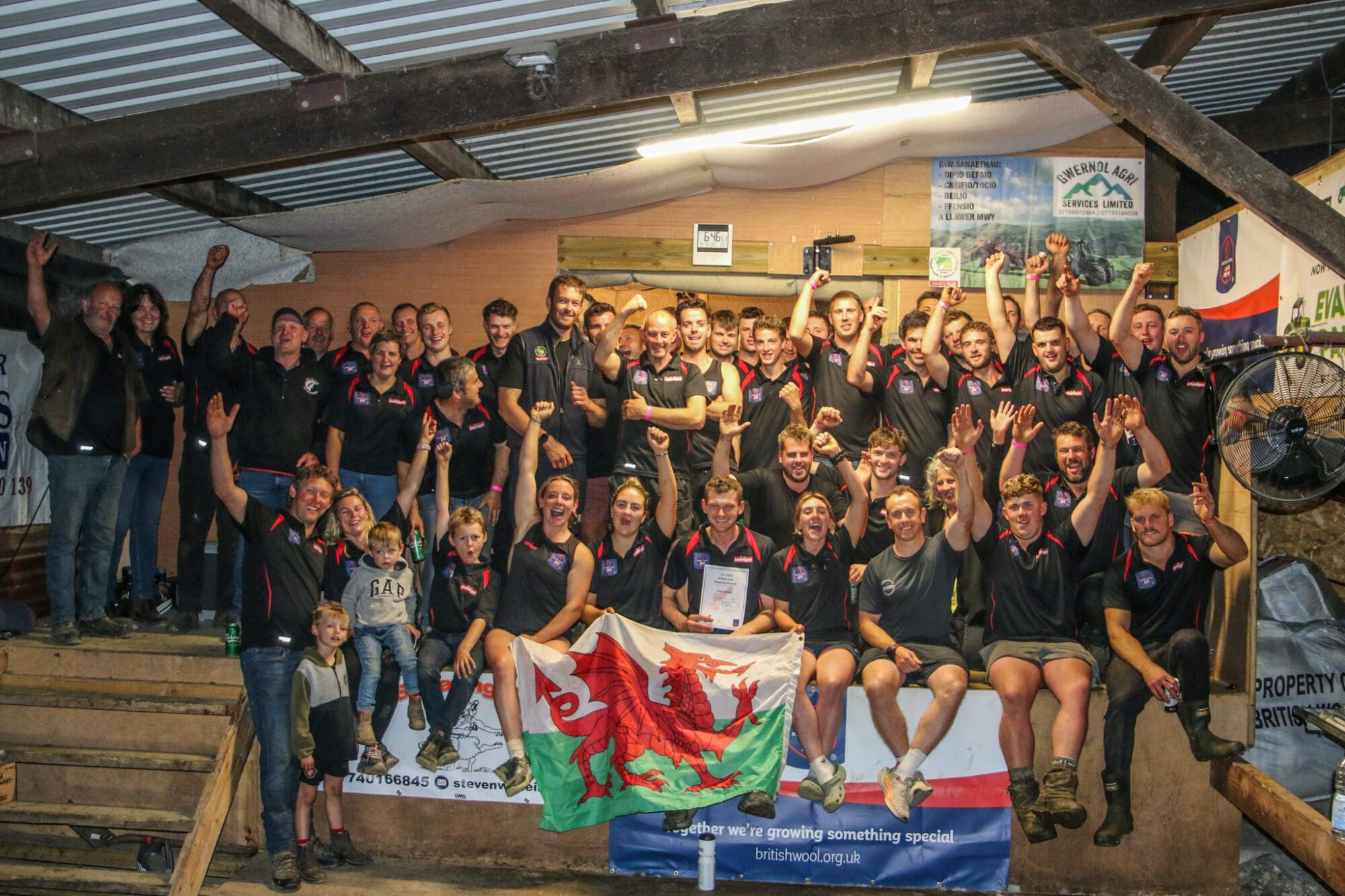
On Saturday, 5th July, all eyes were on Machynlleth in Mid Wales. Where Huw Jones, a 27-year-old Welsh shearer, was successful in his shearing record attempt. Achieving a new 8-Hour Solo Ewe British Record, shearing 663 ewes. This beat the previous record held by Martin Howlett of 539.
After months of preparation, the record attempt started at 7am and concluded at 5pm with hundreds of well-wishers in attendance to support and congratulate Huw.
At the end of the record, a tired but delighted Huw said:
“Today has been an amazing day, thank you to everyone who has helped me achieve what I have here today. There are too many people to name individually, but you all know who you are. Records are not just about the shearers attempt but very much a team effort. I could not have achieved this today without so many people. I thank you so much for the support you have given me.”
Huw continued by mentioning the support of his family:
“My family has always supported me to get me where I am today, no matter what I wanted to do, my family has always been there, and I thank them, it means so much. I’d like to mention my grandad, who is sadly no longer with us, but hopefully looking down on me today, he was the one who started me shearing.”
The charities supported by the record, the Welsh Air Ambulance & Aberdyfi Search and Rescue.
Gethin Lewis and Llyr Evans Break Two-Stand Record
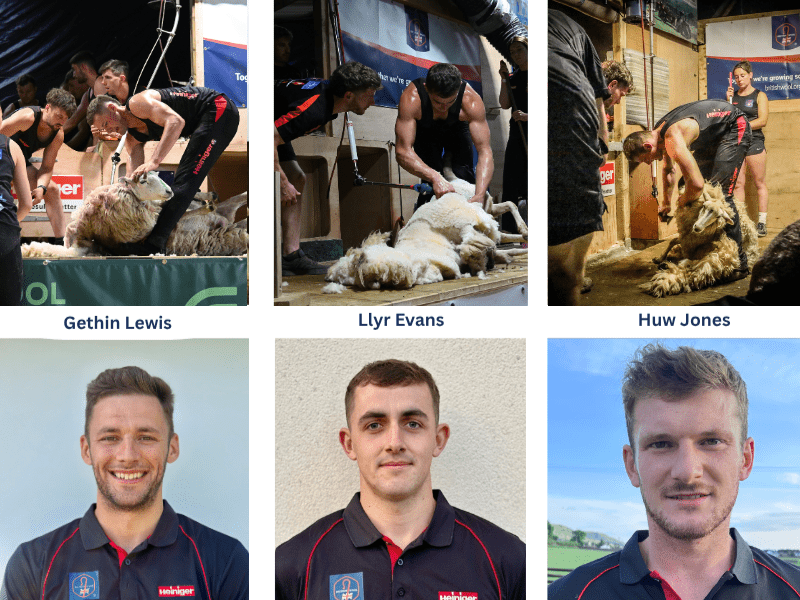
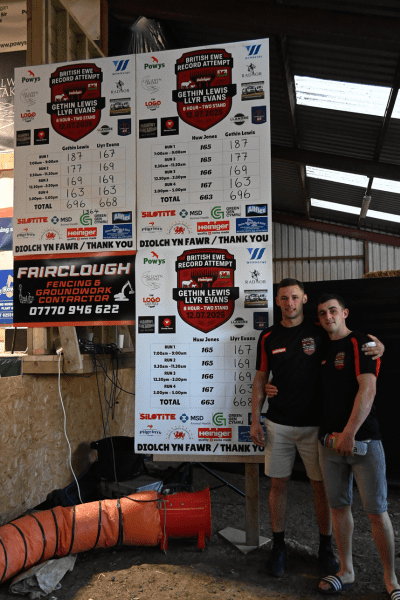
A week later, on the hottest day in Wales this year. Gethin Lewis from Rhayader and Llyr Evans from Aberystwyth were successful in their shearing challenge. Achieving a new 8-Hour Two-stand British Ewe Shearing Record. Gethin was also successful in setting a new British Individual Record.
Shearing started at 7am at Gethin’s family farm in Cwmdauddwr, Rhayader, and after four shearing runs, the last ewe was shorn at 5pm, with a combined total of 1,364 ewes shorn in 8 hours. The existing record was 1,075 ewes held by Martin Howlett and Jonny Roberts since 2019.
Both shearers were also up for the 8-Hour Solo Ewe British Record of 663 ewes held by Huw Jones from the previous week. Llyr shore 668 and Gethin became the new record holder, shearing 696 ewes.
Catching up with both shearers at the end of their successful attempt, Gethin said:
“I’m delighted that our attempt was successful. It’s been a 12-month journey preparing for today, but all the hard work has been worth it.”
Llyr agreed and said:
“All roads led to today, and I’m proud of what we have both achieved – it feels great to be a British Shearing Record Holder.”
Speaking about the hot weather, Llyr added:
“ The extreme heat made the challenge more difficult and at times during the day it was extremely difficult, and we both needed to dig deep to get through to the end.”
Both Gethin and Llyr wanted to pay tribute to all those who had supported their attempt, speaking on behalf of both, Gethin said:
“This record would not have been possible without the help and support of both our families. Thank you, it means so much to us both that we have achieved what we have here today. We’d also like to pay tribute to the support and commitment of so many people, too many to name individually. From the farmers supplying the sheep, pen men that were here with us all day, the wool wrappers, and all our family and friends – a huge thank you.”
The Welsh Air Ambulance and Brain Tumour Research were the nominated charities.
More information is available at
https://www.justgiving.com/crowdfunding/gethllyrbritishrecordattempt
Congratulations from British Wool
Gareth Jones, Head of Member Engagement said:
“On behalf of British Wool, we congratulate Huw, Gethin, and Llyr on their incredible achievements. Setting a Shearing Record requires not only personal dedication and skill, but we also appreciate the hard work that goes on behind the scenes, and therefore we offer congratulations to everyone who has helped and supported Huw, Gethin, and Llyr with their Shearing Records.”
A special mention to Alun Lloyd Jones who shorn 725 ewes in 9 hours on 4th July, raising funds for Eif’s Ewing Sarcoma Research Fund.
Two Welsh Shearers team up to achieve a new British Shearing Record
Record-Breaking Day in Mid Wales
On the hottest day in Wales this year. Gethin Lewis from Rhayader and Llyr Evans from Aberystwyth were successful on Saturday in their shearing record. Achieving a new 8-Hour Two-stand British Ewe Shearing Record. Gethin was also successful in setting a new British Individual Record.
Shearing started at 7 am at Gethin’s family farm in Cwmdauddwr, Rhayader. After four shearing runs, the last ewe was shorn at 5 pm. With a combined total of 1,364 ewes shorn in 8 hours. The existing record was 1,075 ewes held by Martin Howlett and Jonny Roberts since 2019.
Both shearers were also up for the 8-Hour Solo British Record of 663 ewes held by Huw Jones from the previous week. Llyr shore 668 and Gethin became the new record holder, shearing 696 ewes.
Shearers Reflect on Their Achievement
Catching up with both shearers at the end of their successful attempt, Gethin said: “I’m delighted that our attempt was successful. It’s been a 12-month journey preparing for today, but all the hard work has been worth it.”
Llyr agreed and said: “All roads led to today, and I’m proud of what we have both achieved – it feels great to be a British Shearing Record Holder.”
Speaking about the hot weather, Llyr added: “ The extreme heat made the challenge more difficult. At times during the day it was extremely difficult and we both needed to dig deep to get through to the end.”
Both Gethin and Llyr wanted to pay tribute to all those who had supported their attempt. Speaking on behalf of both, Gethin said: “This record would not have been possible without the help and support of both our families. Thank you, it means so much to us both that we have achieved what we have here today. We’d also like to pay tribute to the support and commitment of so many people, too many to name individually. From the farmers supplying the sheep, pen men that were here with us all day, the wool wrappers, and all our family and friends – a huge thank you.”
Congratulations from British Wool and Charity Support
Gareth Jones, Head of Member Engagement at British Wool, said: “On behalf of British Wool, we extend our heartfelt congratulations to Gethin and Llyr on their incredible achievement. Setting a Shearing Record requires not only personal dedication and skill but also the collective effort of a strong support team. We commend everyone involved in making this success possible.”
British Wool recognises the importance of promoting excellence in the shearing industry and celebrates milestones that reflect the hard work and passion of those within the farming and wool community.
The Welsh Air Ambulance and Brain Tumour Research were the nominated charities, with fundraising taking place during the day.
More information is available at
https://www.justgiving.com/crowdfunding/gethllyrbritishrecordattempt
Welsh shearers attempts British Shearing Record
All eyes were on Machynlleth in Mid Wales over the weekend as Huw Jones, a 27-year-old Welsh shearer, set a new 8-Hour Solo Ewe British Shearing Record, shearing 663 ewes and beating the previous record of 539.
Achieving a new 8-Hour Solo Ewe British Record shearing 663 ewes. This beat the previous record held by Martin Howlett of 539.
The record took place at Hendreseifion, the location of another record achieved by local shearer Meirion Evans 12 months ago.
After months of preparation, the record attempt started at 7 am and concluded at 5 pm with hundreds of well-wishers in attendance to support and congratulate Huw.
At the end of the record, a tired but delighted Huw said:
“Today has been an amazing day, thank you to everyone who has helped me achieve what I have here today. There are too many people to name individually, but you all know who you are. Records are not just about the shearer attempting but are very much a team effort. I could not have achieved this today without so many people. I thank you so much for the support you have given me.”
Huw continued by mentioning the support of his family:
“My family has always supported me to get me where I am today, no matter what I wanted to do, my family has always been there, and I thank them, it means so much. I’d like to mention my grandad, who is sadly no longer with us, but hopefully looking down on me today, he was the one who started me shearing.”
Huw concluded by thanking everyone who had attended on the day to support him, and the charities supported by the record, the Welsh Air Ambulance & Aberdyfi Search and Rescue.
Gareth Jones, Head of Member Engagement said:
“On behalf of British Wool we offer huge congratulations to Huw on his successful record attempt. This was a display of high-quality shearing, and Huw should be very proud of his achievements.”
“We appreciate the hard work that goes on behind the scenes in holding a record and therefore offer congratulations to everyone who has helped and supported Huw in successfully setting a new British Shearing Record.”