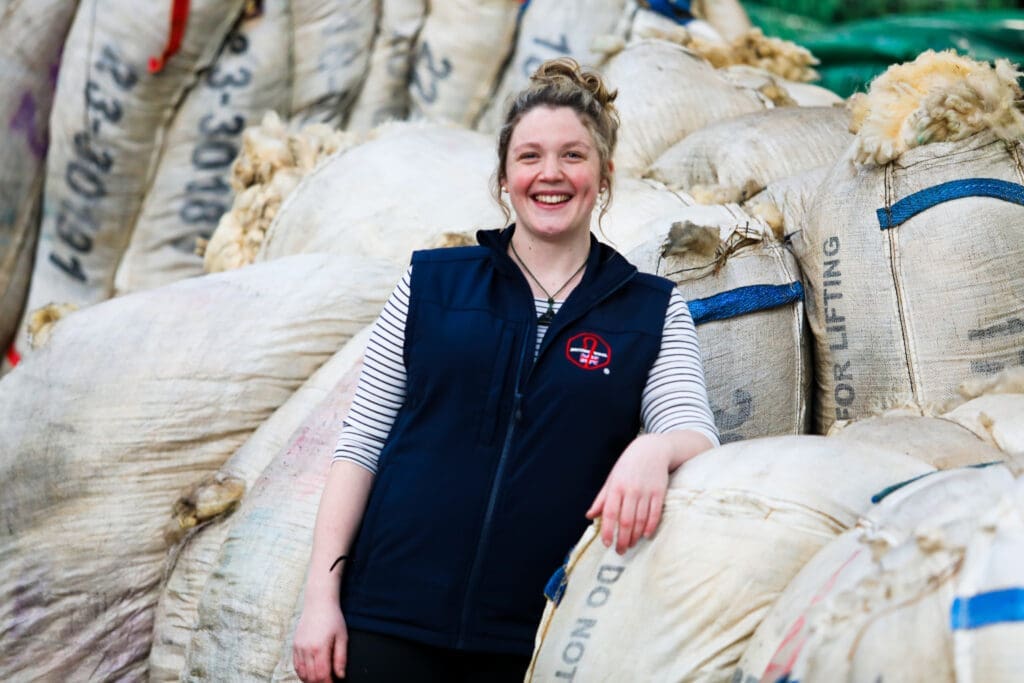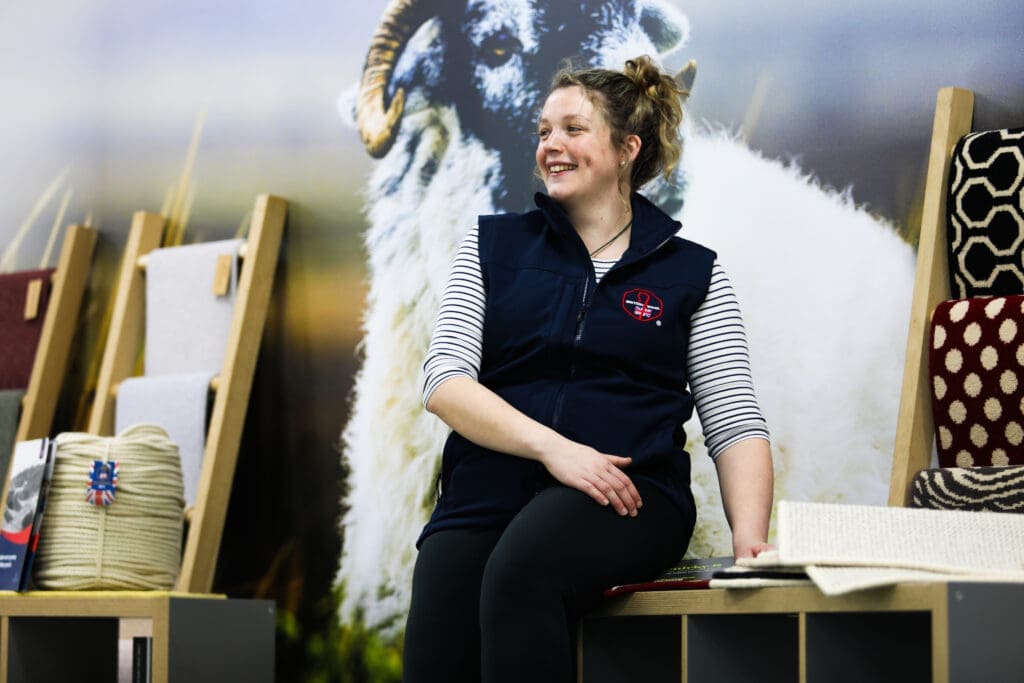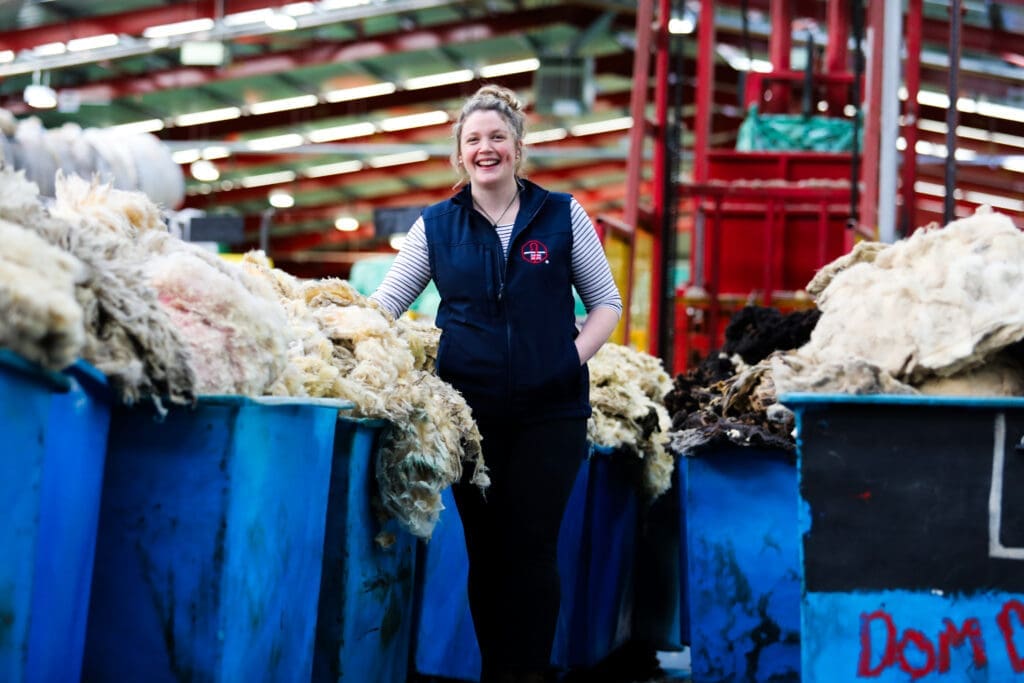
With a lifetime rooted in sheep farming and wool handling, Rosie brings a practical, hands-on perspective as our board member for Scottish Northern. Raised in Perthshire and shaped by years, working in wool sheds across the UK and overseas. Her journey through shearing, shepherding and farming has given her a deep understanding of the fibre and the people behind it.
Now farming in Sutherland alongside her family, and representing members across the Scottish North. She is a strong advocate for British wool, championing its value, versatility and the farmers who produce it. In this Q&A, Rosie shares her background, insights into the industry, and what drives her role on our board.
Can you tell us about your background in farming and the wool industry?
I was raised in Perthshire, Scotland and grew up around sheep. My father is from New Zealand and worked as a sheep shearer. The wool industry was always part of my world. I first got properly involved by going to work alongside him and it was on a trip to Norway that I really caught the bug. From there I began travelling to New Zealand to work in the wool sheds as a Rousie, building skills season by season. I followed a fairly nomadic pattern following the shearing season from Scotland to Norway to New Zealand and Australia. While also fitting in contract lambing work back home.
When Covid hit, it felt like the right moment to put down roots, and I took the opportunity to get myself a team of working dogs and go shepherding. I worked as a contract shepherd in Northumberland managing a breeding flock of Romney ewes. In 2023, I moved to Sutherland in the north of Scotland, where my partner Henry had a Croft running Belted Galloway cows and Cheviot ewes. Since then, we have had a family and built the flock up and now run both a hill flock and a Croft based flock of Cheviot ewes.
How did you first become involved with British Wool, and what led to you becoming a board member?
I’ve always been closely connected to British Wool through my wool handling career. The farmers I worked for consistently sent their wool through the system. It was very much part of the industry I grew up and worked in. While shepherding in Northumberland I took the opportunity to work seasonally as a field officer. This fitted well alongside my work and gave me a deeper understanding of the organisation. In the winter of 2022, I also worked in the Galashiels depot on the floor. Broadening my experience further by seeing the processing and logistics side of the operation.
After moving to Sutherland, the board member role for the North became available. I jumped at the chance. Through my achievements as a wool handler, I was already an ambassador and becoming more involved. This felt like a natural progression. Standing for the board gave me the opportunity not only to represent the wool industry but also to be a strong voice for farmer which is something I care deeply about.
What does your role as board member involve on a day-to-day basis?
My role involves being an approachable point of contact for farmer members. I spend a lot of time listening to their concerns, answering questions and offering practical advice. I also keep up to date with developments within the company including internal updates, wool auctions and how the market is performing. Overall, it is about acting as a link between British Wool and farmers, sharing information both ways, representing members views and helping ensure they feel supported and confident about the wool they produce.
From your perspective, what makes British wool (fibre) special and worth championing?
British wool is a natural, renewable fibre that’s produced as part of everyday sheep farming. It has performance qualities that synthetic fibres simply can’t match. It’s durable, breathable and incredibly versatile with uses ranging from clothing to carpets and insulation. What really matters to me is the people behind it. British wool represents our farmers, landscapes and generations of stockmanship. It’s a fibre with a strong story behind it and that’s exactly why it’s worth championing.
What do you see as the biggest challenges currently facing our industry?
One of the biggest challenges is that wool is consistently undervalued, despite the time, cost and expertise required from farmers to produce it. At the same time the industry is competing with cheap synthetic fibres. Even though wool offers clear environmental and performance benefits. Together these pressures make it more important than ever that the value of wool is properly recognised and supported from farm level through to the end consumer.
Are there particular opportunities you’re excited about for the future of British wool (fibre)?
I am really excited about the growing focus on natural, sustainable fibres and the move away from plastics. The fibre has a huge potential in areas like insulation, interiors and durable textiles where performance and sustainability really matter. There is also a real opportunity to better tell the story behind the fibre. Connecting consumers with the farmers that sit behind British wool.
We held our depot open days last year– why do you feel these events are important for both farmers and the public?
Depot open days are important because they create transparency and understanding. It is a chance go see first hand what happens to their wool after it leaves the farm. How the depot team grades, packs and prepares it and gives farmers the opportunity to ask questions directly.
How can farmers make the most of British Wool’s services and support?
Farmers can get the most of out of us by engaging with their local representatives, asking questions and making use of the advice available. Staying informed and getting involved helps ensure farmers are supported and we hear their voices
What’s the most rewarding part of being a board member?
The most rewarding part is being able to represent farmers and give them a voice within the company. Knowing I can help feed practical experience from the farm into decision making and support producers in getting the best possible outcome for their wool, makes the role genuinely worthwhile.
Do you have a favourite memory or proudest moment during your time at British Wool?
My proudest moment when farmers elected me to be on the board. It meant a great deal to know that farmers trusted me to represent them. I am also proud to bring a younger voice with strong, hands-on experience. Having that fresh perspective alongside practical knowledge is valuable and it is a privilege to represent our wool producers.