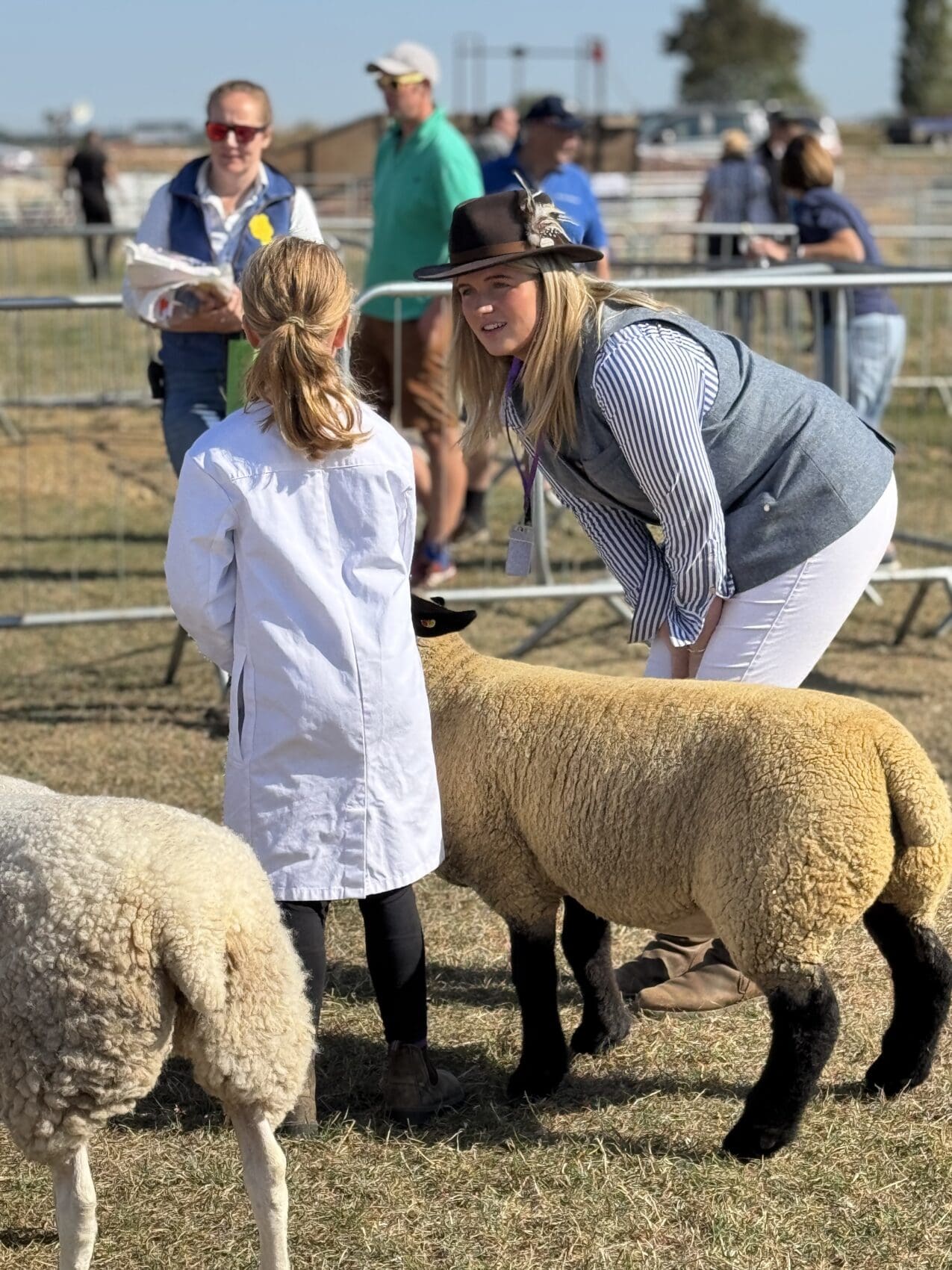
At just 19 years old, Gracie is already making her mark on the farming industry. A self-employed shepherdess from South Yorkshire, she runs GA Livestock Services, works as a livestock fieldswoman and trainee auctioneer, delivers educational talks about sheep and wool, and even performs as the “Singing Shearer.”
As a first-generation farmer from a family of farriers, Gracie’s passion for sheep farming began with a British Wool shearing course at the age of 15. Today, she combines practical livestock expertise with a mission to promote the value of British wool, educate consumers, and inspire the next generation of farmers.
We spoke to Gracie about her journey into farming, her love of sheep and wool, and her hopes for the future of the industry.
Tell us a little about yourself and your farm.
I am a 19-year-old self-employed shepherdess from South Yorkshire. My work is incredibly varied and includes my role as a livestock fieldswoman and trainee auctioneer at York Auction Centre, shearing sheep through my business GA Livestock Services, delivering talks across Yorkshire about life as a young shepherdess and the importance of wool, and performing at events as the “Singing Shearer.”
I started GA Livestock Services four years ago after leaving school to provide practical livestock support to smallholders. Since then, the business has expanded to offer sheep shearing, livestock scanning, hoof trimming, shepherding, injecting, worming, electric fencing, faecal egg count testing and more.
As a first-generation farmer from a family of farriers, I keep a small flock of Texel-cross sheep that I hand-reared from pet lambs, alongside pedigree coloured Ryelands. Our smallholding was built from scratch by my dad, and it’s home to a wide variety of animals. Every day is a learning day, and that’s exactly how I like it.
What does a typical day look like for you?
Every day starts and ends with feeding the animals. In between, there’s mucking out, yard maintenance and general livestock care. During the summer, I’m often preparing sheep for shows.
No two weeks are ever the same in my business, but spring and summer are particularly busy. My speciality is shearing for smallholders, which allows me to build strong relationships with both clients and their sheep. I believe you learn the most about a sheep when it’s on the shearing board, as it’s the perfect opportunity to assess body condition and identify any health concerns.
What do you enjoy most about farming?
I love the values and traditions that come with agriculture. My work is incredibly rewarding, and I have a real passion for sheep and cattle. No matter what’s happening elsewhere in life, there’s something grounding about returning to a field full of sheep.
I’m motivated by the desire to be respected as a knowledgeable, compassionate stockwoman. I also want to improve public understanding of farming, the British food chain, and the importance of wool. Educating children about where their food and fibre come from is particularly important to me.
How did you first become involved in sheep farming and the wool industry?
My journey began about five years ago when I attended my first British Wool shearing course at the age of 15. It was challenging, but I thoroughly enjoyed it and returned the following year to build on my skills.
That course was the starting point for everything that followed. Over the last five seasons, I’ve continued developing my skills while growing my own business alongside them.
What role does wool play in your business?
Wool plays a huge role in my work. After completing a wool handling course, I was able to offer wool wrapping as an additional service through my business.
I’m passionate about helping farmers and the public recognise wool’s value. Through talks to Women’s Institutes and community groups, I bring fleeces from sheep I’ve sheared and help people understand different fibre types, textures and uses, from clothing and carpets to insulation.
Wool handling has become a real passion of mine, and this year I’m competing in my first wool handling class at the Great Yorkshire Show.
What are you most proud of when it comes to your flock and wool production?
I’m most proud of knowing that every fleece comes from sheep that are well cared for. Maintaining a healthy, resilient flock takes dedication, and seeing wool quality improve year after year is incredibly rewarding.
Why is the wool industry important to farmers and rural communities?
Wool is an important natural resource that deserves to be valued and used rather than discarded. It is a renewable, biodegradable fibre that is becoming increasingly relevant as consumers seek more sustainable products.
The wool industry supports sheep farming, helps maintain our countryside, and contributes to the identity and resilience of rural communities. Farmers can also find innovative ways to use wool, whether for bedding, crop production or other practical applications.
What makes British wool such a valuable and sustainable product?
British wool is a natural, renewable fibre produced by sheep that are already an essential part of our farming systems. Sheep grow a new fleece every year, making wool a continually renewable resource.
It is biodegradable, durable, breathable and versatile, with uses ranging from clothing and furnishings to insulation and innovative new products. Produced to high welfare and environmental standards, British wool offers a sustainable alternative to many synthetic materials.
What would you like consumers to know about the journey from sheep to wool products?
Many people don’t realise how much work goes into producing a wool product. Before wool becomes a jumper or pair of socks, it must go through shearing, scouring, grading, spinning and manufacturing.
Fast fashion has contributed to the decline of the wool market by creating demand for cheap, quickly produced clothing. Wool is different—it is a durable, natural fibre designed to last for years.
I’d love consumers to understand the craftsmanship, skill and care behind every wool product and to choose wool because they appreciate its quality, sustainability and versatility.
What made you decide to attend shearing and wool handling course?
I’ve always enjoyed learning new skills and finding ways to improve both myself and my business. These courses have helped me develop knowledge, confidence and practical skills while allowing me to expand the services I offer.
They also gave me the opportunity to learn from some of the best instructors in the industry, including Jason Rangeley and Kiri Edge, whose expertise and hands-on teaching were invaluable.
Why are these courses important?
They provide an accessible starting point for anyone interested in learning. Even with no prior experience, people can gain an enormous amount of knowledge and confidence in just a couple of days.
The courses are welcoming to all experience levels, which is what makes them so effective.
What opportunities do you see for the future of the sheep and wool industry?
I see significant opportunities as demand continues to grow for sustainable, natural and locally sourced products. Consumers are becoming more aware of the environmental impact of synthetic materials, creating new opportunities for wool.
There is also huge potential for innovation in wool-based products, including insulation, packaging and other environmentally friendly applications. By promoting wool’s versatility and environmental benefits, the industry can strengthen its future while supporting rural communities and future generations of farmers.
What advice would you give to someone considering a career in farming or wool production?
Take every opportunity available, ask questions, gain as much experience as possible and never stop learning.
Farming is incredibly rewarding, but it requires dedication, resilience and adaptability. Practical experience, strong livestock knowledge and sound business skills are all essential. Most importantly, if you have a genuine passion for agriculture and animal care, you’ll never work a day in your life.
What does being part of the British wool industry mean to you?
Being part of British wool means being part of British heritage. It connects daily farm work to a much bigger tradition and purpose.
It’s about contributing to a sector with deep roots in British agriculture that continues to support rural communities and the wider economy while preserving an important part of our national identity.