Can you share a bit about your background and how you’re involved in the wool industry?
My involvement in the wool and sheep industry goes back to my childhood. I was introduced to sheep farming through my grandad which led me to building up my own flock and becoming deeply interested in the wider sheep sector. Wool has always been part of that journey. As a breeder I have always tried to promote the value of British wool and the important role it plays in the identity and sustainability of our native breeds.
Alongside my own flock I work for the National Sheep Association as the North of England Manager. This gives me the opportunity to work closely with a wide range of breed societies and represent the interests of sheep farmers across the region. Through that role I regularly work with British Wool and support the messages we both share around the value of UK wool, the importance of quality and the need to champion our national flock. That combination of practical experience and industry involvement has shaped the way I look at wool production both at home and internationally.
What inspired your trip to the USA, and what were your main goals for going?
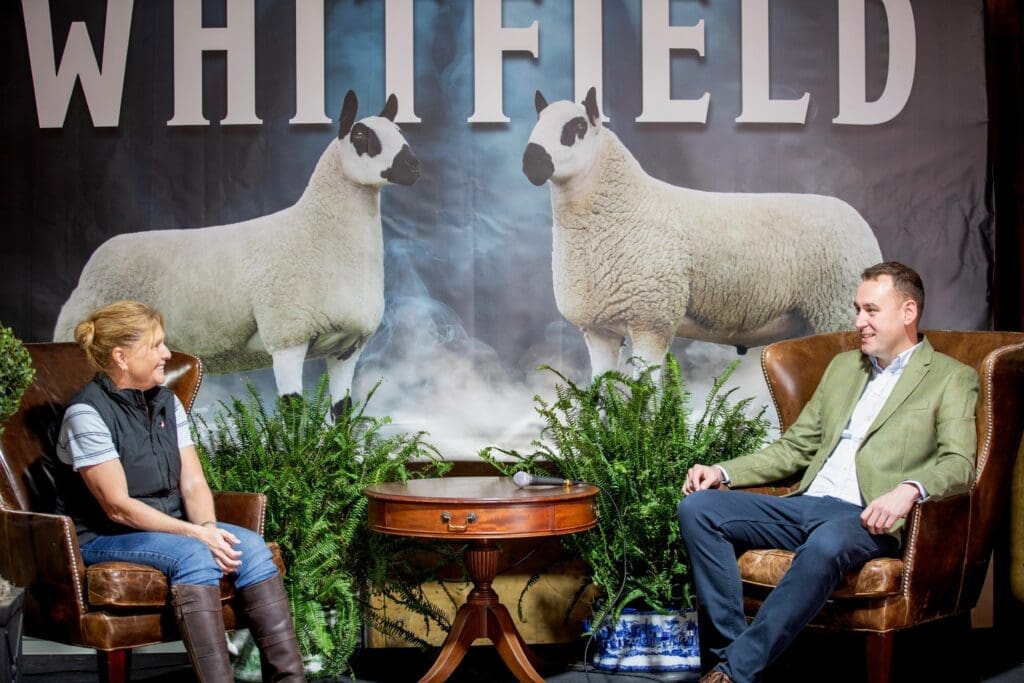
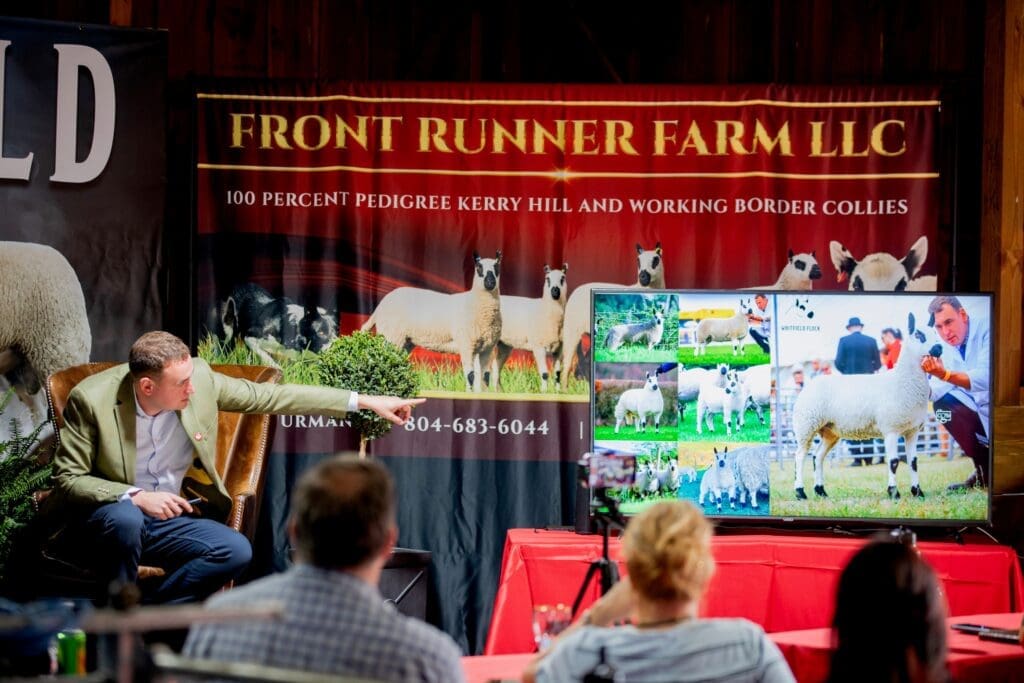
I was invited by the American Kerry Hill Sheep Society to speak at their members workshop and to attend their first show at NAILE. Over the past few years, I have exported most of the embryos and semen that have entered the country since the lift of the ban which has put me in a unique position to support their breeders as they establish the breed. The Society asked me to share my knowledge not just of the Kerry Hill but of the UK sheep industry as a whole and how a breed can be developed responsibly from the outset.
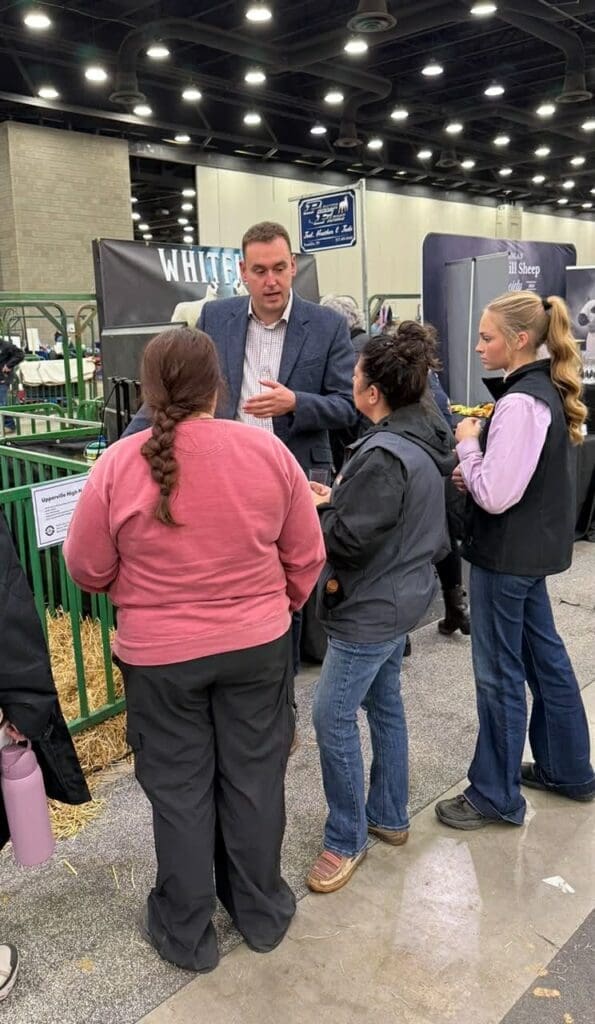
I was also asked to judge the first Kerry Hill show at the North American International Livestock Exposition. I declined judging as I felt my time would be better spent supporting the breeders on the ground, helping them prepare their sheep, trimming and giving them reassurance as they entered their first major show. My main goal was to help the Society make a strong and united first impression, pass on what I have learnt through my work in the UK, and give the breeders confidence as they take the breed forward.
How would you describe your experience while you were in the USA?
The experience was fantastic from start to finish. The enthusiasm and passion from the American breeders was incredible to see. Spending time with members, visiting farms and getting to know their systems was a real privilege and it showed just how committed they are to shaping the breed in the right way.
It was also fascinating to see the wider sheep industry in the USA and how different many of their breeds look compared to the UK despite sharing the same breed names. Their show ring style is very distinct. Sheep are generally shown much taller with a very upright head carriage and a strong emphasis on stature. Many breeds are shown fully shorn apart from the legs with very little wool on display. Even where sheep are shown in wool the fleece is heavily trimmed rather than presented in what we would call a full fleece here.
From a wool point of view the interest in the Kerry Hill fleece was one of the first things breeders commented on which was encouraging to hear.
At the start of my trip, I met William Surman, the agriculture, food and drink attaché at the British Embassy. Speaking with him was extremely insightful. The USA has around five million sheep compared with our thirty-one million yet its population is roughly forty times larger. It was interesting to hear that domestic consumption in the USA is driven largely by ethnic communities which is very similar to the situation here. William was instrumental in reopening the border to British lamb and ovine germplasm in 2023 after thirty-five years of restrictions. Interestingly the majority of trade so far has been in genetics rather than meat which demonstrates how highly valued UK breeds are overseas.
What key takeaways or positives did you bring back from the trip?
Whenever I travel abroad, I find it interesting to look at how agriculture operates in different countries. I would not say there is anything I will be changing within my own flock or system but that does not mean what they do in the USA is wrong. Their breeding goals are simply different and reflect what their market demands.
The biggest positive for me was seeing how much interest there is in UK breeds. It highlights the strength of our national flock, and the trust other countries place in British genetics. With the relaxation of import rules for germplasm the United States now has a real opportunity to once again draw on high quality UK bloodlines. The process is still lengthy, expensive and demanding but it is encouraging to see British breeds being imported again and making an impact.
Another key takeaway was the unity within the American Kerry Hill Society. They have worked incredibly hard to start the breed on the right footing and the passion from members was clear to see. Their first showing at NAILE was a huge success and seeing the ring packed shoulder to shoulder proved that they made an impression on the wider sheep industry.
How do you see your experience influencing your work in the wool industry moving forward?
My trip reinforced the importance of protecting breed identity and the value of maintaining strong wool characteristics even when breeding sheep for different markets. Seeing how other countries present and select sheep makes you reflect on the strengths we have here in the UK especially around fleece quality, traditional breed type and the role British wool plays in defining our breeds.
It also reminded me how highly British genetics and British wool are regarded overseas. That is something we should be proud of and continue to promote. Although I have only covered the trip briefly in this report, I hope it has given you an insight into my experience. I would strongly encourage everyone to get off the farm and explore what is happening beyond their own gate. Whether that is visiting other farms, attending events or going to shows within the UK it is always valuable to see what others are doing and to think about what you might bring back home.
The trip has strengthened my belief that the UK continues to play a major role on the global stage and sheep breeding and wool remains a key part of our national story. It has given me fresh energy to continue championing our industry both at home and on the international stage.