Beyond the Show Ring: A New Story at Crufts

April at the Depot: Maintenance Mode
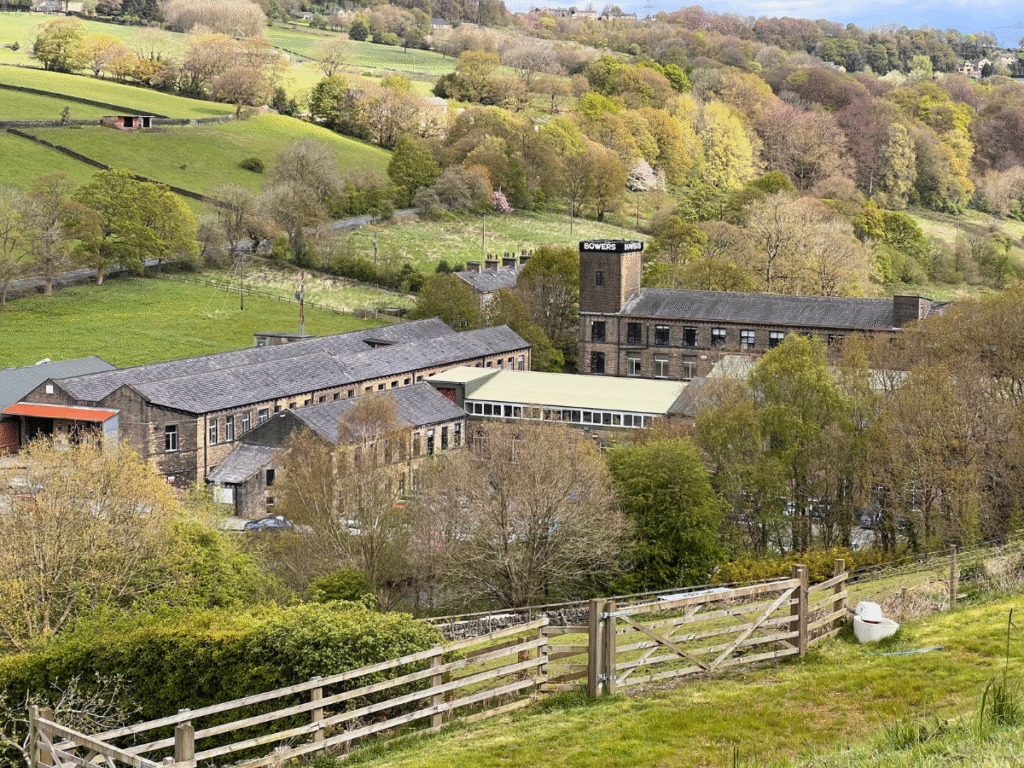
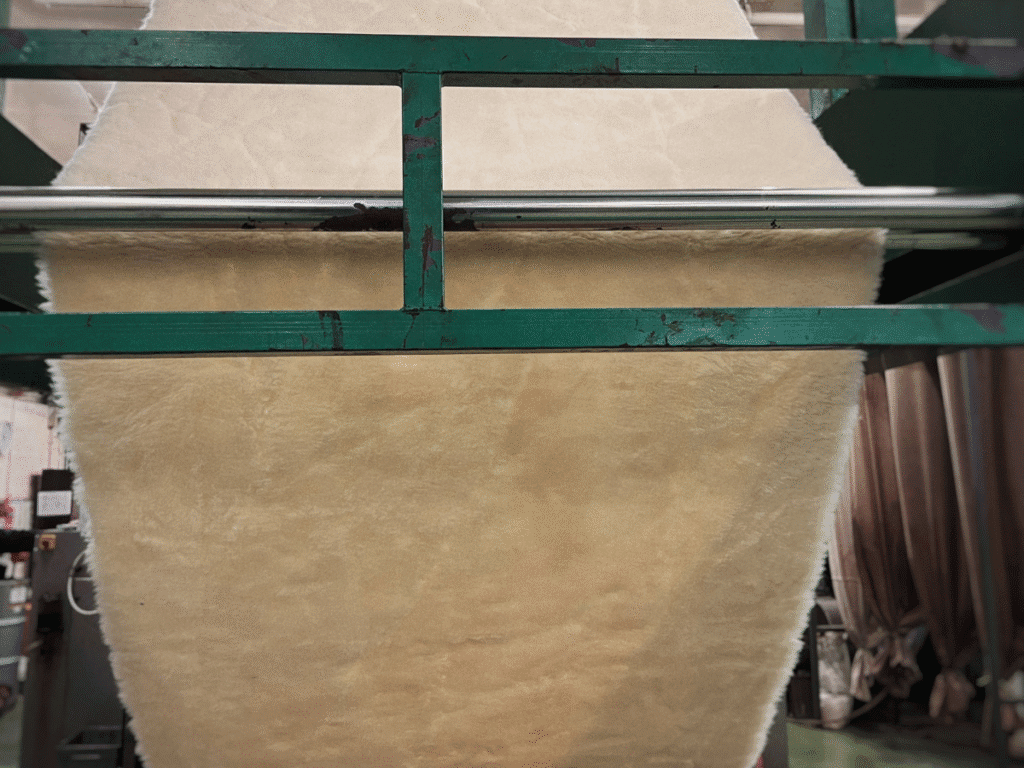
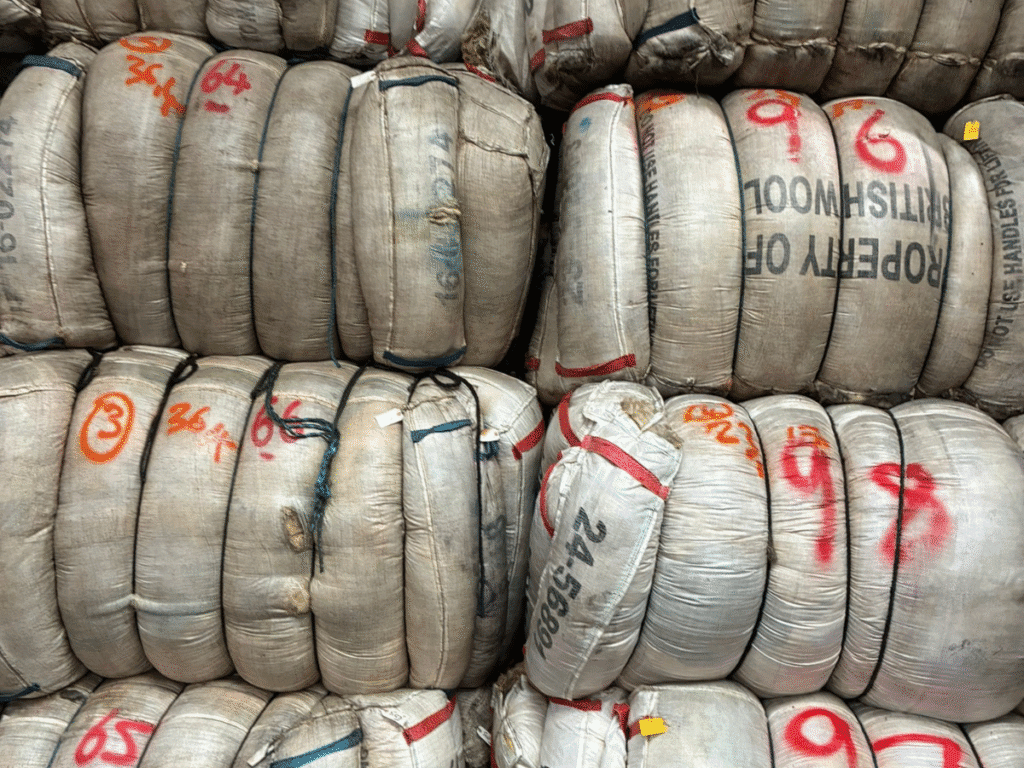
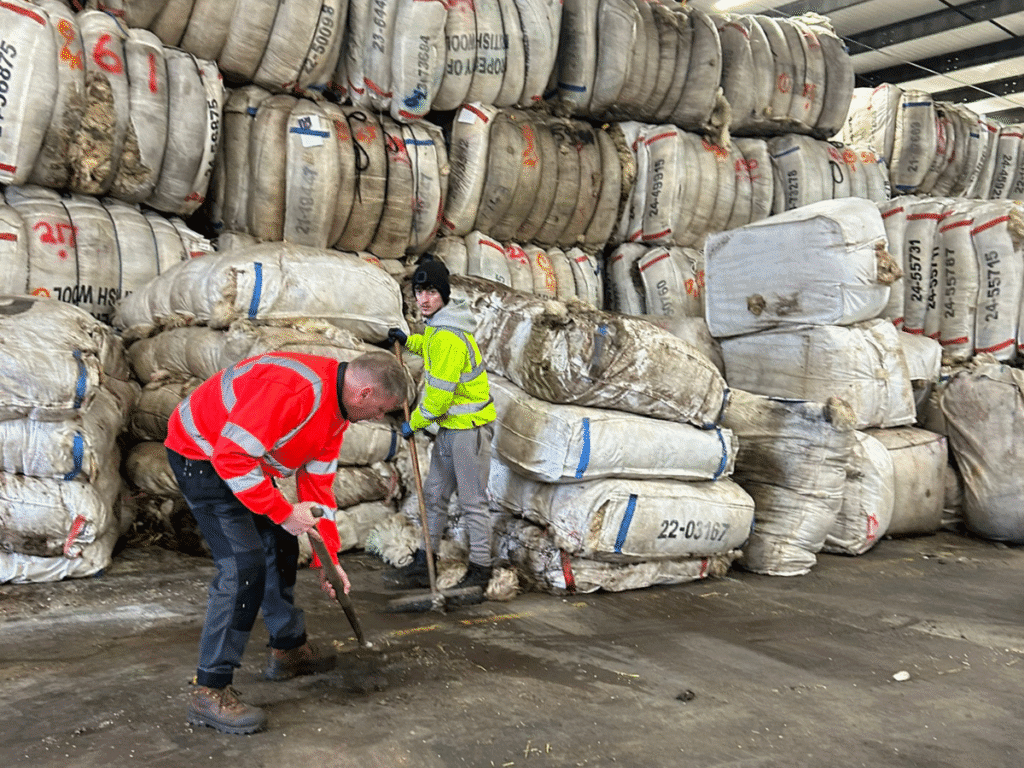
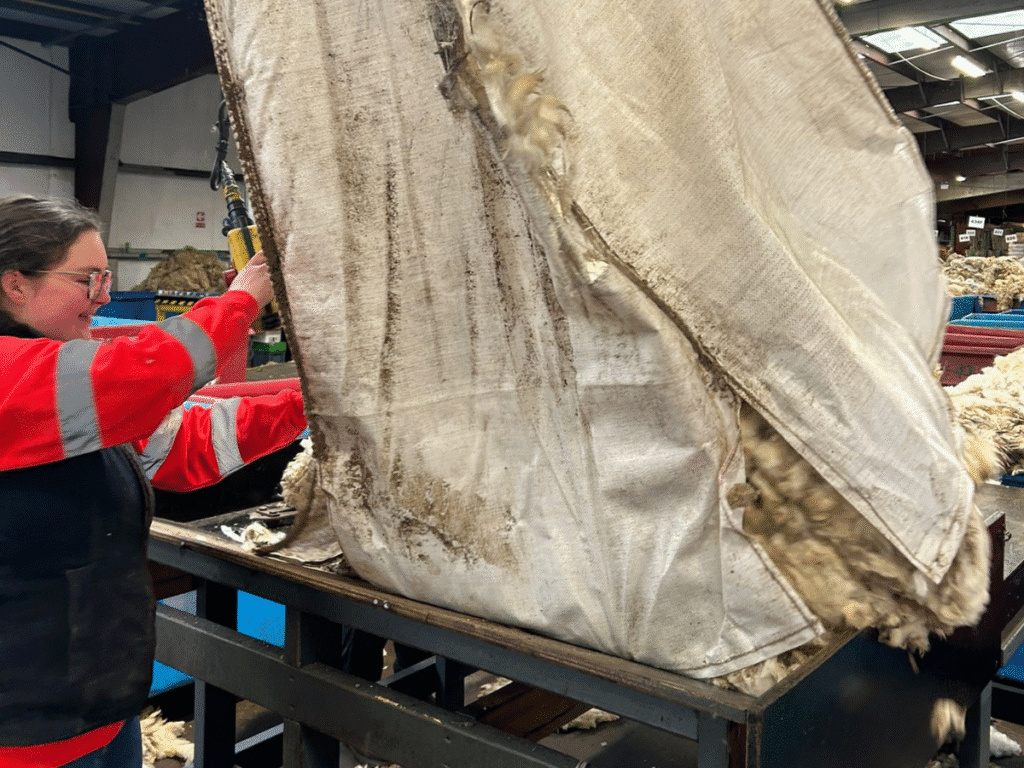
We caught up with Michael at our Borders depot to find out what actually happens when the wool depot shifts into “maintenance mode” each April.
Spoiler: it’s a busy month!
Getting Bags Ready for Members
Michael explains, “One of our first priorities in April is making sure empty bags are ready for our members. We prepare sheets with strings and labels, then send them out across all regions.”
With about eight weeks to cover the whole network, he says, “It takes careful planning to make sure everyone gets what they need on time.”
Servicing Machinery and Safety Checks
Maintenance mode isn’t just about bags. Michael shows us around the depot: “We service wool presses, forklifts, lifting gear, and calibrate the scales. Every bolt, seal, and weld is checked. It might sound boring, but it’s essential – we can’t have anything breaking down when the season starts.”
All lifting equipment also gets independently inspected every 6–12 months, and operators do daily pre-use checks to catch any issues early. Michael adds, “It keeps everyone safe, and it keeps things running smoothly.”
Can You Deliver Wool During Maintenance?
We asked Michael if farmers can still drop off wool: “Absolutely! Even though the cut-off date is 2nd April, all depots can still accept deliveries during maintenance. Any wool we receive is quarantined and held until the new season opens on 1st May. Then we process it fully.”
So if you’re worried about late deliveries, don’t be – your local depot has you covered.
What Happens When We “Pack Up”?
Michael explains packing up at the end of the grading season: “We consolidate wool into standard bales by grade. For small quantities or incomplete grades, we carefully combine them into suitable batches. Quality and consistency are really important, so buyers and manufacturers get exactly what they expect.”
Why Pre-Season Maintenance Matters
“Keeping our machinery in top condition is critical,” Michael says. “We service everything, do daily checks, and inspect lifting equipment. It prevents hazards and keeps the depot running efficiently. Safety is just as important as speed.”
Closing Sale Lots
Before the new season starts, Michael tells us they close all sale lots. Why? “It gives us a clear stock position, helps value any remaining wool accurately, and gives an idea of pricing trends for the season ahead.”
Still Have Wool to Drop Off? Don’t Worry!
Michael reassures, “April is busy, but if you still have wool to deliver, there’s no need to stress. Drop it off during maintenance, and we’ll have it ready for full processing once the season starts.”
Check our Depot Network to find your nearest depot or collection centre!
Breaking Into Farming Without a Background
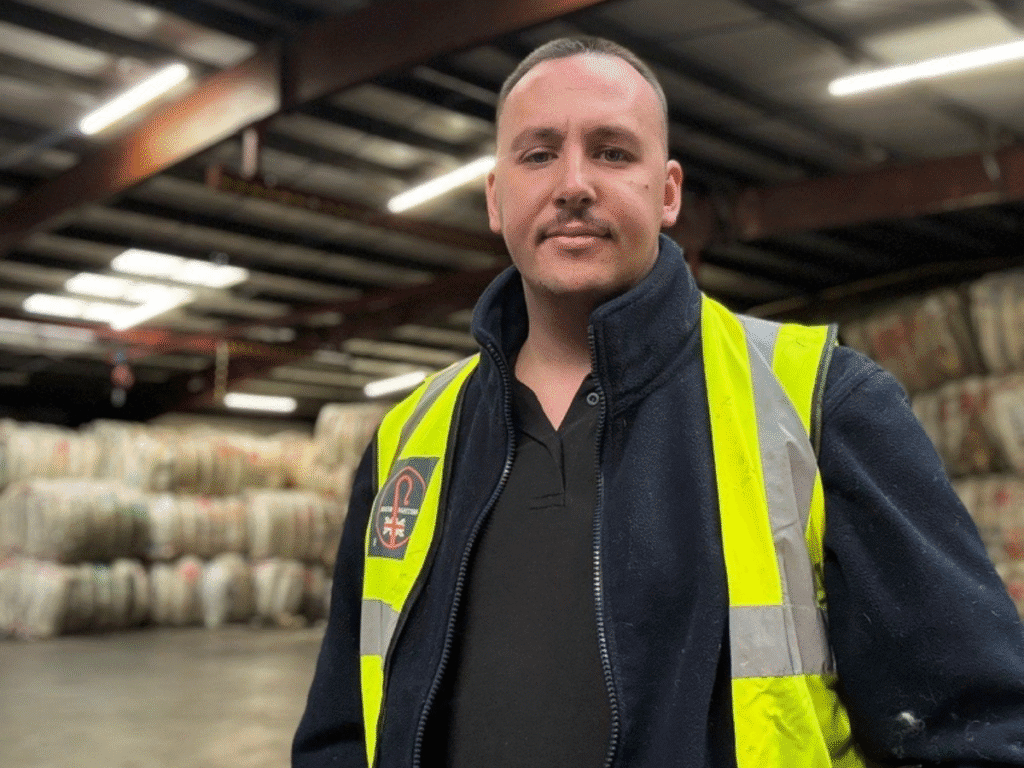
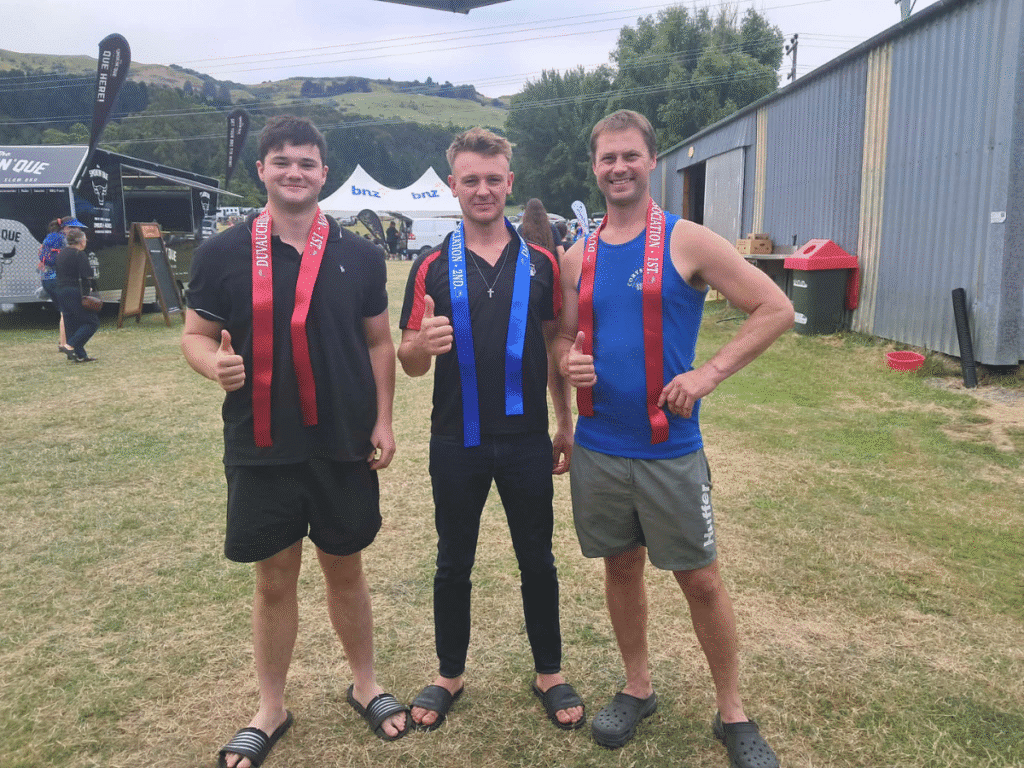
At just 25 years old, Ben Rowson Jones is building a reputation in an industry he didn’t grow up in – yet one he now travels the world to be part of. His journey into agriculture wasn’t inherited; it was built from the ground up through curiosity, determination, and a willingness to learn the hard way.
Growing up in north Derbyshire, Ben had no family ties to farming. Shearing sheep wasn’t even on his radar – until a weekend job on a local dairy farm at 14 changed everything. That first taste of farm life opened a door, and Ben stepped straight through it.
Learning the Hard Way: Early Shearing Challenges
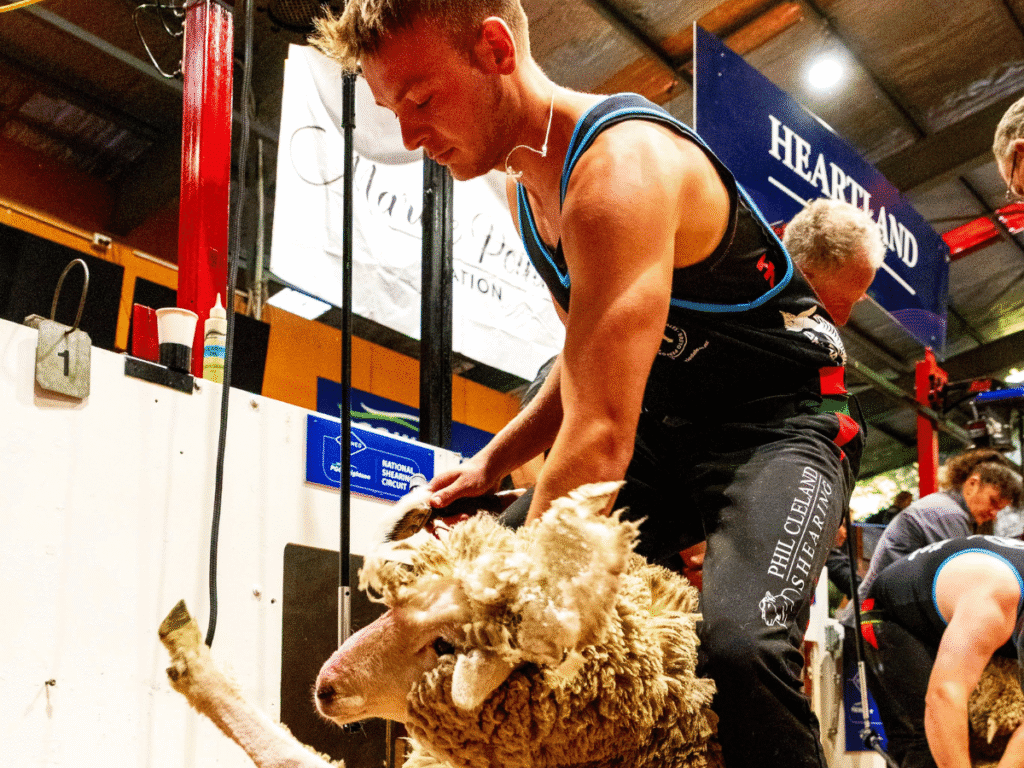
At 18, Ben bought three Ryeland ewes of his own and decided to try shearing. With no formal training, he used blade shears – and quickly realised how difficult it really was.
“The result? A nightmare,” he admits.
After several frustrating seasons using both blade and battery shears, Ben recognised that if he wanted to improve, he needed proper training. That decision led him to British Wool shearing courses.
A Turning Point: Discovering Professional Training
Signing up for his first course in January 2024 marked a major shift in Ben’s journey. The experience was physically demanding, but also deeply rewarding.
As Ben puts it, “the best things in life are never easy.”
By the end of the course, he had earned his blue seal – an important milestone – and, more importantly, the confidence that he was on the right path.
Building Skills and Confidence
That first course provided more than just basic knowledge. Ben developed a strong foundation in shearing patterns, equipment handling, and sheep control. It also sparked a deeper passion for the craft.
“I’d definitely caught the bug,” he says.
Learning from Experienced Instructors
A key part of Ben’s early progress came from the instructors. Their ability to simplify complex techniques – such as footwork, positioning, and rhythm – made learning accessible without being overwhelming.
Looking back, Ben recognises that their guidance was built on years of hands-on experience in the industry.
Like any physically demanding skill, shearing came with challenges. But over time, Ben found that small technical adjustments made a significant difference.
Refining his footwork and positioning improved his flow around the sheep, reducing strain and increasing efficiency. Conversations with instructors also introduced more advanced insights, from selecting the right combs to fine-tuning equipment setups.
From Local Beginner to Global Shearer
Since that first course, Ben’s progress has accelerated. Now holding a silver seal and working towards gold, he has completed two seasons in New Zealand – widely regarded as one of the world’s shearing heartlands.
He has also travelled extensively across the UK, becoming part of a tight-knit, hardworking global shearing community.
Future Goals: Growing a Shearing Career
Today, Ben is focused on expanding his own shearing run while continuing to work with local contractors. Competitive shearing is another major ambition, with plans to enter as many shows as possible during the 2026 season.
For those new to the industry, Ben highlights competitions as a valuable opportunity for growth. Not only do they help improve skills, but they also provide a supportive and familiar environment.
Many course instructors also serve as judges, and for Ben, seeing familiar faces in competitions helped build confidence and ease nerves.
A Journey Built on Persistence
From struggling through his first shearing attempts to working internationally, Ben Rowson Jones’ story is one of persistence, growth, and seizing opportunity.
It’s a powerful reminder that you don’t need a farming background to succeed in agriculture – just the drive to learn, the resilience to keep going, and the courage to start.
From Farmyard to Chairman
A Lifetime in British Wool
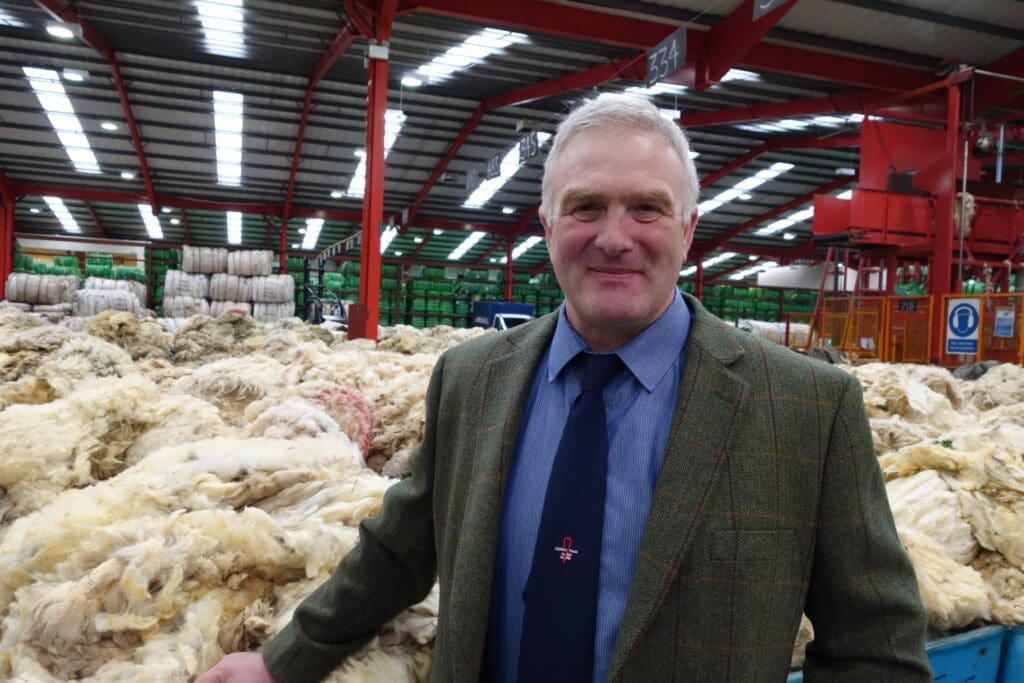
For Chairman Jim Robertson, wool has been part of everyday life for as long as he can remember. Growing up on a family farm, he left school and went straight to work alongside his father and grandfather. At just 20 years old, he secured his own tenancy – beginning a farming career that now spans more than 45 years.
Sheep have always been central to his work, whether breeding flocks or shearing sheep across the region. But Jim’s connection with British Wool started even earlier – as a young boy collecting scraps of wool after shearing and taking them to the local depot.
Today, decades later, he is Chairman of the very organisation that first introduced him to the value of wool.
“Sheep have always been at the heart of what I do – whether that’s breeding or shearing.”
Early Years – First Steps in Wool
As a child, Jim Robertson regularly travelled with his grandfather to British Wool grading depots.
At the time, wool was extremely valuable and nothing went to waste. Even the smallest fibres were collected. His job was to gather the little pieces of wool left behind after shearing – and even pick wool caught on fences and wire.
At the end of the season, he would bring a bag of these scraps – known as “pooks” – to the depot and receive payment.
“Every scrap counted back then. That was my first real connection with British Wool.”
As he grew older, Jim’s father taught him the traditional skill of hand shearing before he progressed to machine shearing. He later completed British Wool shearing courses and began shearing not only his own flock but also carrying out contract shearing for other farms.
His dedication to the craft even took him into competitions. A major highlight was winning the Silver Hand piece at the Royal Highland Show, one of the most respected shearing awards.
At one stage he was even asked if he would consider becoming a shearing instructor.
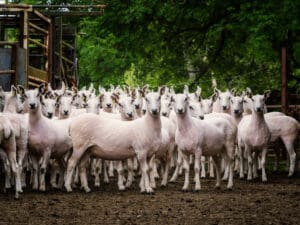
Cheviots on Jim’s Farm
Joining the Board
Jim’s route into British Wool leadership came almost by chance. An advert appeared for a position on the board, and a neighbour encouraged him to apply.
“He said it would be good to have a Cheviot man on the board.” He applied – and was elected.
Nine years later, he remains part of the organisation’s leadership. After four years serving as a director, he stepped into the role of Chairman.
“It’s been an incredible journey, and I’m proud of how far we’ve come. British Wool is in a very strong place today.”
As Chairman, Jim Robertson guides the organisation and ensures strong collaboration between the board and executive team. He describes the role as acting as a bridge between the two, ensuring ideas, decisions and communication flow effectively.
“I don’t think I ever truly switch off,” he says. “The role certainly keeps the mind active.”
He believes the organisation’s strength lies in the people behind it. From directors to depot teams, British Wool brings together individuals committed to championing British wool and supporting farmers.
Championing British Wool
British wool stands apart from fibres produced elsewhere in the world. Britain produces an extraordinary diversity of fibres from different sheep breeds.
According to the Chairman, this uniqueness comes not only from the fibre itself, but also from the systems behind it.
Combined with the expertise within British Wool’s depots – from grading and sorting to testing and marketing – this diversity allows the fibre to reach a wide range of global markets.
“Until you’ve stood inside a depot and seen the process, you don’t fully appreciate the skill that goes into it.”
Challenges Facing the Industry
Like many parts of agriculture, the wool sector faces ongoing change.
One of the most significant challenges is the decline in sheep numbers, influenced by factors such as land-use changes, retirement within the farming community, and fewer new entrants. However, this trend is not limited to the UK.
“Sheep numbers are falling globally,” Jim explains. Despite this, he remains optimistic about the future of British wool and the opportunities ahead.
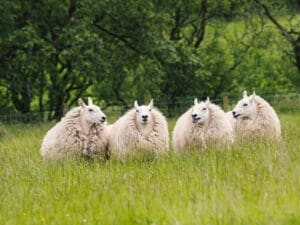
Cheviots on Jim’s farm
Connecting Farmers and the Public
British Wool recently celebrated its 75th anniversary, marking the milestone with depot open days across the country. The events allowed farmers and members of the public to see first-hand how wool is graded, handled and prepared for sale.
“They were a fantastic achievement,” Jim says. “It really showcased the journey of our fibre and the skill behind it.”
Looking ahead, the organisation is focused on continuing to support farmers and ensuring wool remains a valuable part of British agriculture.
Encouraging farmers – particularly the next generation – to bring their wool to British Wool remains a key priority. By collecting and marketing wool collectively, the organisation can help secure stronger returns for producers.
“By bringing their wool to us, we can market it on their behalf and help secure the best possible return.”
The Most Rewarding Part of being Chairman
For Jim, the greatest reward of being Chairman is simple : the people.
From the board and head office team to colleagues working across the depot network, he believes British Wool is driven by individuals who genuinely care about what they do.
“Working alongside such committed, like-minded individuals is incredibly rewarding.”
Quick Fire
Proudest moment
Being elected Chairman.
Most rewarding part of the role
Working with the people across British Wool.
British Wool in three words
Professional. Loyal. Resilient.
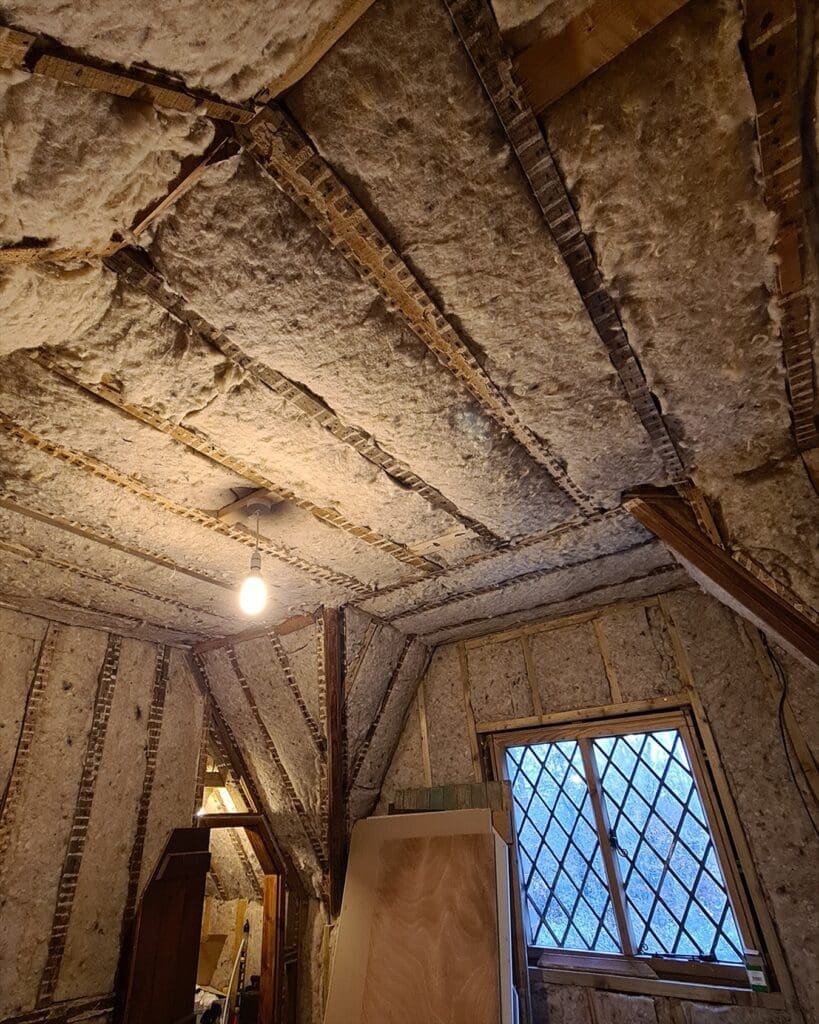
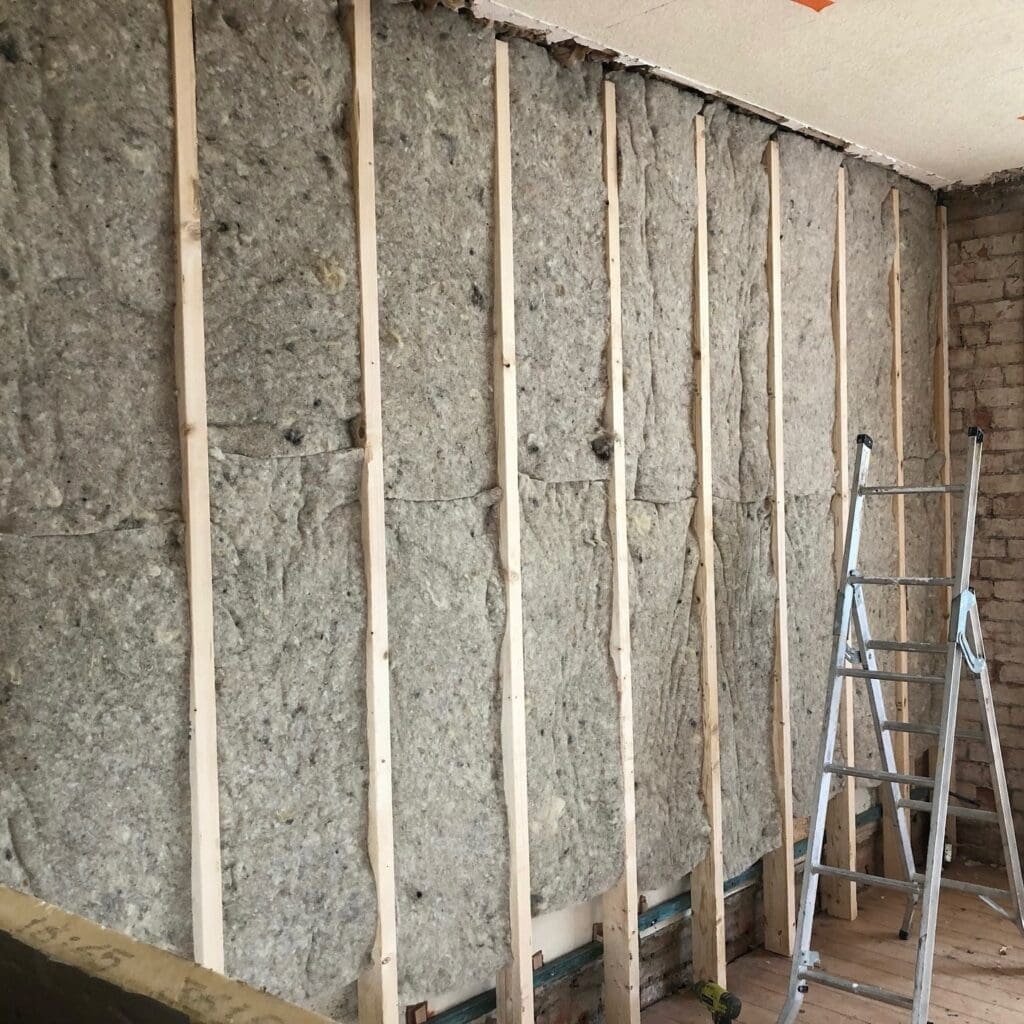
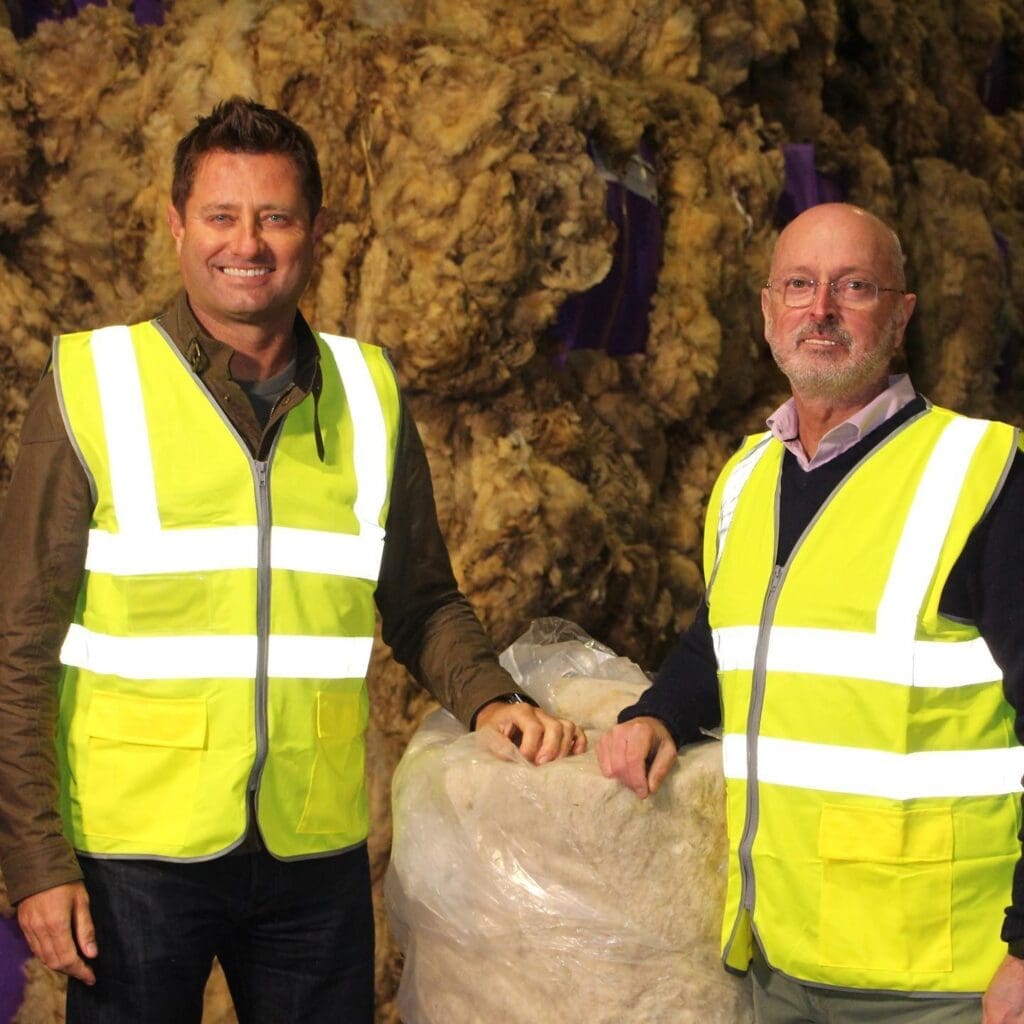
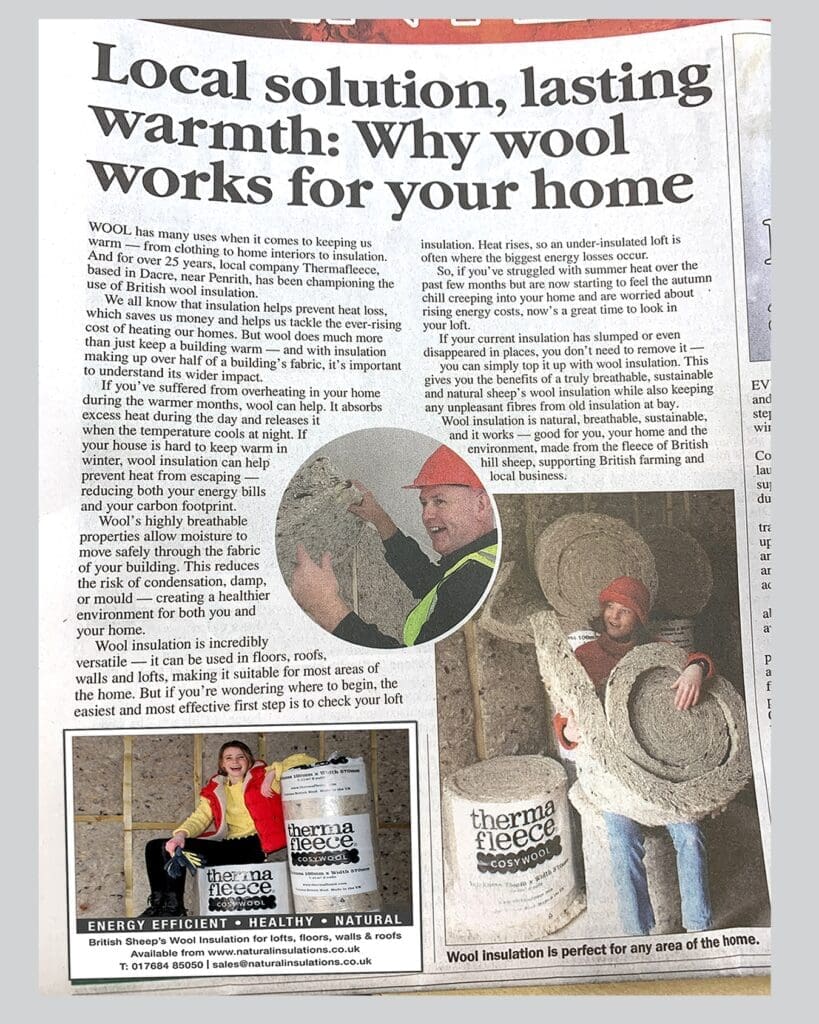
Brand Spotlight: Thermafleece and Wool Insulation
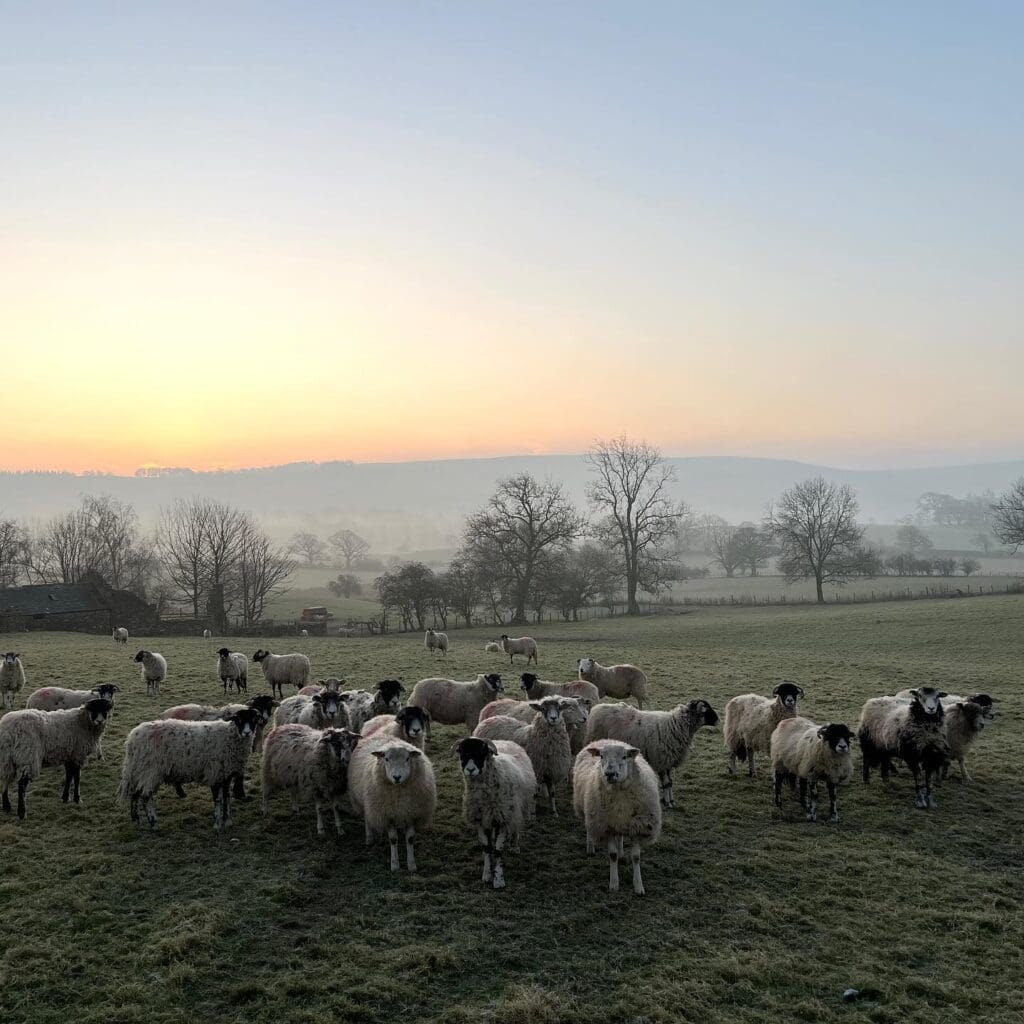
At the heart of the Lake District, amid rolling hills and flocks of sheep, Eden Renewable Innovations Ltd. (ERI) has been creating sustainable products for over two decades. Their flagship brand, Thermafleece, has become a leader in the UK’s natural fibre insulation market, offering an eco-friendly alternative to conventional insulation.
Mark Lynn, Managing Director, explains,
“Inspired by the sheep in rural Cumbria, we create products that use natural, renewable resources to benefit people and the planet.”
Why British Wool Matters
Thermafleece products are built on the qualities of British wool, particularly that sourced from hill sheep.
“The wool we use comes from British Hill sheep; this coarser, coloured wool is ideal for insulation but not suitable for carpets or clothing. The crimp and elasticity of these fibres trap the air effectively, enhancing the thermal performance of the insulation,” says Mark.
Using local wool also supports the environment and the economy. “Using British wool reduces transportation distances, lowering the carbon footprint of the insulation whilst supporting local farmers and the UK wool industry,” Mark adds. “It’s a practical, ethical and environmentally friendly choice that suits both the needs of insulation and our own sustainability ethos.”
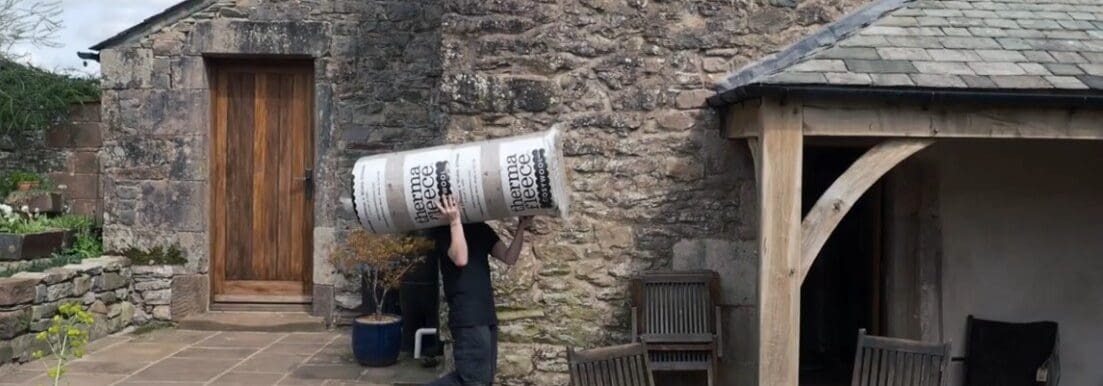
Watch to learn more:
Partnering with UK Farmers
Strong relationships throughout the supplier chain including farmers are central to Thermafleece’s approach.
“Over the past 25 years, we have built strong relationships with wool suppliers and producers across the UK. Today, we continue to manufacture Thermafleece in Britain, reinforcing our commitment to local production and sustainability,” says Mark.
Close collaboration with farmers ensures both quality and integrity. “Farming is something we care deeply about, we farm over 3,000 sheep ourselves, so we understand first-hand the standards, challenges, and dedication involved. By sourcing our wool from British Wool’s auctions, we help to strengthen the local supply chain, promote high welfare and quality standards, and play a part in securing the future of the industry,” Mark explains.
Wool: A Natural Choice for Sustainability
Beyond performance, British wool carries a strong sustainability story. “British wool contributes to a more responsible and environmentally aware society by being a natural, renewable, and locally sourced material. Using wool in insulation reduces energy consumption, improves indoor air quality, and supports the long-term health of buildings and occupants,” Mark notes.
For customers, choosing wool is not simply a purchase decision, but a commitment to something bigger.
“We tell our customers that choosing wool is more than just about buying a product – it is about supporting local industry, community, the environment and the British supply chain. Wool is 100% natural and renewable, planet friendly, temperature regulating and breathable, making it a healthy choice for buildings, their occupants and the environment,” Mark adds.
With pressures on British farming increasing, every choice matters. “By choosing wool and wool-based products, customers are making a positive lifestyle choice that supports British farming, rural livelihoods and a more sustainable future,” he concludes.
Case Studies
Here’s a selection of projects using Thermafleece insulation, highlighting environmental impact and performance benefits.
Strong Market Performance Continues
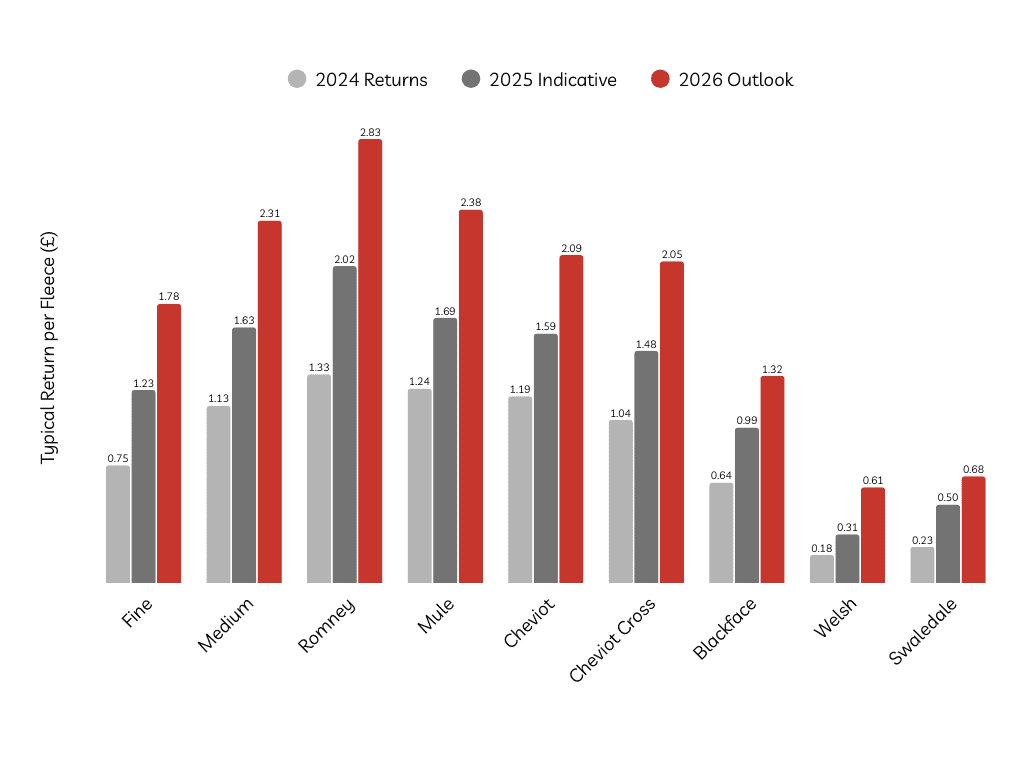
The strong demand for British wool in the second half of 2025 has continued into 2026. We have seen further improvement and clearances have been high. This will be welcome news to all our members. With the improved prices set to support improved member returns this year.
Since September, values have risen by by 40%. Average auction prices are now at the highest level since 2015.
Andrew Hogley, CEO, said: “Global demand for crossbred wool is now back in balance with supply. Our colleagues in New Zealand cleared their excess wool supplies from the covid pandemic just over a year ago. This has now fed through to better prices in both the UK and New Zealand wool auctions. Global wool markets are now trading at the highest levels for many years and in real terms prices are back at pre-pandemic levels.”
Season to Date Prices and Outlook for 2026
Season-to-date our average selling prices (illustrated in Red on the chart below) are up for all core types, generally by around 15p to 20p per kg. This equates to around 40p more to members for every fleece. Latest prices are even higher (illustrated in Green on the chart below). If these prices are maintained over the last few sales of the season, average prices will continue to rise.
The higher current prices also provide a positive outlook for our members as we head into the 2026 season. Latest prices are as much as 40p to 50p per kilo higher than in the 2024 season. Which would see member returns next year increase by around £1 per fleece.
Supporting Members and Driving Demand
Andrew continued: “Our work to build brand awareness on behalf of our members is also supporting the market for British wool. Consumer research shows that our brand awareness is improving. We now have over 170 brands on our licensee scheme and specifying British wool in their products. Sales of traceable wool at a premium to the commodity market have also seen good growth over the last twelve months.
“With the market showing clear signs of improvement and higher returns this year, I encourage all members to deliver their wool. Handling more wool improves our efficiency, and allows us to invest more in driving demand from manufacturers and consumers to support member returns.”
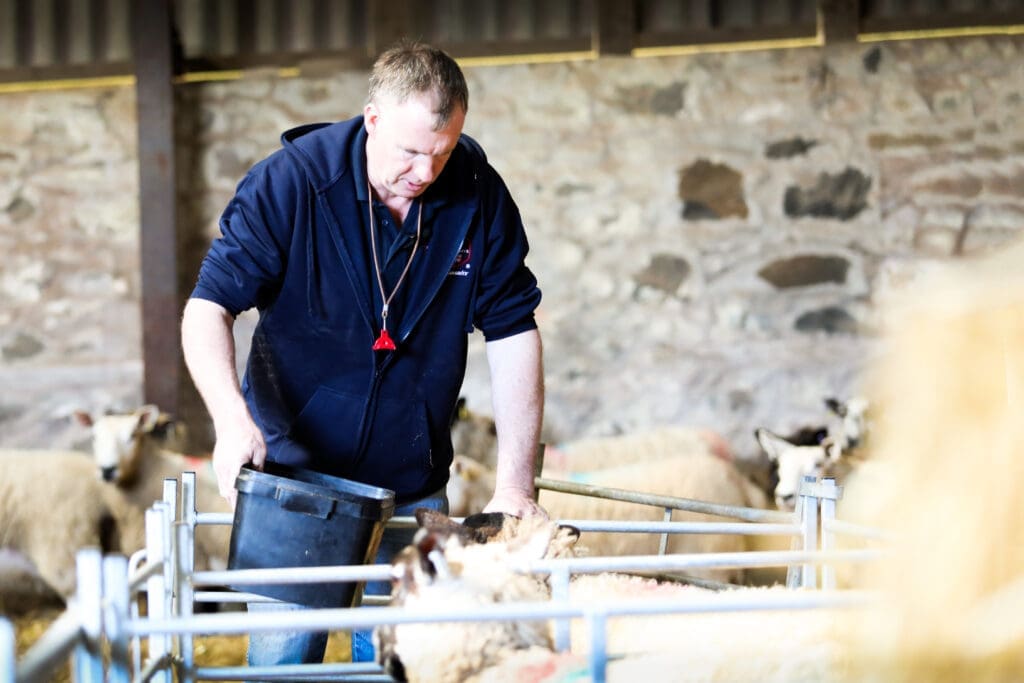
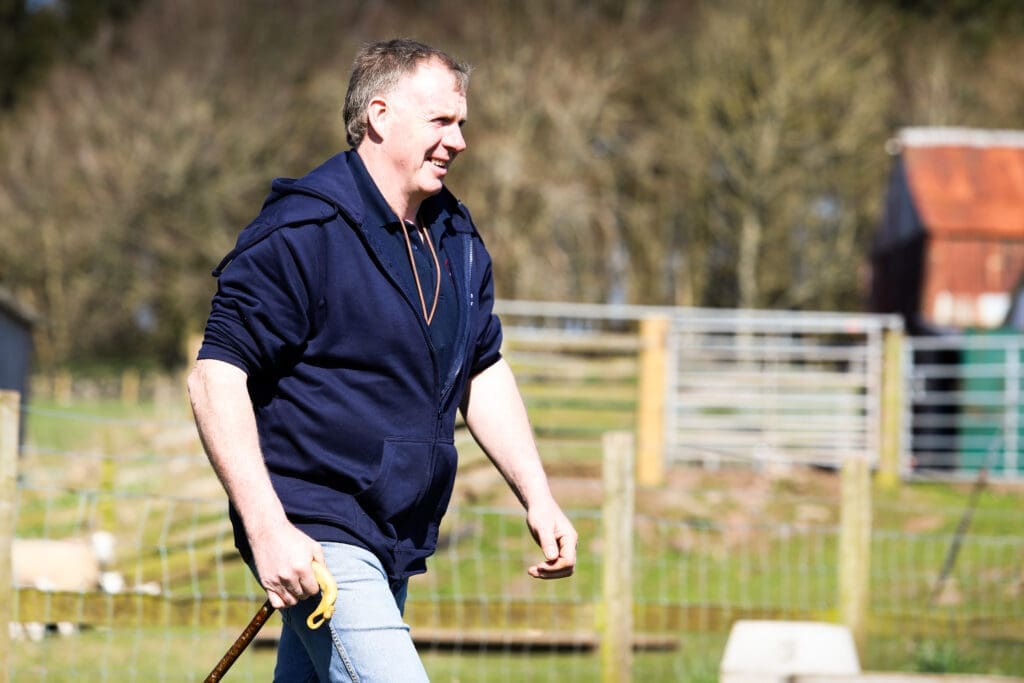
From shearing his first sheep at just 16 to preparing for his tenth appearance on the world stage, seasoned Scottish shearer Hamish Mitchell has dedicated a lifetime to farming and the wool industry. With over three decades of competitive experience across the globe and six years as a stock manager in Scotland, his career has been shaped by hard work, pride, and a deep-rooted passion for natural fibre. As he gears up once again to represent Scotland at the World Championships – and continues his role as one of our ambassadors – he reflects on his journey, the challenges facing the industry, and the importance of championing wool in a changing world.
Can you tell us about your background in farming and the wool industry?
I started sheep shearing at 16 and have been involved with sheep ever since. For the past 6 years I’ve worked as a stock manager on a property in Scotland. I’ve also competed in shearing around the world for 33 years.
How many times have you represented Scotland in the World Champs?
This will be my tenth time taking part, although I did miss the one held in France. Having been involved so many times now, I know what it takes to prepare properly, both physically and mentally, and I’m looking forward to getting back into it again
What’s your preparation for the World Champs?
Shearing is like riding a bike – once you can do it, it stays with you. That said, you still need the fitness. To keep on top of that, I’ve started running every day and focusing on staying fit. I’ll be travelling to New Zealand at the beginning of February, and from then on, I’ll be shearing full-time in the lead-up to the competition, including competitive shearing at weekends.
How does it feel representing Scotland on the World Stage?
It’s very hard to put into words – it’s a mix of pride and emotion. Standing on that stage and seeing your family there, and knowing how proud they are of you, is a fantastic feeling. Hearing from the people who’ve backed you along the way, telling you how much you deserve to be there, makes you feel genuinely appreciated and worthy of it.
How did you first become involved with us, and what led to you becoming an ambassador?
When I was 16, I wanted to learn to shear, so I started out on a British Wool shearing course. At 19, I went to America and worked as a shepherd for a couple of years, with the aim of heading on to New Zealand. Because of that, I went on a shearing course every year for six or seven years to keep improving.
Shearing has given me a lot over the years, along with plenty of good times. The most important thing to me about being an ambassador is wanting to see things move forward and modernise. I want to be part of helping drive that progress.
What does your role as Ambassador involve on a day-to-day basis?
As an ambassador, the main thing for me is being able to relate to farmers and encourage them to deliver their wool. I’m in auction marts regularly, and through shearing I still meet a lot of farmers who’ve followed my career over the last 30 years. Farmers often look to me for advice on how wool sales are going and to hear about any new innovations in the industry.
What do you see as the biggest challenges currently facing our industry?
How many people are actually wearing wool now? To increase demand, we need more people choosing wool. Oil-based synthetic fibres are taking over, and too many folk are wearing them instead. We need to change people’s habits and get them back to wearing natural wool.
In three words, how would you sum up British Wool?
Natural, Sustainable, Origin
From the woolsheds of rural New Zealand to the world stage of competitive shearing, Matt Smith’s journey has been shaped by hard work, travel and a deep-rooted passion for the wool industry. Now farming sheep and cattle in Cornwall and representing England at the highest level, Matt combines global experience with hands-on knowledge of British farming. As one of our ambassadors, he’s committed to championing the fibre, supporting fellow farmers and helping drive the industry forward. We caught up with Matt to talk about his background, his World Championship ambitions and why he believes British wool has a strong future ahead.
Can you tell us about your background in farming and the wool industry?
I was brought up on a sheep and beef farm in New Zealand. With Dad being a shearing contractor, I was always around the woolsheds. I started having a go at shearing when I was 13. Before that, I was wool handling and pressing, just learning the ropes.
I started full-time shearing at 15 and first came over to the UK for the summer when I was 17. After that, I worked between the UK and New Zealand until I was 19, then headed over into Eastern Europe. At 20, I went to America and ended up running a seasonal crew there for 10 years which I loved.
I found travelling the world very interesting as I would be involved in, not just shearing, but day to day farming practices. I enjoyed talking to farmers about why and how they do things differently in the different environment and climates.
Whilst travelling I met my wife Pip. In 2014 we took on her family farm in Cornwall, farming Sheep and Cattle.
How many times have you represented England in the World Champs?
This is my second time representing England, which I’m really pleased about. I feel like I’ve got a bit of unfinished business this year, so I’m looking forward to getting back out there and giving it everything.
What’s your preparation for the World Champs?
It’s about getting the right balance between training, mental preparation and physical fitness – they’re two different sides of it, and both matter.
I’m really looking forward to being back in New Zealand and getting some more relevant sheep under my belt. In the weeks leading up to the World Champs, I’ll have nine competitions to go to, which should sharpen me up and get me properly ready.
How does it feel representing England the World Stage?
I’m very proud to represent England. Our kids are extremely passionate about shearing and they love their country, so seeing their dad wearing the English singlet means a lot to me and them. Hopefully it inspires them that if they work hard, one day it may be them pulling on the English singlet. That’s something I’m proud of.
How did you first become involved with British Wool, and what led to you becoming an ambassador?
When I first moved over to the UK in 2014, we held a few World Record attempts, and British Wool really got behind me and supported it – and anyone else who wanted to do something positive for the industry. That meant a lot to me, because the industry only moves forward if there’s proper backing and a bit of drive behind it.
Off the back of that, I was invited to run some shearing courses down South. Taking on this role has given me the chance to make sure people are getting the right information and that standards are kept where they should be.
From your perspective, what makes British wool (fibre) special and worth championing?
We’ve got a real mix of breeds in our wool flock here in Britain, which means we’ve got a place in the market for all those different types. It gives us a wide range of wool to work with and a good variety of product to offer.
What do you see as the biggest challenges currently facing our industry?
The main challenge is getting it into the market. I do think we’re coming to the end of the negativity around wool, which is encouraging.
If we can find a more cost-effective way of turning it into finished goods, I believe we’ll see more people using it. At the minute, it’s very much seen as a premium product because of the cost of production, and that can put some buyers off. Bringing those costs down would open the door to a much wider market.
Are there particular opportunities you’re excited about for the future of British wool (fibre)?
The bedding sector is really starting to take off, and that’s exciting to see. There’s growing interest, and once people try the product and see the benefits for themselves, it more or less sells itself.
We held depot open days last year – why do you feel these events are important for both farmers and the public?
We both need the chance to see both sides of the production process, from farm right through to the finished product. It’s a really positive story to tell, especially with the Royal Visit showing there’s strong backing behind wool.
The more people who see that and understand it, the better. Positive word of mouth goes a long way, and once it starts spreading, it builds momentum of its own.
How can farmers make the most of British Wool’s services and support?
We probably just have to accept that, at the minute, wool isn’t always going to be financially beneficial. That’s the reality of it. Markets go in cycles, and we’re in a tougher spell right now.
But that doesn’t mean it hasn’t got value. It’s still a quality, natural product with a strong story behind it. Sometimes you have to take the longer view and keep backing it, improving it and finding better markets. If we keep pushing it in the right direction, the returns will come back around in time.
What’s the most rewarding part of being an ambassador?
It’s about setting a few records straight and being open to talking with farmers. Now that people know the role I’m in, they’ll often come up to me with questions. I’m able to give them straight answers, and if I don’t know the answers, I know the right people to ask.
That bit of communication is important – if people understand what’s going on and why, it clears up a lot of confusion.
In three words, how would you sum up British Wool?
Growing, Challenged, Innovative
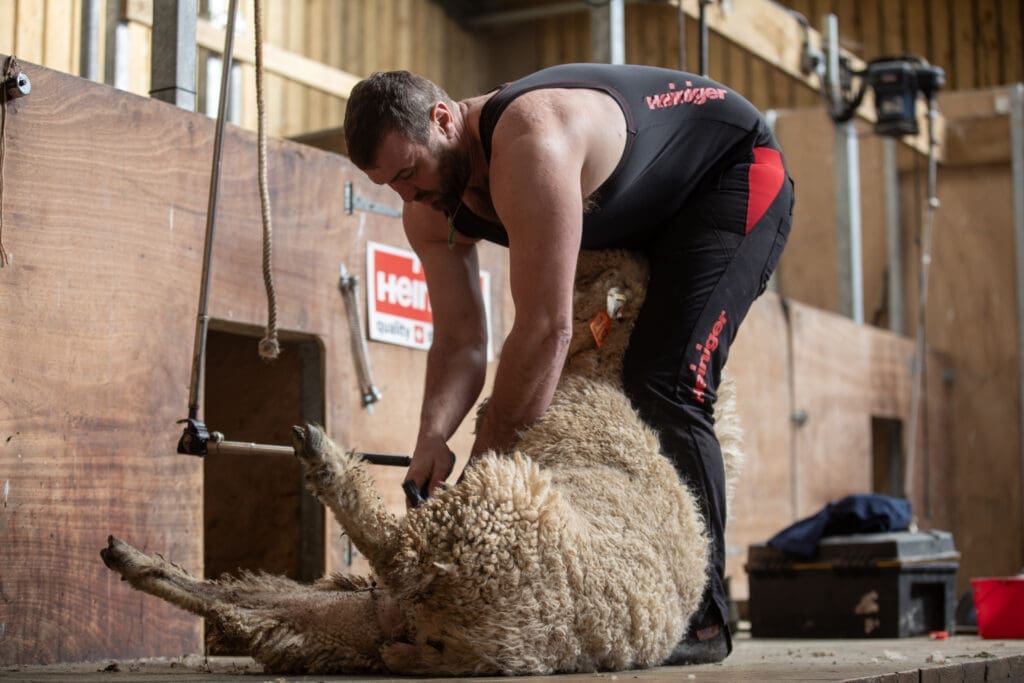
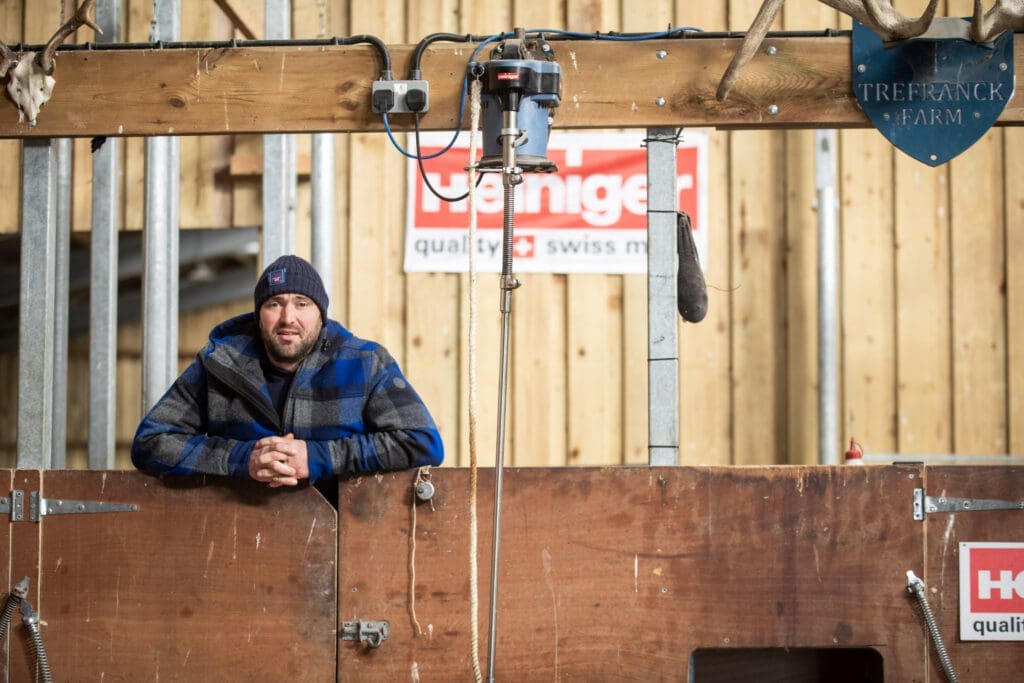
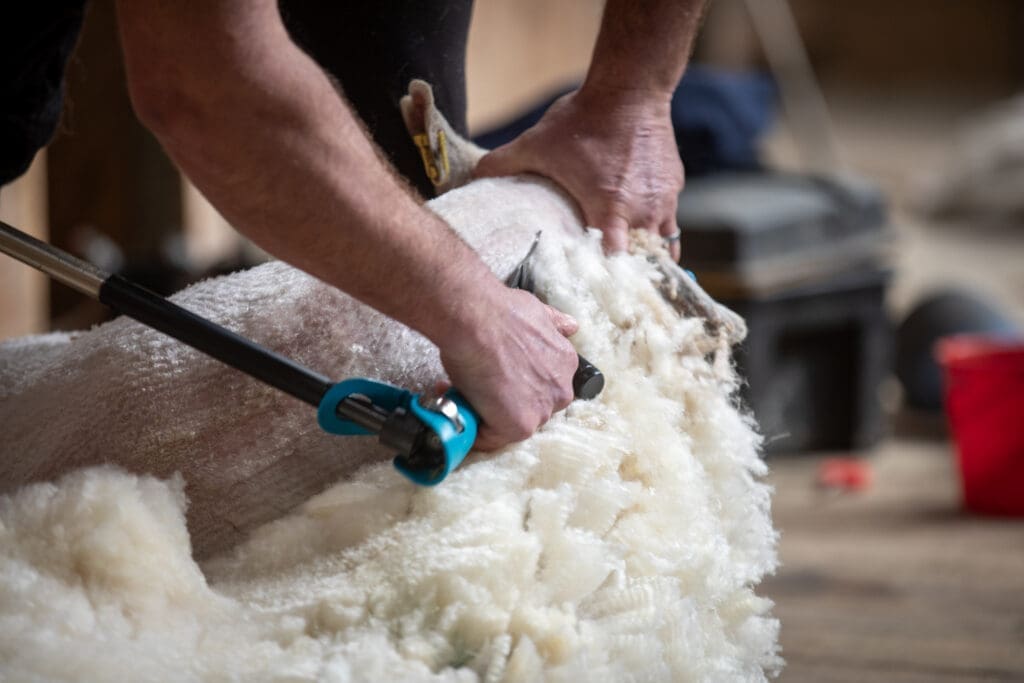
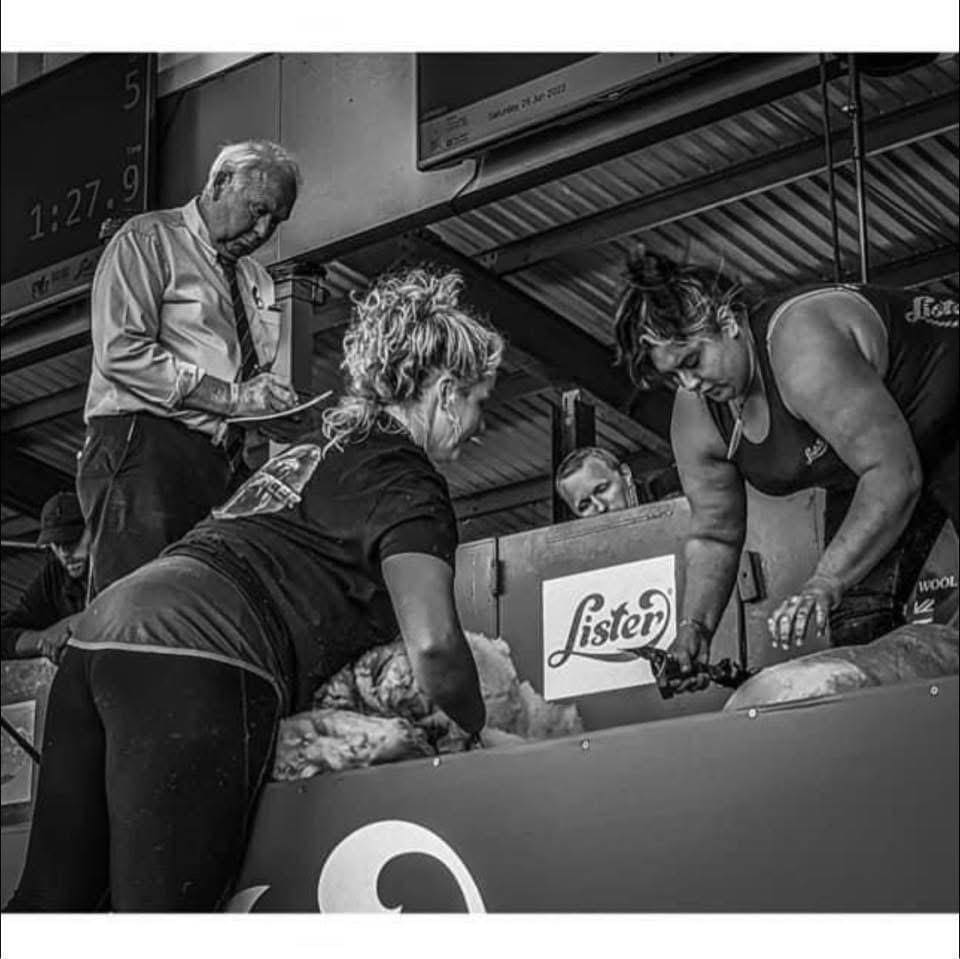
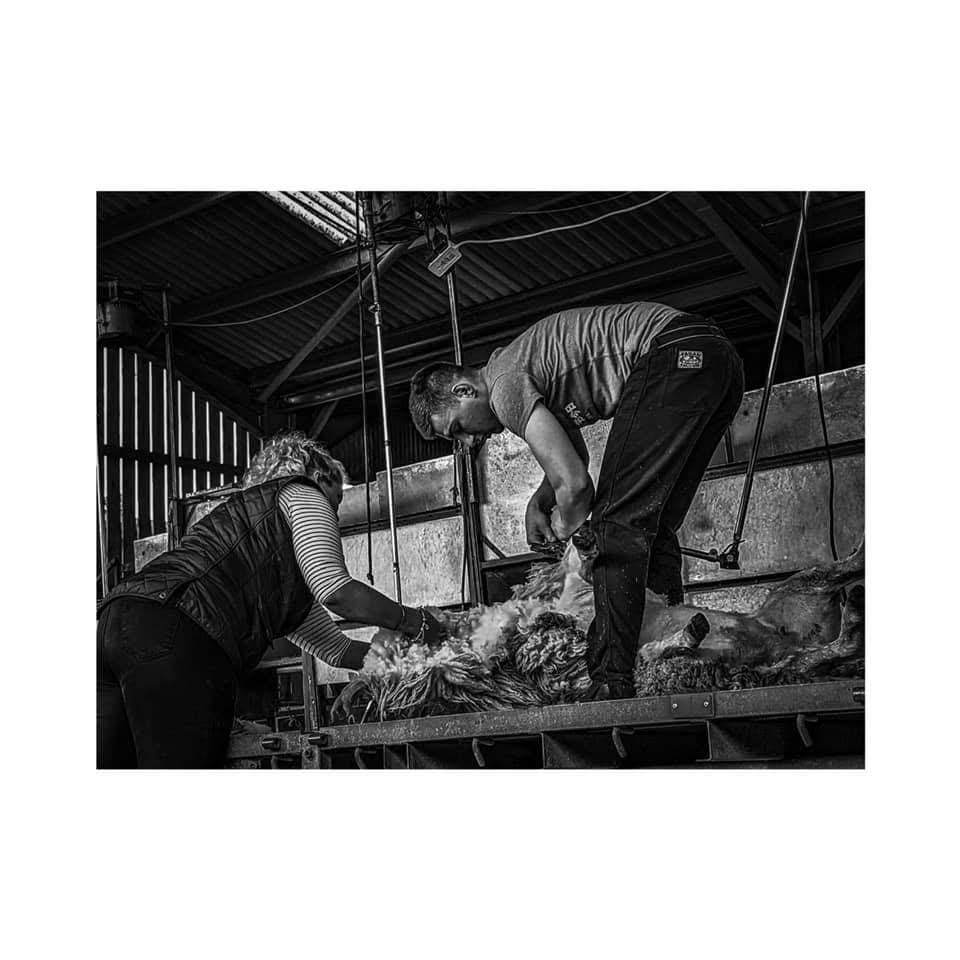
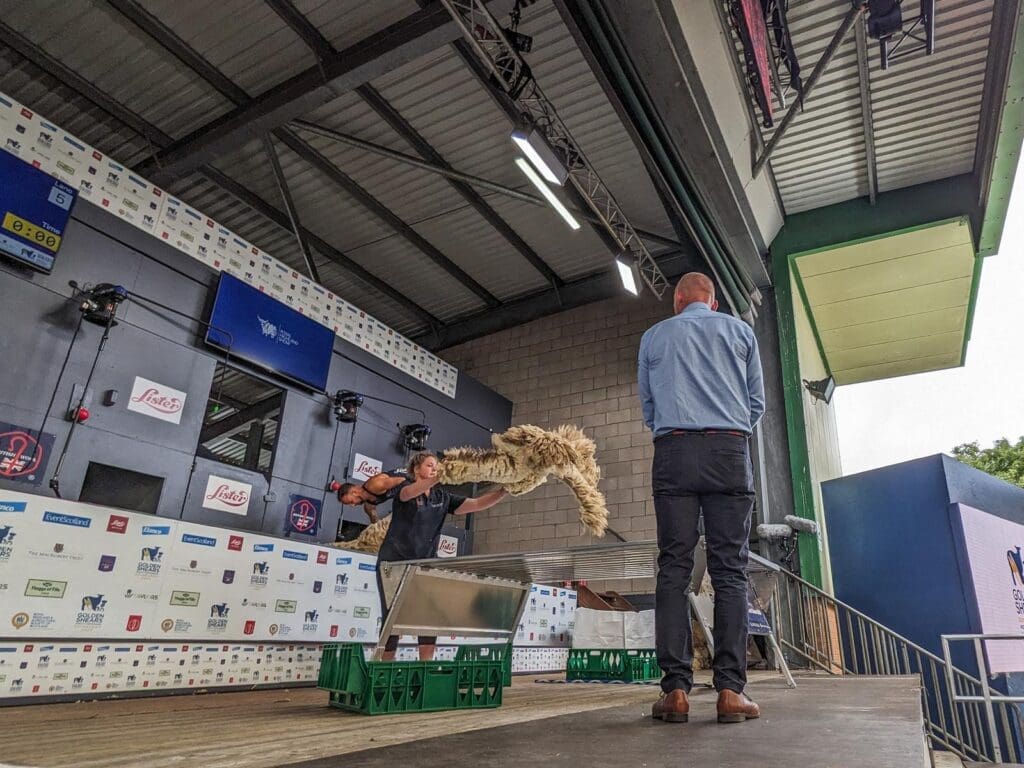
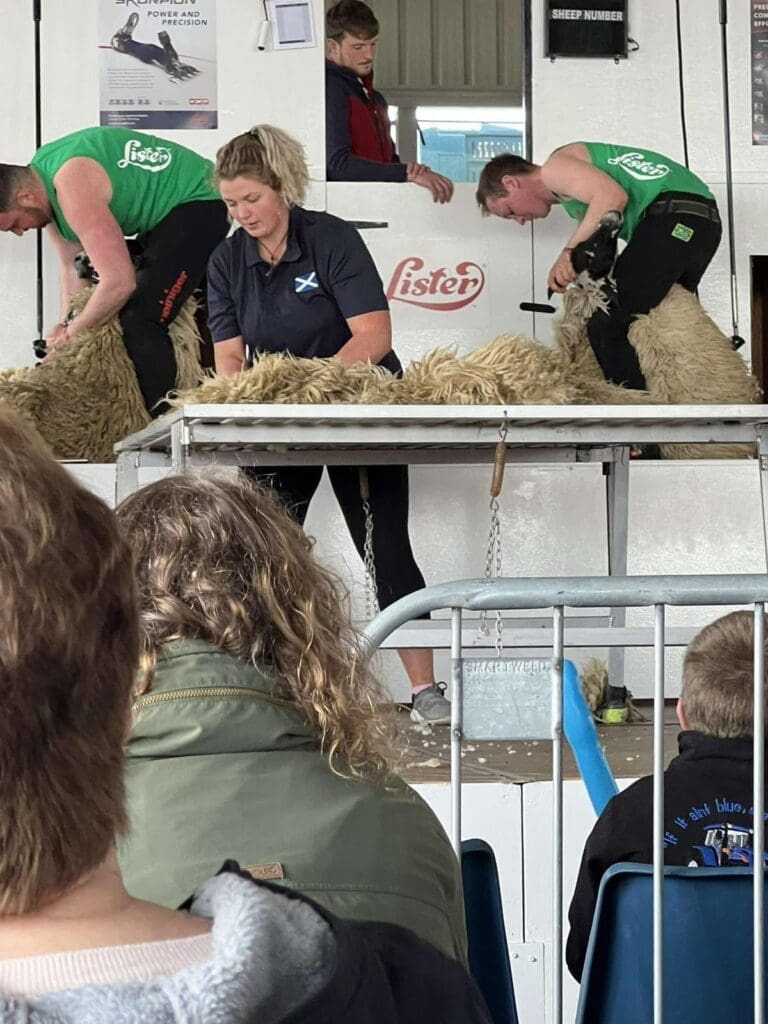
Interview with Wool Handling World Champ, Rosie Keenan
Humble and quietly formidable, Rosie Keenan, the three-time Wool Handling World Champion, is still coming to terms with just how much she has achieved. From balancing motherhood, her duties as a board member, and international competition. Rosie opens up about what it’s really like to be a World Champ, represent her country on the world stage, and chase excellence not just for herself, but for her family too.
You are the current individual Wool Handling World Champion – tell us how being the World Champion for the last 3 years has been for you?
I am actually very humble and shy away from it whenever it is brought up, as I can’t believe it’s actually me! It seems like a long time ago, my life has changed so much since. I have a family now and I don’t work at the graft as much anymore. I am really proud of myself and to see how proud other people are of me, especially my family, it still doesn’t feel real.
How does it feel to represent your country at the World Championships?
I am proud, I wasn’t going to do it originally and thought about retiring at the top. I decided I wanted to go for it for my family – we will do this! It will be excellent if I could retain my title but I’d also be incredibly chuffed to hand it over to someone else who would be equally as deserving. It’s a big thing to pass your title onto someone else as much as it is to retain it. I will still try and own it and am aiming to win, but also knowing the success and achievement someone else may feel – that is a good feeling.
What is your preparation ahead of the World Championships?
I will be travelling over to New Zealand solo, and I will then be training over there. I will do some courses, shows and some work over there to prepare myself. Just really focus – as you don’t just need physical training, you need mindset training too. Which at the moment, I have lost completely. Travelling on my own will enable me to focus on this, however I do wish my family was coming too. On mindset – you need to believe in yourself. Tell yourself you are going to do it and get rid of all distractions. It’s going to be harder this time round as New Zealand will be very strong and on home ground. The wool handler that has qualified for New Zealand is elite level and tough competition.
What would it mean to you if you retained your World Title?
It would be even more incredible than last time round. I know its going to be tougher as I had the advantage last time round being on home soil, and New Zealand is just coming to the end of their show season so will be more prepared and top of their game. If I were to win and bring that home to my family, it would mean the world to me.
How long will you be out in New Zealand for, and tell us about the competition season last year that led to your qualification?
I will be in New Zealand for about a month in total. I wasn’t going to do the competition season this year – the circuit closed on the 10th of May and I decided to enter at 4pm that day. Henry said to me, “I believe you can do it, so go for it”. It was tough as you have to do 5 out of 8 shows and living so far north there was no way logistically or financially, I could go to all the shows. I did the bare minimum – there were a couple of other girls that were doing very well. Thankfully I went into the first show and won it. 2nd show, won it. 3rd show, I didn’t do as well. The decider came down to the last show, and I was ill the day before with anxiety – I was terrified. These girls that had never been a threat before were suddenly a threat, it could have gone either way. Thankfully it worked in my favour.
How do you manage to juggle being a mum and a World Champion?
As a mum, you are a role model and being a World Champion, you are a role model too. I rely a lot on Granny and the support network of my family. Saying that, it gives me more fuel as I am not just doing it for me now. You want them to look up to you and say, “I want to do that!”. As soon as my daughter is old enough to go out and do the graft herself, I want her to think, “I want to be a World Champion like mummy”.
Are your children looking at following in your footsteps?
I would absolutely love it if they did. I am heartbroken the family aren’t travelling with me this year, however there is a lot on at home so it’s the right thing to do. Henry is a shearer too – he has travelled the world and has all the stories to tell like me. I would love her to go use her brains, but farming/shearing is a way of life – the stories you can tell your friends and family and the life skills you get – I would love her to follow our footsteps. As soon as she is aware of a sheep and knows how to handle one, I will introduce her to wool handling. It’s in her blood and it’s amazing how she is picking up the life on a farm.
I feel like I’ve worked my way up – I was 17 when I started. I am still in the industry, in a corporate way too by being on the Board. I find the wool industry still a very important part of my life.
Photo credit
Photos 1-3: Lucy Stewart
Meet your World Championship teams
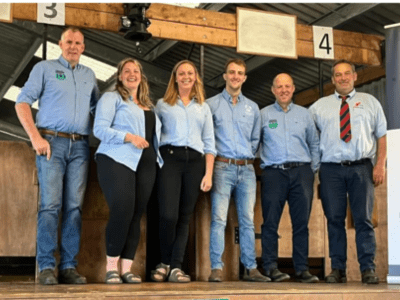
The Golden Shears 2026 World Shearing and Wool Championships’ will take place in New Zealand from 4–7 March. We are proud to sponsor the teams travelling from England, Scotland and Wales. Find out more about each of the teams.
Scotland Team
Team Manager
Will Dickson
From Duns in the Scottish Borders, has been involved in shearing for around 35 years. Working mostly in Scotland, Norway, and New Zealand. He is now stepping back from full-time shearing to focus on running his beef and sheep farm alongside shearing contracting work. As a shearing instructor for British Wool and a judge for the British Isles Shearing Competitions Association (BISCA). Will feels it is a real honour to manage such a talented group of competitors and wishes them every success. He is especially looking forward to seeing the very best shearers from around the world come together under one roof and battle it out to be crowned world champions.
Shearers
William Craig
57, from Broughton, just outside Biggar, has been a shepherd and farm manager all his life. Representing Scotland at the World Championships in 2012, 2019, and 2023. He achieved a 6th-place finish on each occasion, with 2026 set to be his fourth appearance. Sharing the experience this time with his son Murray. Who is his blade team-mate, makes it even more special. Excitement builds at the thought of spending time with team-mates, catching up with old friends, meeting new faces, and shearing alongside some of the best blade shearers in the world. Wearing the Scotland vest again is a huge source of pride.
Murray Craig
26, also from Broughton, has gained most of his experience on the machine circuit. Notable results include winning the National Young Farmers Championship. 1st in the Juniors at the Black Isle Show, and 1st in the Intermediates at Lesmahagow. He has also competed in a Scotland vs. Ireland test match. Representing Scotland in blades against the best in the world is a real honour, and experiencing his first Golden Shears and World Championships as part of such a strong team is extremely exciting.
Hamish Mitchell
55, from Central Scotland, shorn his first sheep nearly 40 years ago and has spent around 30 years as a professional shearer. For the past six years, he has focused on shepherding and livestock management at Letham Farm in Glenfarg, alongside running his own farm. His competition successes include multiple wins at the Scottish National Championships and participation in over 100 open competitions worldwide. This year brings the honour of representing Scotland at his 10th World Championships. He has also taught shearing courses for many years and served as an ambassador for Heiniger and British Wool, with one of his most memorable moments being part of the 2014 World Championships team event victory in Ireland alongside Gavin Mutch.
Gavin Mutch
46, born in Scotland and now based in New Zealand, has over 25 years’ experience as a professional shearer. He has competed and won in 13 different countries. Major achievements include the Individual World Shearing Championship in 2012 and World Teams Championship victories in 2014 and 2019, as well as the Golden Shears in 2015. He will represent Scotland at the World Championships for the eighth time this year. One of his most memorable moments occurred in Masterton when former World Champion Tom Wilson led the arena in singing Flower of Scotland after the individual title was secured.
Woolhandlers
Rosie Keenan
32, from the North of Scotland, balances farming, raising a family, and serving as a board member for British Wool. She is the current World Champion woolhandler after winning in Scotland in 2023. Previous highlights include 2nd at the World Championships in France in 2019, 3rd in the teams in Edinburgh in 2023, and 2nd in the teams in France in 2019, alongside numerous Open wins across the UK and Europe. Representing Scotland again is a great source of pride and offers the chance to welcome new team members. Rosie is excited about taking her family to New Zealand, reconnecting with friends and relatives, and seeing familiar faces after six years away from competing there.
Katie O’Sullivan
From Crieff in Perthshire, Scotland, shears for around seven months of the year, gaining experience in Norway, New Zealand, Ireland, and Scotland, while running a flock of Cheviot ewes. Her best woolhandling results came in the 2025 season, including wins at Shearfest, the Royal Welsh, Corwen, and the Scottish Circuit—all in one year, marking a major achievement. Representing Scotland at the World Championships for the first time is a real honour, and she is eagerly anticipating catching up with competitors old and new from around the world.
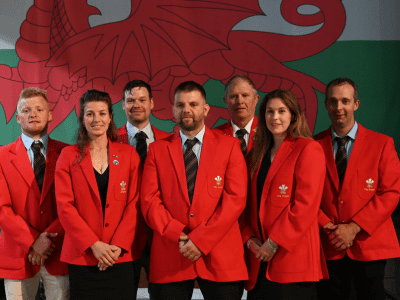
Wales Team
Team Manager
Rhys Jones, Corwen, Denbighshire
Rhys is a farmer and retired shearer and has been involved in the shearing industry for many years. He is a British Record holder and had numerous successes during his shearing career. Rhys is also a BISCA Judge.
Machine Shearers
Gwion Lloyd Evans, Bylchau, Denbighshire
Gwion is the reigning World Champion and will be defending his title at the 2026 World Championships. This is the third time Gwion has represented Wales at the World Championships. Also part of team which won the World Machine Shearing Team title at the 2023 World Championships.
Llyr Jones, Llanrwst, Conwy
Llyr won the 2025 Champion Shearer of Wales competition for the first time, earning himself a place in the Welsh World Team. Shorn for several seasons over in New Zealand so he has plenty of experience with their sheep. This will be his first World Championships.
Blade Shearers
Elfed Jackson, Bethesda, Gwynedd
Elfed’s 12th World Championships representing Wales, and he has competed in several World Finals. Winning many competitions over the years during his shearing career.
Rhydian Evans, Talybont, Aberystwyth
Rhydian won the 2025 Champion Blade Shearer of Wales competition for the first time, earning his place in the Welsh World team. This will be his first World Championships.
Woolhandlers
Sarah Rees, Brecon, Powys
This will be Sarah’s second World Championships, and she was part of the team which won the World Woolhandling Team title at the 2023 World Championships in Scotland.
Jessica Morgan, Llandeilo, Carmarthenshire
Jessica won the Welsh Open Woolhandling Circuit to secure her place in the Welsh team to compete at the World Championships for the first time. Jessica has been competing for over 20 years, winning many competitions.
Wording and images courtesy of RWAS

England Team
Team Manager
Gavin Stevens
Gavin Stevens has previously been involved in two World Championships, including judging at the Royal Highland Show World Shearing and Wool Handling Championships in 2023. With extensive experience in the sport, he is excited to support a promising England team and looks forward to the challenges ahead. One of the highlights of his career was judging wool handling at the 2023 World Championships in Scotland, a role he considers a proud moment. His advice to young and aspiring shearers and wool handlers is to never give up, take part in courses and shows whenever possible, always watch and listen, and be prepared to dig deep when it matters most.
Machine Shearers
Matt Smith
Matt Smith represents England at the World Championships for the second time. Having previously competed on the world stage, he is driven by the goal of another shot at the title, supported by his family and surrounded by the global shearing community he values highly. Career highlights include bringing world shearing records to the Northern Hemisphere, notably breaking the nine-hour record in 2016. His advice to aspiring shearers is simple: work hard, learn from the best, maintain high standards everywhere you work, and success will follow.
Nick Greaves
Nick Greaves will make his World Championships debut, fulfilling a long-standing goal in his shearing career. Competing in New Zealand makes the occasion even more special. He looks forward to representing England in the white singlet alongside the world’s best, giving everything he has. His standout achievement came at the Bath & West Show, where he won the Open, the English National, and the Six Nations team titles—a remarkable treble. He encourages young shearers to surround themselves with the right people, share knowledge, look after their body, and remember that consistency beats talent every time.
Blade Shearers
Andrew Mudge
Andrew Mudge will attend his sixth World Championships, having made his debut in Norway in 2008. Each event brings a unique atmosphere, blending new faces with long-standing friendships. He is proud to represent England alongside his teammates once again. Career highlights include competing at the same Worlds as his wife and father, reaching his first individual world final, and winning the Six Nations four times with his dad. The proudest achievement came in 2023, finishing third at the World Championships in Scotland. Andrew encourages young shearers to work hard, enjoy the journey, and learn from everyone they meet.
Woolhandlers
Jess Parkhouse
Jess Parkhouse, 20, will make her World Championships debut in New Zealand during her third season working there. Supported in person by her brother and cheered on by family from home, the occasion is extra special. Her fondest wool handling memory is winning the Intermediate title at the Royal Welsh Show, an unexpected victory shared with friends and family. She encourages anyone interested in wool handling to embrace the opportunities to travel, take part, and connect with the supportive shearing community worldwide.
Hilary Bond Harding
Hilary Bond Harding will attend her tenth World Championships, a remarkable achievement that reflects her experience and dedication. She enjoys adapting to different wool presentation processes compared to those used in the UK. Over her career, Hilary has accumulated numerous achievements, including winning the World Championships in 2014, multiple Six Nations team titles, and involvement in world record performances. She continues to inspire within the sport, advising aspiring wool handlers to dream big, work hard, and enjoy the journey every step of the way.