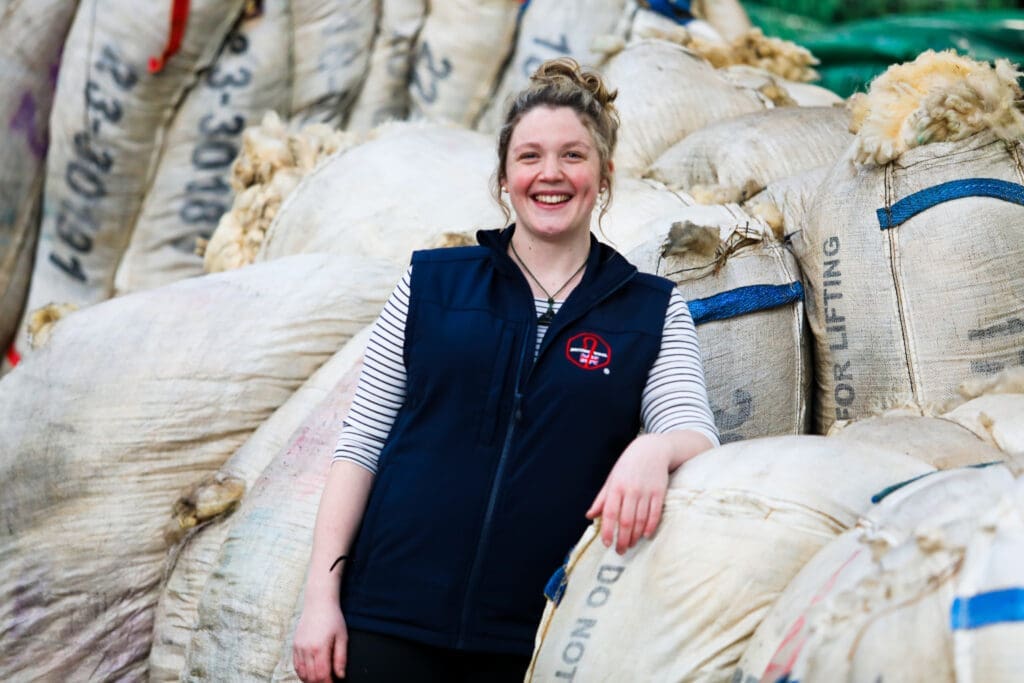
With a lifetime rooted in sheep farming and wool handling, Rosie brings a practical, hands-on perspective as our board member for Scottish Northern. Raised in Perthshire and shaped by years, working in wool sheds across the UK and overseas. Her journey through shearing, shepherding and farming has given her a deep understanding of the fibre and the people behind it.
Now farming in Sutherland alongside her family, and representing members across the Scottish North. She is a strong advocate for British wool, championing its value, versatility and the farmers who produce it. In this Q&A, Rosie shares her background, insights into the industry, and what drives her role on our board.
Can you tell us about your background in farming and the wool industry?
I was raised in Perthshire, Scotland and grew up around sheep. My father is from New Zealand and worked as a sheep shearer. The wool industry was always part of my world. I first got properly involved by going to work alongside him and it was on a trip to Norway that I really caught the bug. From there I began travelling to New Zealand to work in the wool sheds as a Rousie, building skills season by season. I followed a fairly nomadic pattern following the shearing season from Scotland to Norway to New Zealand and Australia. While also fitting in contract lambing work back home.
When Covid hit, it felt like the right moment to put down roots, and I took the opportunity to get myself a team of working dogs and go shepherding. I worked as a contract shepherd in Northumberland managing a breeding flock of Romney ewes. In 2023, I moved to Sutherland in the north of Scotland, where my partner Henry had a Croft running Belted Galloway cows and Cheviot ewes. Since then, we have had a family and built the flock up and now run both a hill flock and a Croft based flock of Cheviot ewes.
How did you first become involved with British Wool, and what led to you becoming a board member?
I’ve always been closely connected to British Wool through my wool handling career. The farmers I worked for consistently sent their wool through the system. It was very much part of the industry I grew up and worked in. While shepherding in Northumberland I took the opportunity to work seasonally as a field officer. This fitted well alongside my work and gave me a deeper understanding of the organisation. In the winter of 2022, I also worked in the Galashiels depot on the floor. Broadening my experience further by seeing the processing and logistics side of the operation.
After moving to Sutherland, the board member role for the North became available. I jumped at the chance. Through my achievements as a wool handler, I was already an ambassador and becoming more involved. This felt like a natural progression. Standing for the board gave me the opportunity not only to represent the wool industry but also to be a strong voice for farmer which is something I care deeply about.
What does your role as board member involve on a day-to-day basis?
My role involves being an approachable point of contact for farmer members. I spend a lot of time listening to their concerns, answering questions and offering practical advice. I also keep up to date with developments within the company including internal updates, wool auctions and how the market is performing. Overall, it is about acting as a link between British Wool and farmers, sharing information both ways, representing members views and helping ensure they feel supported and confident about the wool they produce.
From your perspective, what makes British wool (fibre) special and worth championing?
British wool is a natural, renewable fibre that’s produced as part of everyday sheep farming. It has performance qualities that synthetic fibres simply can’t match. It’s durable, breathable and incredibly versatile with uses ranging from clothing to carpets and insulation. What really matters to me is the people behind it. British wool represents our farmers, landscapes and generations of stockmanship. It’s a fibre with a strong story behind it and that’s exactly why it’s worth championing.
What do you see as the biggest challenges currently facing our industry?
One of the biggest challenges is that wool is consistently undervalued, despite the time, cost and expertise required from farmers to produce it. At the same time the industry is competing with cheap synthetic fibres. Even though wool offers clear environmental and performance benefits. Together these pressures make it more important than ever that the value of wool is properly recognised and supported from farm level through to the end consumer.
Are there particular opportunities you’re excited about for the future of British wool (fibre)?
I am really excited about the growing focus on natural, sustainable fibres and the move away from plastics. The fibre has a huge potential in areas like insulation, interiors and durable textiles where performance and sustainability really matter. There is also a real opportunity to better tell the story behind the fibre. Connecting consumers with the farmers that sit behind British wool.
We held our depot open days last year– why do you feel these events are important for both farmers and the public?
Depot open days are important because they create transparency and understanding. It is a chance go see first hand what happens to their wool after it leaves the farm. How the depot team grades, packs and prepares it and gives farmers the opportunity to ask questions directly.
How can farmers make the most of British Wool’s services and support?
Farmers can get the most of out of us by engaging with their local representatives, asking questions and making use of the advice available. Staying informed and getting involved helps ensure farmers are supported and we hear their voices
What’s the most rewarding part of being a board member?
The most rewarding part is being able to represent farmers and give them a voice within the company. Knowing I can help feed practical experience from the farm into decision making and support producers in getting the best possible outcome for their wool, makes the role genuinely worthwhile.
Do you have a favourite memory or proudest moment during your time at British Wool?
My proudest moment when farmers elected me to be on the board. It meant a great deal to know that farmers trusted me to represent them. I am also proud to bring a younger voice with strong, hands-on experience. Having that fresh perspective alongside practical knowledge is valuable and it is a privilege to represent our wool producers.
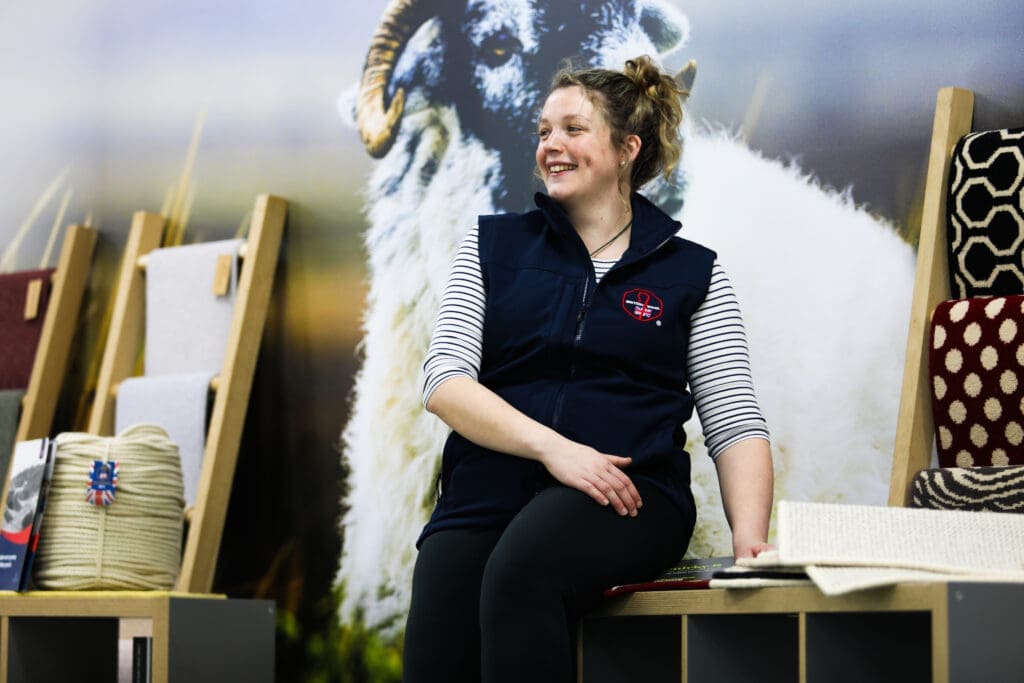
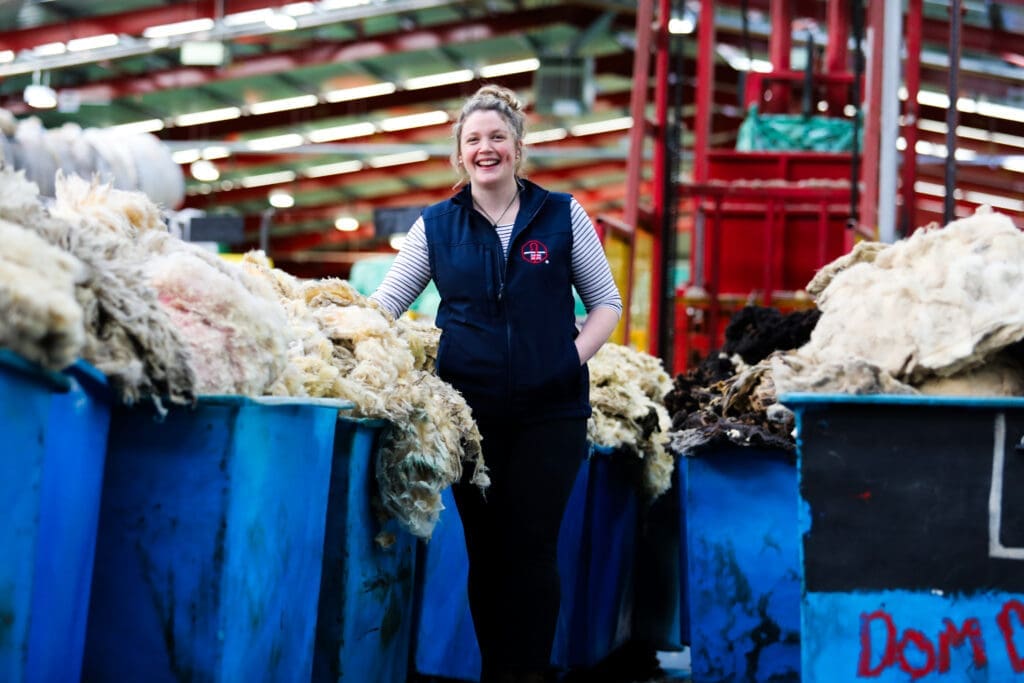
In this Q&A, we speak with Richard Spencer, our board member for English Central. His farming roots lie in the Midlands and whose career has been shaped by a lifelong commitment to sheep farming and the wool industry. From working directly on the farm to representing members at board level. Richard shares insights into his journey with us, the responsibilities of leadership. The importance of championing British wool as a natural, sustainable fibre. The discussion also explores current industry challenges, the value of farmer engagement, and what we represent for the future of the sector.
Can you tell us about your background in farming and the wool industry?
I started life farming on a mixed farm in the Midlands, and sheep have always been a big part of what we do. We also ran cattle for many years, but in 2009 we made the decision to sell the cows and focus our time and effort on sheep instead. Since then, sheep farming has really been at the heart of the business. Wool has always been a by-product I’ve had a strong interest in. Over the years, you get to understand how important wool is to the industry, not just as a product but as part of the whole sheep enterprise.
How did you first become involved with us, and what led to you becoming a board member?
I first got involved when I noticed there was no Derbyshire delegate on the Central Committee. It felt like a gap that needed filling. So I put my name forward, mainly to make sure local farmers had a voice. Much to my surprise, I was then elected Chairman. Even more unexpectedly, when a vacancy came up on the Board, I was asked to step into that role. Honestly, it was never something I’d imagined for myself. But I saw it as a chance to represent fellow farmers, stand up for the value of wool. Also giving something back to the industry that’s been such a big part of my working life.
What does your role as board member involve on a day-to-day basis?
On a day-to-day basis, it’s about keeping myself informed and staying connected. I keep up to date with all communications through my iPad. Follow what’s happening across the sheep industry. Keep a close eye on market trends and issues affecting members. Just as importantly, I spend a lot of time listening to what farmers are saying at grassroots level. The concerns they raise, the challenges they’re facing, and the ideas they put forward.
A key part of the role is making sure those real-life observations from the farm gate don’t just stay there. I see it as my responsibility to feed that information back to head office. Pushing for responses that are both practical and timely. Farmers need clear answers and effective action. I work hard to ensure decisions are made quickly and with the interests of producers firmly in mind.
From your perspective, what makes British wool (fibre) special and worth championing?
What really makes British wool special is the phenomenal attention to detail that goes into producing and marketing it as a high-quality product. From the farm right through to the finished market. There’s a huge amount of care taken to make sure what we’re selling is exactly what it says on the tin. It’s a natural, sustainable fibre with a wide range of uses. It’s something we should be proud of. When it’s presented properly and marketed well, British wool can stand shoulder to shoulder with any fibre in the world, and that’s well worth championing.
What do you see as the biggest challenges currently facing our industry?
One of the biggest challenges we face is making sure all the wool produced on farms comes back through our doors. The more wool that’s collected and marketed through us. The stronger and more viable the organisation remains. If we want British Wool to continue delivering value for members. We need farmers fully engaged and confident in the system. Ensuring good returns, clear communication. Trust in the process is absolutely key to keeping the whole industry moving forward.
We held our depot open days last year – why do you feel these events are important for both farmers and the public?
While I fully accept that open day’s place extra demands on an already highly committed team. I firmly believe they are well worth the effort. They give our suppliers and customers the chance to see first-hand the attention to detail. The sheer dedication that goes on behind the scenes. It helps people appreciate the work done at head office and depots to present wool to the market in the best possible way. For the public in particular, it opens eyes to just how versatile British wool is. How undervalued it often has been, despite being a natural, sustainable product with huge potential.
How can farmers make the most of our services and support?
The simplest and most effective way farmers can support us — and benefit — is by bringing all of their wool to through our depots and collection centres. By doing so, they help strengthen the organisation, improve consistency of supply, and ensure we remain viable for the future. The more wool that comes through the system, the better positioned we are to market it effectively and secure the best possible returns for producers.
What’s the most rewarding part of being a board member?
The most rewarding part, for me, is finally feeling that I’m in a position where I can do something about issues that have been giving me concern for many years. As a farmer, you often see problems at ground level but feel a step removed from the decisions. Being on the board means I can now raise those concerns, help shape discussions, and work towards practical solutions that genuinely make a difference for farmers and the wider industry.
Do you have a favourite memory or proudest moment during your time at here?
It may sound a little strange, but my proudest moment was the sense of honour — and genuine disbelief — when the entire committee placed their trust in me and asked me to represent them in such an important role. Knowing that fellow farmers had that level of faith in me was both humbling and motivating, and it’s something I don’t take lightly. It reinforces why I do the job and who I’m there to represent.
In three words, how would you sum up British Wool?
Protecting our heritage.
We have recently published new independent research into the performance of wool and sleep. This was carried out by Bangor University and funded by the Welsh Government.
The study compared wool duvets with synthetic and feather-and-down alternatives under controlled conditions designed to reflect a full night’s sleep. The results showed that wool performed significantly better. Maintaining a more stable sleeping temperature and moving moisture away from the body much more effectively, particularly as temperatures increased. Both of these factors are key to helping the body regulate its temperature overnight.
These findings are particularly relevant, with almost one in five UK adults saying they wake every night because they feel too hot or too cold. While 79% report experiencing this at least once a week.
Commenting on the research, Graham Clark, Director of Marketing, said:
“For many people, the benefits of sleeping under wool are already well understood — it’s a natural fibre that works with the body rather than against it. What this research provides is robust, independent evidence to support what we have known for some time. Despite its proven performance, wool still accounts for a relatively small share of the bedding market. By clearly communicating these benefits to consumers, there is a real opportunity to grow demand for wool products, strengthen the market and deliver better long-term returns for our members.”
The research forms part of a wider consumer-focused campaign highlighting the benefits of wool for sleep and has been shared with both UK and international partners.
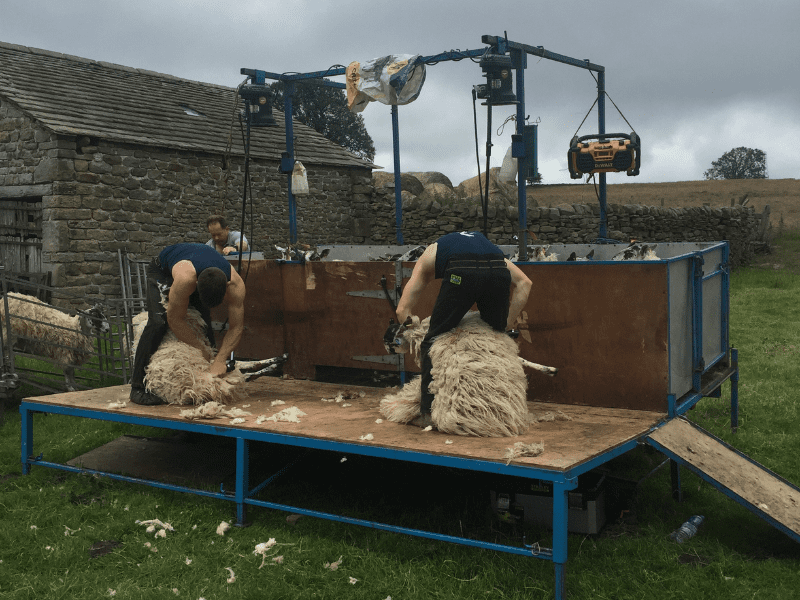
We’re pleased to announce our full programme of shearing and wool handling courses for 2026, which will go live on 9 February. Between April and August, more than 100 courses will run across the UK. These courses cover machine shearing, blade shearing, and wool handling, with training available for all levels of experience. Whether you are just starting out or looking to refine your skills, our courses help you progress with confidence in a supportive, hands-on learning environment.
Training Built for Real Life in the Shed
Our courses build strong shearing technique from the outset. From day one, training focuses on working safely and efficiently in real shed conditions. Specifically, it covers:
-
Health and safety in the shearing shed
-
Setting up the shearing environment
-
Equipment selection and maintenance
-
Shearing technique and wool care
As a result, participants gain practical, real-world knowledge that translates directly into everyday work. The training structure supports a wide range of goals – from improving your own flock shearing, to building a career in the industry, or progressing to high-level and international competition standards. Each course is delivered by experienced instructors, who bring extensive industry knowledge and hands-on expertise, ensuring learners develop good habits from the very beginning.
Course Levels & Accreditation
We offer training for everyone, from complete beginners through to advanced shearers:
-
Blue Seal training for beginners
-
Gold Seal progression for advanced shearers
-
Machine shearing and wool handling courses for all trainee levels
All courses carry international recognition and help participants achieve accredited skills that are respected across the industry. Whether your goal is to improve farm performance, gain confidence handling equipment, or work towards competitive shearing standards, there is a course tailored to your needs.
Subsidised Training for Young Farmers
In addition, we’re proud to partner with the National Federation of Young Farmers’ Clubs (NFYFC), CFfI Cymru/Wales YFC, Scottish Association of Young Farmers’ Clubs (SAYFC), and the Young Farmers’ Club of Ulster (YFCU) to provide subsidised training for Young Farmers Club members. Now in its eighth year, this collaboration offers 50% off shearing and wool handling courses for affiliated YFC members.
Discounted course rates for YFC members (valid 2 February–30 April 2026):
-
Shearing course: £115 + VAT
-
Wool handling course: £42 + VAT
Meanwhile, non-members can still book at £230 + VAT, offering excellent value for small-group tuition and expert instruction.
How to Register
To register your interest, complete the online form on our website – click here
Secure your place today and take the next step in your shearing journey.
We are once again partnering with the National Federation of Young Farmers’ Clubs (NFYFC), CFfl Cymru/Wales YFC, Scottish Association of Young Farmers Club (SAYFC) and Young Farmers’ Club of Ulster (YFCU). Providing subsidised shearing and wool handling training for Young Farmers Club (YFC) members across the UK.
Now in its eighth consecutive year. This collaboration continues to support young farmers by offering a 50% discount on our shearing and wool handling courses for affiliated YFC members. The discount applies to machine shearing, blade shearing, and wool handling courses. Making this training accessible at every stage of a young farmer’s shearing journey.
What the Training Includes
Our two-day shearing courses and one-day wool handling courses run nationwide and focus on the core principles of effective and efficient shearing. Attendees receive hands-on training designed to improve technique. While emphasising animal welfare, correct use of shearing equipment, and maintaining safety in the shearing shed. With small-group instruction and expert guidance, participants can develop confidence and skill in a supportive learning environment.
Who Can Apply
This discounted training is open to absolute beginners, as well as intermediate and advanced shearers. We encourage Young Farmers to continue developing their skills through further training opportunities and progression routes. Whether they are preparing to shear their own flock, pursue a career in shearing, or compete at higher levels.
How to Access the Discount
YFC members can access the exclusive discounted rate by registering between 2 February and 30 April 2026:
Shearing course: £115 + VAT
Wool handling course: £42 + VAT
Non-members can still attend at the standard price of £230 + VAT, which remains excellent value for high-quality, small-group tuition delivered by experienced instructors.
To register your interest, please contact your local YFC group. Full course details and booking information will be published on our website on 2 February.
British Wool shearing courses are built on one thing above all else, exceptional instructors with real shed and competition experience.
Our experienced team of instructors delivers a comprehensive training programme designed to build confidence, skill, and industry-standard technique. Running from April to August, the programme features more than 95 courses, offering a wide range of training opportunities in machine shearing, blade shearing, and wool handling. With flexible course options available, there’s something for everyone, from beginners to advanced shearers.
What the Training Covers
Our shearing courses are designed to develop best practice and strong technique from the outset. You will learn every key aspect of shearing, including:
-
Health and safety requirements and safe working practices
-
Preparing and managing the shearing environment
-
Selecting the right equipment and maintaining it effectively
-
Developing efficient shearing technique
-
Ensuring high standards of wool care and handling
This training helps you build the skills needed to work safely and confidently while improving both speed and quality.
Who the Courses Are For
Our courses are internationally recognised and tailored to suit all levels of experience. They are ideal for:
-
Complete beginners starting with Blue Seal training
-
Intermediate learners looking to refine their technique
-
Advanced shearers working towards Gold Seal accreditation
-
Farmers wanting to improve efficiency when shearing their own flock
-
Individuals planning a career in shearing
-
Competitors preparing for high-level and international standards
Whether you are aiming to improve your day-to-day shearing skills or build a pathway into professional shearing, the training provides clear progression and structured development.
Why choose British Wool?
-
Industry leading instructors
-
Proven training pathway from beginner to open level
-
Strong focus on technique, efficiency and animal welfare
- Certified by Highfield
Whether you’re starting out or looking to refine your skills, our courses provide the foundation, confidence, and standards needed to progress in the shearing shed.
Learn from the best. Train with British Wool.
Course Options
We offer both machine shearing and wool handling courses that cater to every trainee level. Each course is designed to deliver practical, hands-on experience with expert guidance and feedback. You’ll receive training in real-world conditions, helping you apply new skills immediately and confidently.
Book a course after the 9th of February click here
Alternatively, for more information contact our shearing team:
Shearing Team – 01274 688666 – [email protected]
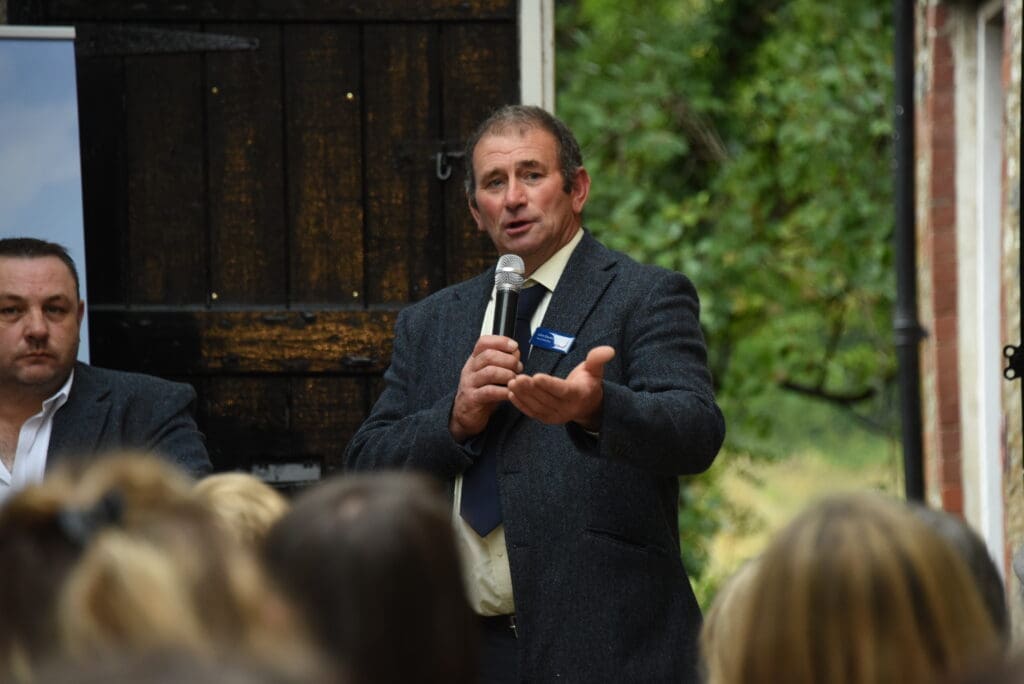
With a lifetime rooted in farming and a deep commitment to the wool industry. John Davies brings experience, passion and practical insight to his role as a British Wool board member for the Welsh Southern Region. From running a successful beef and sheep farm in South Wales to championing shearing skills and supporting the next generation of wool producers. His journey reflects the values at the heart of British Wool. In this Q&A, he shares his background, his role on the board, and his perspective on the challenges and opportunities shaping the future of British wool.
Can you tell us about your background in farming and the wool industry?
I have been farming my entire life. Currently running a 300-acre beef and sheep farm with my wife and son. We manage 700 ewes and also contract-rear calves. For the past 30 years, I have hosted a British Wool shearing course on my farm each year. l then represented farmers on NFU livestock board, and we were a HCC demonstration farm.
How did you first become involved with British Wool, and what led to you becoming a board member?
I have served as a county representative since 2012 and became a board member in 2019. My passion for shearing. My desire to inspire the next generation of shearers and those working in the wool industry. This drives my continued involvement.
What does your role as board member involve on a day-to-day basis?
My role as a board member involves acting as a key point of contact for anyone in South Wales. Always being available to discuss matters relating to the wool industry. I regularly attend livestock markets and regional events to represent British Wool. I maintain close communication with our Brecon grading depot to stay updated on developments within the area.
From your perspective, what makes British wool (fibre) special and worth championing?
British wool is special because it comes from a cooperative owned by its members. All of whom are committed to producing wool to an exceptionally high standard. That dedication is reflected in the quality of the fibre and the products we create, making it well worth championing
What do you see as the biggest challenges currently facing our industry?
One of the biggest challenges facing our industry is the decline in sheep numbers. This combined with a lack of opportunities for younger generations to enter the sector. Without clear pathways, it’s becoming harder to attract new talent and ensure the industry’s future sustainability.
Are there particular opportunities you’re excited about for the future of British wool (fibre)?
I’m excited about the growing recognition of wool as a natural, sustainable fibre. More people are becoming aware of the environmental impact of synthetic materials, particularly microplastics. Along with the long-term effects these products can have. This shift in consumer awareness presents a real opportunity for British Wool. To promote its high-quality, eco-friendly products and highlight the benefits of choosing natural fibres over synthetics. I also see potential for expanding wool into new markets. From sustainable fashion to home textiles, as demand for environmentally responsible products continues to grow.
Our depot open days were held last year – why do you feel these events are important for both farmers and the public?
Depot open days are important because they give both farmers and the public the opportunity to connect directly with British Wool. Farmers can see first-hand the journey their wool takes after it leaves the farm. Gaining insight into the grading and processing stages. The public, meanwhile, can learn about the quality and versatility of British wool products. Whilst engaging with our colleagues who showcase the fibre. These events help build understanding and appreciation of the wool industry. Strengthen relationships within the community. Highlighting the value of supporting sustainable, locally produced wool
How can farmers make the most of British Wool’s services and support?
Farmers can make the most of British Wool’s services by actively engaging with the organisation, as it is ultimately their industry. By participating fully—whether that’s using grading services, attending events, or keeping up to date with best practice guidance—they can help improve the quality and consistency of the wool they produce. Supporting British Wool not only helps maintain and grow the market for British fibre but also contributes to increasing the overall value of their own wool. Essentially, the more farmers get involved, the stronger the industry becomes for everyone.
What’s the most rewarding part of being a board member?
The most rewarding part of being a board member is the opportunity to represent fellow wool producers and advocate for their interests. It’s incredibly satisfying to contribute to shaping the future of the industry and helping to build a strong, recognisable brand for British Wool. Being in this role also allows me to engage with a wide range of people—from farmers to industry partners—share knowledge, and play a part in promoting sustainable, high-quality British fibre for generations to come.
Do you have a favourite memory or proudest moment during your time at British Wool?
One of my favourite memories—and proudest moments—has been attending industry events and watching shearers compete. It’s inspiring to see their skill and dedication first-hand. Equally rewarding is the opportunity to speak with our members at these events, hearing their experiences, sharing knowledge, and seeing the enthusiasm and passion people have for British Wool. Moments like these really highlight the strength of our community and remind me why supporting and promoting the industry is so important.
What are your hobbies and interests?
I have a strong interest in sheepdog trialling, enjoying the skill and tradition behind it. I also closely follow Newcastle Emlyn Rugby Club and enjoy keeping up with their matches and supporting the club whenever possible.
In three words, how would you sum up British Wool?
Sustainable, Natural, Fantastic
Q&A with Chris Adamson, National Sheep Association
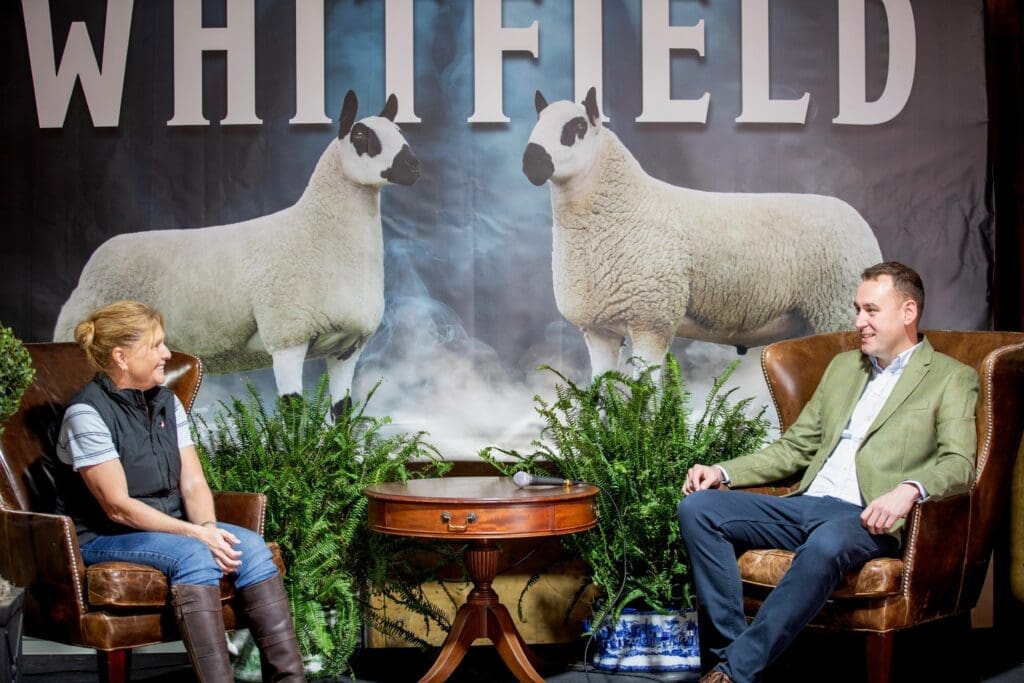
British sheep farming has long carried influence far beyond our own shores. From genetics to fleece quality, the reputation of the UK flock continues to shape flocks and markets around the world. Few people understand that global connection better than Chris Adamson of the National Sheep Association (NSA), whose work bridges practical flock management with industry leadership across the North of England.
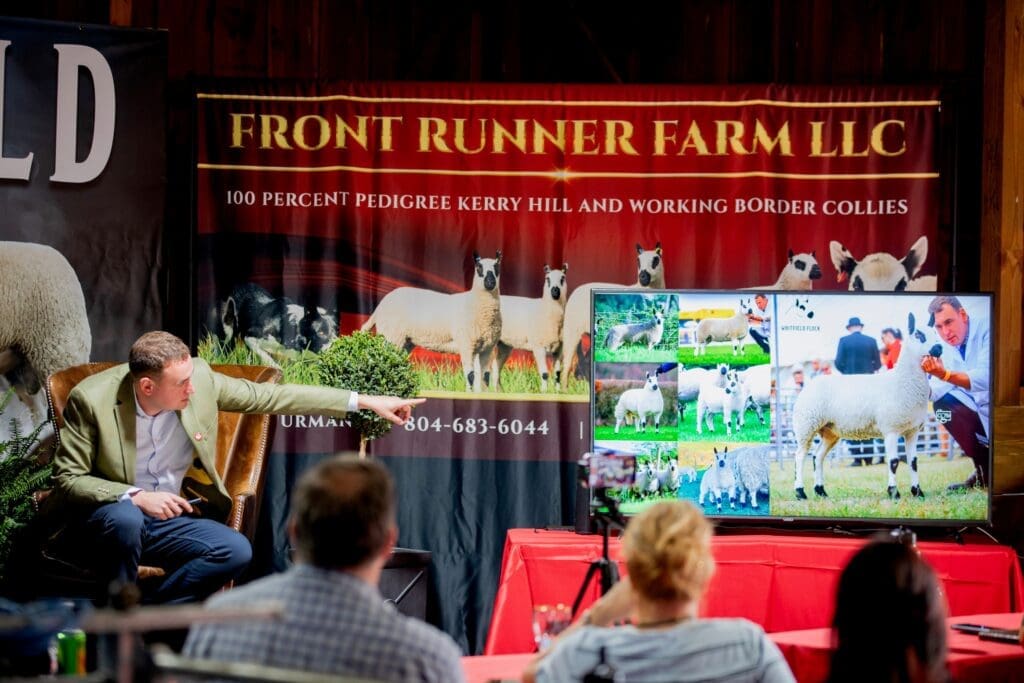
Raised in the industry and now working closely with breed societies and British Wool. Chris brings both grassroots experience and a strategic perspective to conversations about sheep and wool. His recent trip to the United States, supporting the development of the Kerry Hill breed and engaging with American breeders. Offered a valuable lens on how British genetics and wool are viewed overseas.
In this Q&A, Chris reflects on his journey into the sheep sector, what he observed during his time in the USA, and why protecting breed identity and wool quality remains central to the future of British sheep farming at home and abroad.
Can you share a bit about your background and how you’re involved in the wool industry?
My involvement in the wool and sheep industry goes back to my childhood. I was introduced to sheep farming through my grandad which led me to building up my own flock and becoming deeply interested in the wider sheep sector. Wool has always been part of that journey. As a breeder I have always tried to promote the value of British wool and the important role it plays in the identity and sustainability of our native breeds.
Alongside my own flock I work for the National Sheep Association as the North of England Manager. This gives me the opportunity to work closely with a wide range of breed societies and represent the interests of sheep farmers across the region. Through that role I regularly work with British Wool and support the messages we both share around the value of UK wool, the importance of quality and the need to champion our national flock. That combination of practical experience and industry involvement has shaped the way I look at wool production both at home and internationally.
What inspired your trip to the USA, and what were your main goals for going?
I was invited by the American Kerry Hill Sheep Society to speak at their members workshop and to attend their first show at NAILE. Over the past few years, I have exported most of the embryos and semen that have entered the country since the lift of the ban which has put me in a unique position to support their breeders as they establish the breed. The Society asked me to share my knowledge not just of the Kerry Hill but of the UK sheep industry as a whole and how a breed can be developed responsibly from the outset.
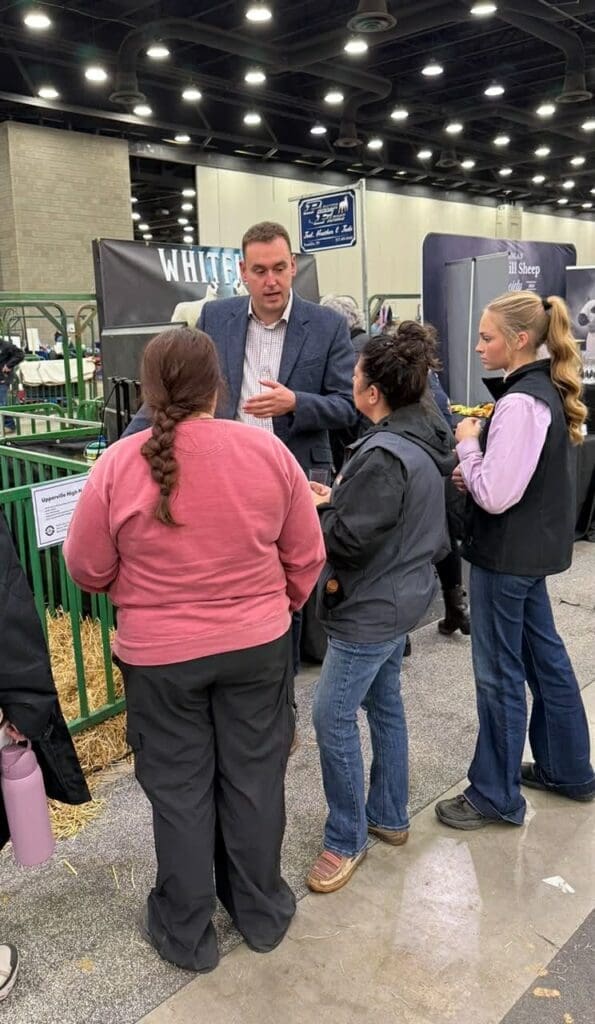
I was also asked to judge the first Kerry Hill show at the North American International Livestock Exposition. I declined judging as I felt my time would be better spent supporting the breeders on the ground, helping them prepare their sheep, trimming and giving them reassurance as they entered their first major show. My main goal was to help the Society make a strong and united first impression, pass on what I have learnt through my work in the UK, and give the breeders confidence as they take the breed forward.
How would you describe your experience while you were in the USA?
The experience was fantastic from start to finish. The enthusiasm and passion from the American breeders was incredible to see. Spending time with members, visiting farms and getting to know their systems was a real privilege and it showed just how committed they are to shaping the breed in the right way.
It was also fascinating to see the wider sheep industry in the USA and how different many of their breeds look compared to the UK despite sharing the same breed names. Their show ring style is very distinct. Sheep are generally shown much taller with a very upright head carriage and a strong emphasis on stature. Many breeds are shown fully shorn apart from the legs with very little wool on display. Even where sheep are shown in wool the fleece is heavily trimmed rather than presented in what we would call a full fleece here.
From a wool point of view the interest in the Kerry Hill fleece was one of the first things breeders commented on which was encouraging to hear.
At the start of my trip, I met William Surman, the agriculture, food and drink attaché at the British Embassy. Speaking with him was extremely insightful. The USA has around five million sheep compared with our thirty-one million yet its population is roughly forty times larger. It was interesting to hear that domestic consumption in the USA is driven largely by ethnic communities which is very similar to the situation here. William was instrumental in reopening the border to British lamb and ovine germplasm in 2023 after thirty-five years of restrictions. Interestingly the majority of trade so far has been in genetics rather than meat which demonstrates how highly valued UK breeds are overseas.
What key takeaways or positives did you bring back from the trip?
Whenever I travel abroad, I find it interesting to look at how agriculture operates in different countries. I would not say there is anything I will be changing within my own flock or system but that does not mean what they do in the USA is wrong. Their breeding goals are simply different and reflect what their market demands.
The biggest positive for me was seeing how much interest there is in UK breeds. It highlights the strength of our national flock, and the trust other countries place in British genetics. With the relaxation of import rules for germplasm the United States now has a real opportunity to once again draw on high quality UK bloodlines. The process is still lengthy, expensive and demanding but it is encouraging to see British breeds being imported again and making an impact.
Another key takeaway was the unity within the American Kerry Hill Society. They have worked incredibly hard to start the breed on the right footing and the passion from members was clear to see. Their first showing at NAILE was a huge success and seeing the ring packed shoulder to shoulder proved that they made an impression on the wider sheep industry.
How do you see your experience influencing your work in the wool industry moving forward?
My trip reinforced the importance of protecting breed identity and the value of maintaining strong wool characteristics even when breeding sheep for different markets. Seeing how other countries present and select sheep makes you reflect on the strengths we have here in the UK especially around fleece quality, traditional breed type and the role British wool plays in defining our breeds.
It also reminded me how highly British genetics and British wool are regarded overseas. That is something we should be proud of and continue to promote. Although I have only covered the trip briefly in this report, I hope it has given you an insight into my experience. I would strongly encourage everyone to get off the farm and explore what is happening beyond their own gate. Whether that is visiting other farms, attending events or going to shows within the UK it is always valuable to see what others are doing and to think about what you might bring back home.
The trip has strengthened my belief that the UK continues to play a major role on the global stage and sheep breeding and wool remains a key part of our national story. It has given me fresh energy to continue championing our industry both at home and on the international stage.
Launching Ewe and Your View
We are proud to launch Ewe and Your View in collaboration with the National Young Farmers’ Clubs (NFYFC), CFfl Cymru/Wales YFC and Scottish Association of Young Farmers Club (SAYFC).This exciting new competition gives young farmers a platform to share their voice. Open to YFC members aged 18–30, the competition invites participants to create a short video of up to two minutes exploring their thoughts and experiences within the wool industry.
Competition Themes
Entrants can choose from a range of engaging themes, including what British Wool means to them, how the shearing course discount helps young farmers, ways to promote British Wool to the next generation, or why supporting the wool industry matters so much.
Key Dates to Remember
The competition launches on 7th January, giving young farmers the chance to plan, film, and submit their entries. The competition closes on Friday 23rd January, so we encourage participants to get involved early. Our judging panel will review videos during the week commencing 26th January. We will announce the winners in the week commencing 2nd February via British Wool’s farm social media channels.
Ewe and Your View offers more than a competition—it gives young farmers a chance to showcase passion, pride, and innovation within the agricultural community.
Fantastic Prizes
We are offering fantastic prizes.. The overall winner will receive a cash prize, and we may award standout entries with a free place one of our shearing courses and feature them across our social media channels to give valuable industry exposure.
Emily Ashworth from Farmers Guardian and Cammy Wilson of The Sheep Game will judge the entries. Their expertise will help them recognise originality, authenticity, and strong messaging.
If you’re a young farmer with a story to tell, Ewe and Your View gives you the chance to share your voice and help shape the future of British Wool.
This competition reflects our continued commitment to supporting the next generation of farmers. In February for the eighth year in a row, we will also continue to offer 50% off any shearing course to all young farmers, reinforcing its dedication to skills development, education, and the future success of the wool industry.
Competition Terms & Conditions
- Promoter
British Wool promotes this competition.
- Eligibility
- We open the competition to members of Young Farmers Clubs aged 18 years or over.
- Competition Period
The competition opens on the 7th January and closes on the 23rd January. We will not consider entries submitted outside this period.
- How to Enter
- To enter, participants must create a 2-minute video on the themes described.
- Participants may submit more than one video.
- Prize
- We cannot transfer or exchange the prize, and we do not offer a cash alternative.
- Winner Selection & Notification
- Our judging panel will select the winner(s) from all valid entries received during the Competition Period.
- We will notify the winner(s) via social media in the week commencing 2nd February.
- Publicity
By entering, participants agree that we may use their name and/or entry for promotional purposes without additional compensation, unless the law prohibits it.
- Data Protection
We will use personal data solely to administer the competition in accordance with the Promoter’s privacy policy
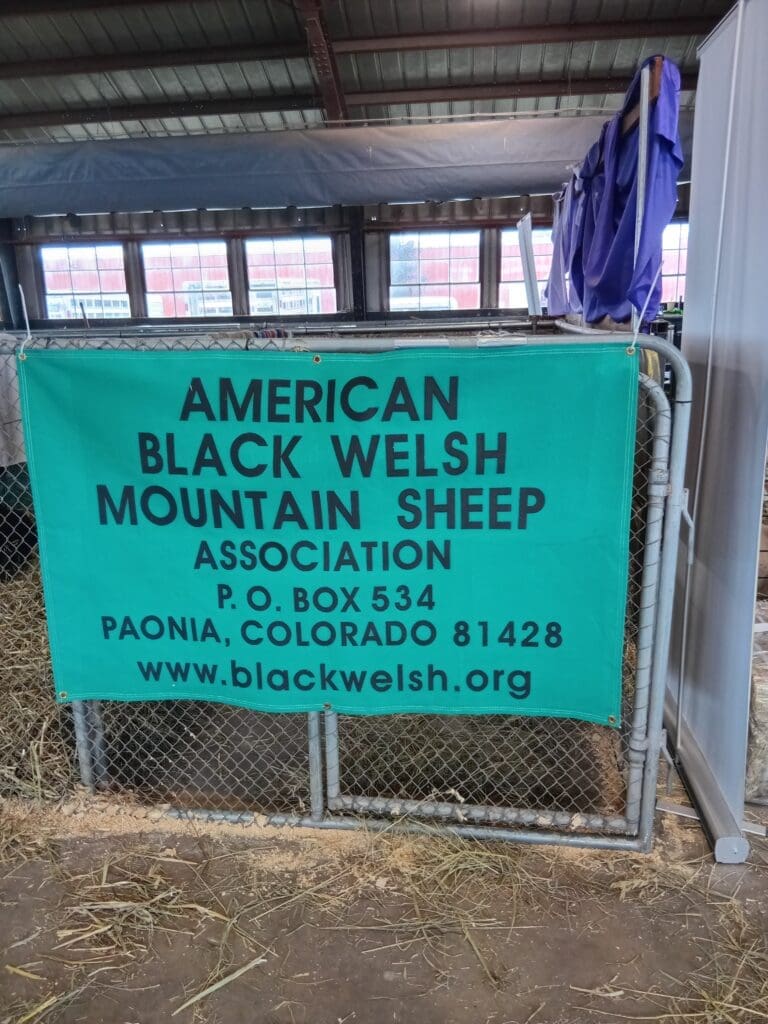
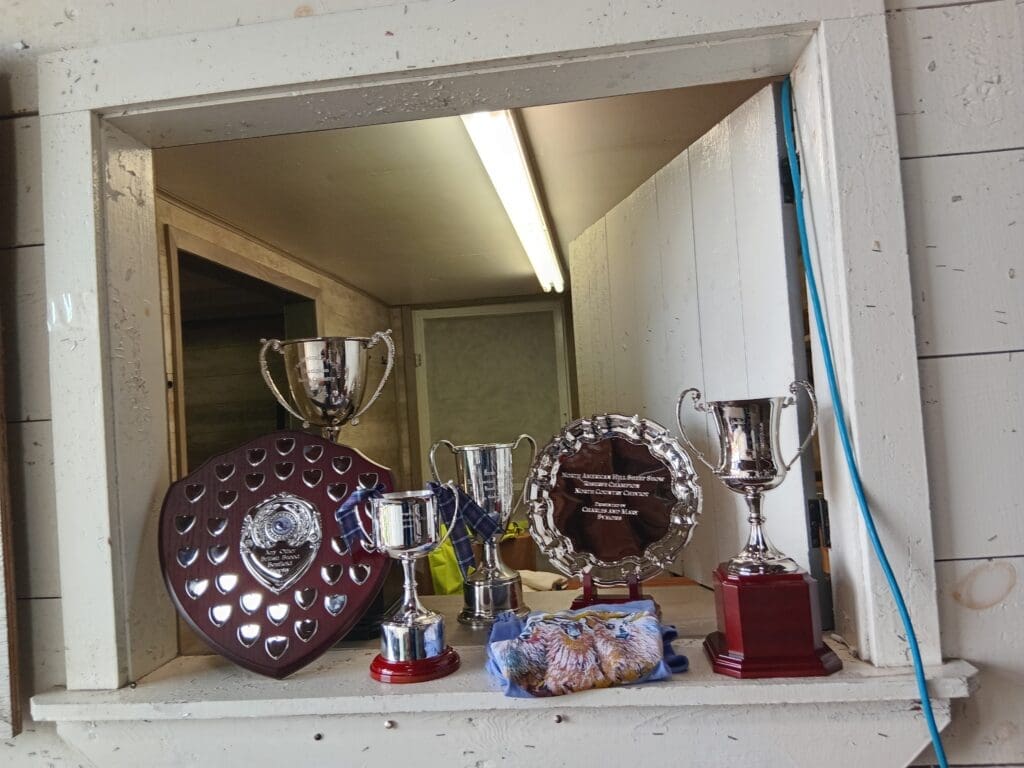
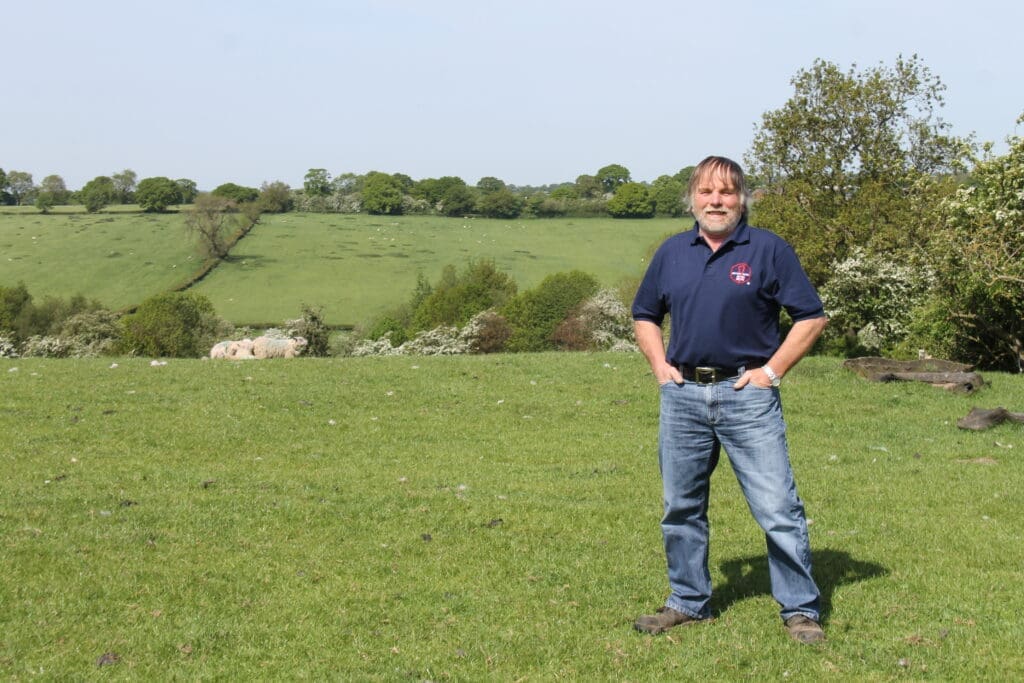
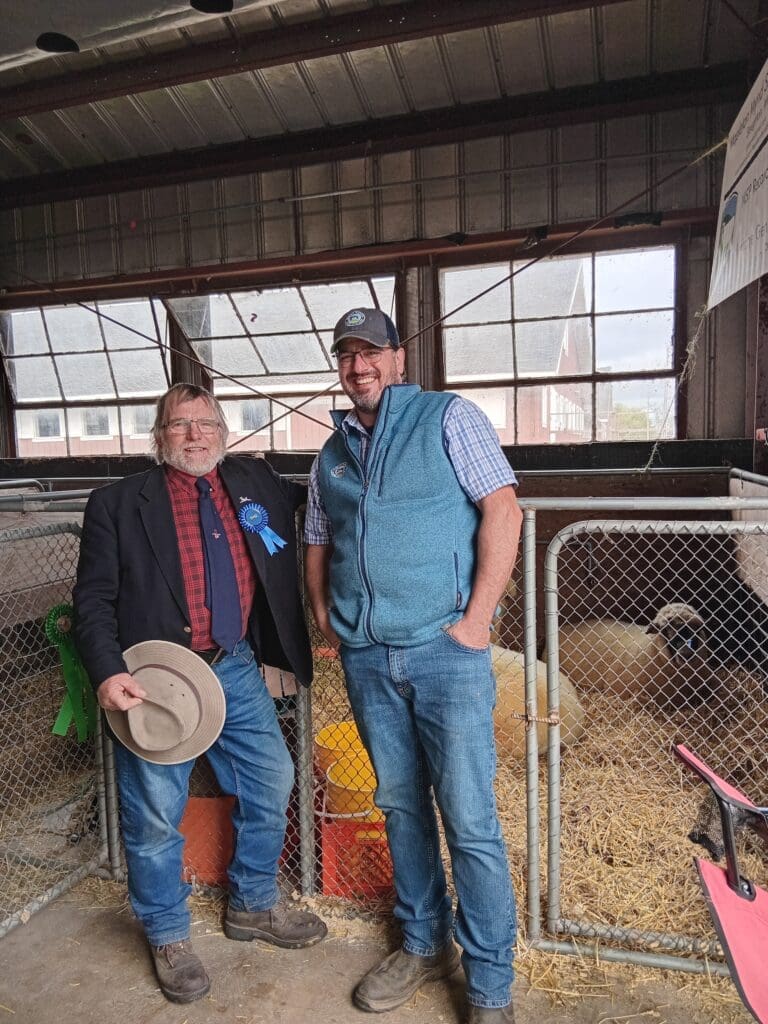
Our Board Member for the English Central region travelled to the USA. Richard served as a judge at the inaugural North American Hill Sheep Show, proudly representing our organisation on the international stage.
Can you share a bit about your background and how you’re involved in the wool industry?
I’m a fourth-generation farmer, with the fifth and sixth generations already following in our footsteps. Like many of my generation, my introduction to sheep came early—on a medium-sized Midlands farm with a bit of everything. One of my first jobs, at around age four, was to bottle-feed the lambs.
In the early 1970s, I studied Agriculture at Reading University, where my interest in sheep really took hold. I was fascinated by the new and emerging breeds and crossbreeds, names like ABRO Damline and Colbred (now gone), and Finn, Friesland, Cambridge, and Meatlinc, the latter developed by Henry Fell and now successfully continued by his son and grandson, George. It was an exciting time, though my focus back then had to remain on our dairy herd rather than sheep.
That changed in 2009 when the dairy herd left the farm, giving me time to direct my energy toward new interests. Sheep replaced cows, and as I began reading the annual publications from British Wool, I noticed there was no Derbyshire County representative at the Central Region. One thing led to another, I became Chairman of the Central Region and, much to my surprise, am now a Board Member. Having seen first-hand the consequences of the Milk Marketing Board’s demise, I’m determined to support British Wool and protect our industry from a similar fate.
What inspired your trip to the USA, and what were your main goals for going?
I hadn’t planned the trip to the USA at all. Through organising local Sheep Fairs to promote the sheep industry in all its forms. I met an excellent Cheviot breeder, James Metcalf, who organisers invited to judge at the inaugural North American Hill Sheep Show in 2024. Their aim is to breed British-type sheep. For the 2025 show, they were looking for a judge for the “Any Other British Breed” category.
They surprised me with the invitation. I accepted with both excitement and a fair amount of trepidation, but with a firm resolve to judge by UK standards.
How would you describe your experience while you were in the USA?
Our hosts treated the four judges with extraordinary hospitality, truly “like royalty.” One evening, around 10 p.m., while walking back to our condo. We passed a members’ club, and two men invited us in, one of whom turned out to be the mayor of Escanaba. He insisted that drinks were on his tab all night!
That level of generosity and kindness continued throughout the week. We always had a car and driver available, often from one of the large local families. Many families in the area live simply, no TV, no mobile phones, until the children are working. With an average of around ten children, all homeschooled. It was inspiring to see so many polite, hardworking, and confident young people who were eager to talk and engage.
Escanaba, on the northwest coast of Lake Michigan. A rural area with modest farms and strong support for Donald Trump. The sheep we judged over three days were, with very few exceptions, of a remarkably high standard. Many would have held their own against serious competition in the UK.
There are about five million sheep in the USA, but lamb and mutton remain unpopular. The story goes that during the world wars. American troops stationed in the UK were fed poorly cooked mutton, and that bad experience still lingers. Attendees travelled anywhere from 3 to 48 hours to reach the show. Which had a wonderfully social, friendly atmosphere quite different from most shows in the States.
What key takeaways or positives did you bring back from the trip?
Wool, for many in the USA, is something of an embarrassment. Many exhibitors process their own wool at home, it’s a small-scale, cottage-style industry, often run by family members. Despite that, the quality of the yarns and the natural dyes they produce were impressive.
There’s real potential for a gradual introduction of British genetics to help improve carcass quality in American flocks. Thanks to John Royle of the NFU, I’m now in regular contact with John Wilkes of AHDB in the USA and have reconnected with Cody Heinke, one of the key figures driving progress in their sheep sector.
How do you see your experience influencing your work in the wool industry moving forward?
The biggest takeaway for me, as a Board Member, was the reminder of how fortunate we are in the UK to have a functioning auction system, where buyers actively compete for our wool, recognising its quality. As Cody said, rather ruefully, in the US much of their wool is simply “left in a corner until I can find a use for it.”
That contrast has strengthened my resolve to continue standing up for and promoting British Wool. We have an incredible product and a system worth protecting.