Nationwide Shearing Courses for 2026
We have announced that we will be running 120 shearing courses again this year from our own experienced team of instructors. We will offer courses across the whole of the UK, between April and August this year. These courses have been live on our website since February 3rd with spaces booking up fast.
We design these courses to develop good techniques and shearing practice from the outset. Courses cover key topics relating to shearing such as health and safety, the shearing environment, equipment, shearing technique, and care for your wool.
The industry recognises these courses worldwide and tailored to individual levels of ability. From an absolute beginner (Blue Seal) to an advanced stage (Gold Seal). Course content is designed to achieve several individual objectives. From shearing your flock more efficiently and effectively, building foundations for career entry opportunities, and supporting entry at global competitions of the highest standards.
How to Book and Further Information
To book a Shearing course, click here, (Book online | Sheep shearing training | British Wool) and you can browse available courses based on your location, date, and skill level. Once you have selected your preferred course, follow the online registration process to secure your place.
Machine shearing and Wool handling courses are available to suit all classes of trainees but anyone wanting an Advanced machine shearing course should contact Emma Jagger or Richard Schofield by emailing [email protected] to obtain a booking on code.
One-day Machine and Blade shearing on-farm training courses are also available ranging from those having no experience to professional shearers traveling the world.
If you require further assistance or have specific questions about course availability, equipment requirements, or payment options, you can contact our shearing team directly via email at [email protected] or call 01274 688666 (Option 6). Early booking is recommended, as spaces are limited, and courses can fill up quickly. You should arrive and leave in clean clothing. If you don’t have a handpiece, you may contact the instructor to discuss loan options.
Recommended clothing for shearing courses:
- Shearing trousers, work trousers, or jeans.
- Shearing vest or polo shirt.
- Sweatshirt or jumper (when you’re not shearing)
Footwear requirements:
- Flat-soled trainers or shearing moccasin
Equipment necessities:
- Serviceable handpiece with a worm/spline drive
- 2 to 6 clean, sharp short bevel combs (88-94mm)
- 4 to 12 cutters
Matt Smith Shearing Masterclass Announced
You may have seen on our social media some exciting news that we will be working with Matt Smith, World Record Holder and British Wool Ambassador. On a Shearing Masterclass, to support shearers in the UK in achieving their goals.
For more than 30 years. British Wool and UK shearers have been making a significant impact, both in the UK and internationally. Our Team are proud to have supported shearers and to have sponsored several British and world shearing records, as well as various shearing competitions.
Our focus is to consistently enhance its support for shearers in a constantly evolving industry. We are committed to maintaining high training standards, staying up-to-date, and helping individuals achieve their career goals. To accomplish this, we recognise the importance of continuous improvement and adaptation.
Most of you will be aware of Matt Smith and his role within the shearing and record scene here in the UK. Not only holding a world record but also hosting, facilitating, and working with many other successful world record attempts that have taken place here in the UK.
Advanced Courses for Experienced and Aspiring Shearers
To achieve the desired result for all shearers. We have decided to bring Matt Smith’s training in as part of what we have to offer.
These courses are designed for shearers who regularly shear 300 or more sheep per day. As well as for Senior and Open competition shearers. Participants will gain a deeper understanding and more extensive experience in shearing through a course tailored specifically to their skill level. Whether you are refining your technique, enhancing your knowledge of gear, or strengthening your theoretical foundation. These courses are intended to elevate your skills to the next level.
While it’s important for individuals to learn and advance through their early levels. We must also ensure that the young people who begin this journey receive the support they need to reach the highest levels of achievement.
We will call in experienced and well-respected help from other shearers who have a lot to offer our industry. Some of them are already working with young UK shearers who have achieved amazing accolades.
Dates and Locations
📍West Sussex
📅 Thursday 8th & Friday 9th May
📍Gloucester
📅 Monday 12th & Tuesday 13th May
📍Gloucester
📅 Wednesday 14th & Thursday 15th May
To book please contact Richard or Matt, once you satisfy the criteria then you will be shared a password to unlock the course.
Matt Smith will also be hosting a series of Shed Days, where he will customise the training to meet the specific needs of your shed. This initiative aims to drive significant improvements in performance and efficiency. For more information, please contact Matt Smith or Richard Schofield.
👤Richard Schofield
📞07966 291618
👤Matt Smith
📞07789 290331
Heiniger has launched the Xcell, a new battery powered clipper. Suitable for sheep and other large animals. The high-performance battery offers 60 minutes of run time. Whilst being light enough to fit into an ergonomic hand piece. Heiniger’s Hefin Rowlands says:
“The Xcell is a dual speed clipper that can be supplied with two batteries to help even the most demanding users to clip all day. The high-speed unit is capable of running at 2,500/2,800 double strokes a minute whilst remaining quiet with very low vibration levels,”
A new patent pending direct drive makes the Xcell well suited to shearing sheep and camelids or clipping cows, adds Mr Rowlands.
“It is a truly unique design that can be fitted with different combs and cutter combinations to make it suitable for a variety of applications. Unlike some battery powered clippers it is light, at just 1,334 grams, making it well suited to those operating for long periods of time,”
The Xcell features an easy-to-handle, soft touch grip with anti-slip coating which will make it well suited to those operating in challenging conditions for long periods. The battery can be recharged in 60 minutes to enable continuous running time with two batteries, concludes Mr Rowlands.
“Like all Heiniger clippers, the Xcell has been manufactured to be best in class. The combs are forged in our Swiss factory out of the strongest steel and the handpieces are built to last for years of demanding use. Our UK distributors are excited to have a new Heiniger product that we see as leading the way in battery operated clipping,”
The Xcell is available in the UK from spring 2025 from a nationwide network of supportive distributors that offer product support and information.




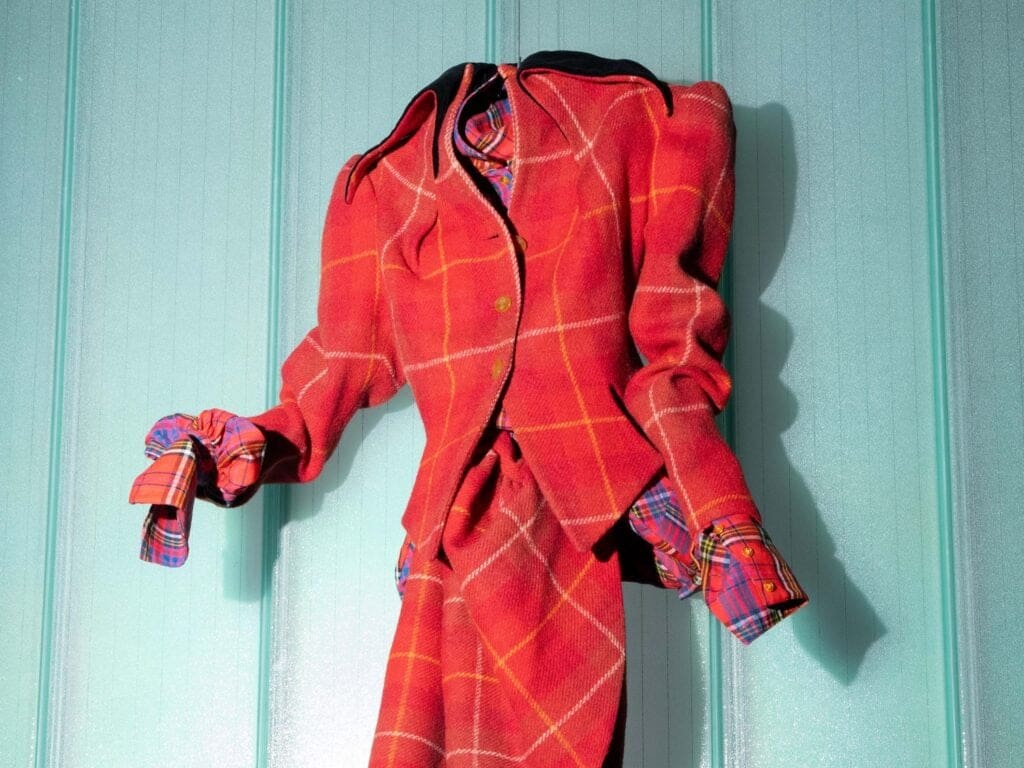
British Wool on the Catwalk
British wool is gaining renewed visibility on international catwalks. Where designers are reinterpreting this traditional natural fibre through a contemporary lens and introducing it to new global audiences.
Once associated primarily with heritage knitwear and rural craft. British wool is now being showcased in directional collections that emphasise innovation, traceability and responsible sourcing. Its presence at major fashion weeks is not only elevating its status within luxury and ready-to-wear markets, but also challenging outdated perceptions about performance, versatility and handle.
As a result, British wool is opening doors to new commercial partnerships, export markets and design-led collaborations worldwide.
Haldi Kranich-Wood, Business Development Manager at British Wool, comments:
“We have spent the past 2-3 years targeting the fashion sector through attending European shows and presenting our new sourcing guides. These sourcing guides show all our partners certified British wool cloth and yarn ranges that are currently available to brands, and it is the first time they have been brought together to be shown as one complete collection, to make it easy to source genuine British wool with traceability back to our farms.
This has allowed us to have conversations with many brands who have never previously considered local wool in their collections. Part of this was the perception that British wool could only be used in carpets and was too coarse for this sector. The sourcing guides have really helped dispel this myth.”
Brands like Marc Jacobs, Viviene Westwood, Zenga and Dior have all shown British wool on the catwalk over recent months which is important as Haldi explains
“This high-end fashion helps shape more mainstream (volume) fashion so it’s important that we are shown in this arena.”
This activity has also seen several new yarn and cloth collections being launched across Europe and brands embracing this in their ranges which is helping grow the overall demand for British wool.
Haldi, concludes:
“It has been amazing to see brands being really engaged with our sourcing guides and asking questions about British wool as a fibre, some for the first time. They are also increasingly asking about farming standards; this activity gives us the ideal platform to communicate and educate about the high standards farmers in the UK work to and explain why some global standards are either not relevant or indeed impractical in the UK.”
Gather your wool our depots will be open and ready to accept your wool starting in May 2025. We have a comprehensive network of depots nationwide, with over 110 collection centres points across the UK and even more on the way. This makes it easy for you to send your wool to us.
Free Haulage
To make wool delivery easy and convenient for you we have introduced free haulage collection if you and your neighbours can get 100 fully packed wool sheets together. All you need to do is call us and we will arrange the collection.
Once Delivered
After your wool is delivered, it is graded at one of our depots. Individual clips are combined to form commercially graded lots, which are then sold at auction. This process ensures a consistent supply of large quantities of wool that have a uniform type and quality, catering to the needs of the international textile industry.
Here are some important points to keep in mind when sending your wool to us:
- Pack your wool sheet to its full capacity. This will help reduce your transportation costs.
- Consider collaborating with your neighbours to combine your transport efforts. This can also lower your transportation expenses.
- Send your wool to us as soon as it is shorn. Delaying delivery may expose the wool to damp conditions or damage, which can decrease its value.
All wool must be delivered using our provided wool sheets. These sheets will be distributed by your local depot before the new wool season. If you require wool sheets, please contact your local depot directly.
To improve our depot operations, please ensure that wool sheets are evenly filled and properly packed. When correctly packed, wool sheets should weigh around 80 kg of wool, although this may vary depending on the type of wool.
Wool Sheet Labels
All wool must be clearly labelled. All wool sheets should be clearly labelled with the following.
- Member’s name
- Address
- Registration number – this is a unique seven-digit to each member
Each wool sheet should have one label attached outside and another placed inside the sheet.
If you are using a haulier, please make sure to fill out the provided paperwork completely.
If your wool is not identifiable it is much more challenging for us to ensure that you are paid correctly.
QR Code
Last year, we introduced a QR code system at our collection centres. By using the camera on your smartphone to scan the QR code, you will be directed to a form. This form allows you to inform us that you have dropped off your wool, enabling us to release your payment.

The Woman Inspiring a New Generation of Farmers
Farming in the UK has seen an increase in female shearers entering the industry. As a result more women take part in shearing competitions.
In particular as the agricultural show season kicking off from May. One woman, Susie Parish, an award-winning shearer and British Wool Ambassador based in Hampshire. Continues to inspire women across the UK to become shearers.
Susie’s expertise in shearing began at the age of 16. Prior to this, she worked with sheep from age 10 on her family’s smallholding. Then, when a local shearer failed to turn up one day, she took matters into her own hands and instantly found her calling.
Since that time, she has competed in shearing and wool-handling competitions across the UK. As a result, winning the prestigious Ladies Competition at the Royal Welsh Show multiple times and is set to compete at the Royal Highland Show in 2025. Currently, Susie judges junior shearing competitions, therefore ensuring the next generation of shearers are given the opportunity to develop their skills. Susie, said:
“Over the past five years, I’ve seen a remarkable increase in female shearers entering the industry, particularly women and girls competing in shearing and wool handling competitions, encouragingly who are incredibly young and already so talented.
“It’s so important that woman represent their skills at these shows not only to inspire the next generation, but furthermore to preserve a traditional skill. For example it was a privilege to discover Marie Prebble, previous sheep-shearing World Record holder, pursued a shearing career after seeing me compete at a show.”
Susie’s drive to become a successful shearer and farmer stems from her passion of British wool. She said:
“Like so many people, I am passionate about British wool and it’s so important to shift outdated perceptions, particularly among older generations who remember wool as itchy.”
“Wool is one of the most sustainable materials we have; it’s breathable, biodegradable, and versatile. I want to ensure people understand just how valuable it is in fashion, interiors, home insulation, and so much more.”
Outside the competitions, Susie has used her platform to educate the public on the value of wool and the realities of sheep farming, having appeared on Alan Titchmarsh’s Love Your Weekend, Countryfile, and notably even sheared a sheep live on The Jeremy Vine Show. Susie, said:
“What’s more the 2025 show season starts in just a few months’ time and I’m really looking forward to seeing a whole new wave of women visit for the first time, participate in competitions and feel inspired by the wealth of talent we have across the UK. I’d always encourage, whether from a farming background or not, people take the time to visit their nearest agricultural show and see first-hand the passion and determination from our farmers.”

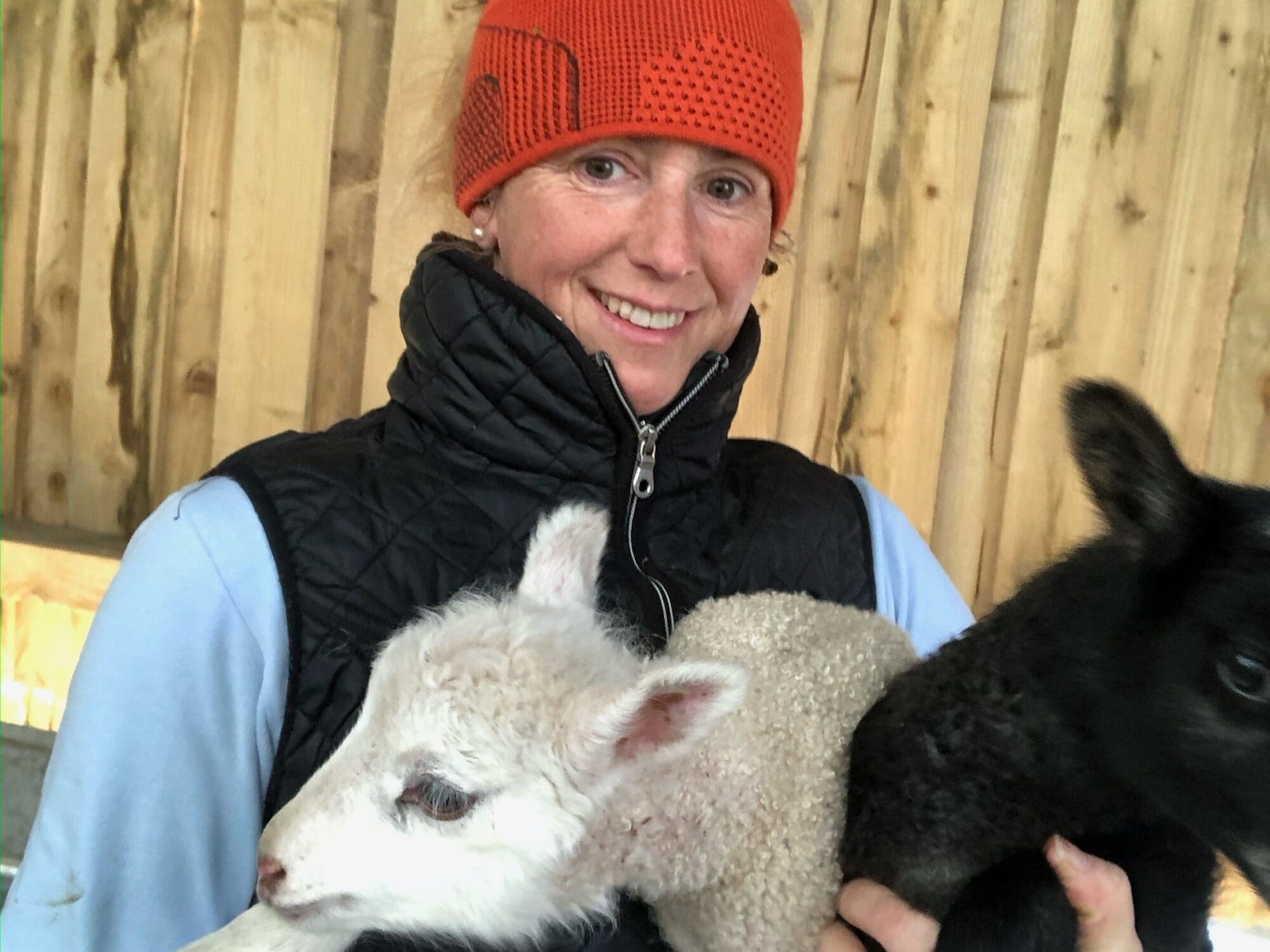
Lambing Season with Susie Parish
Lambing season is always an exciting time on our farm. As a low-input, fibre-focused operation, our approach is relaxed and natural, allowing our ewes to lamb with minimal intervention. Our flock is made up of three breeds, the Gotland sheep, known for their long, grey, lustrous, and curly fleece, originating from the Isle of Gotland in Sweden. Our own Stein sheep, a crossbreed we have developed to produce a fleece with an exceptionally high softness factor alongside its lustre, and a small flock of Shetlands for our conservation grazing.
Our lambing season kicks off in April with the first group, followed on by the other groups through May and into mid-June. By staggering our lambing period, we ensure that we can manage the process smoothly, with plenty of time to monitor the flock while still maintaining a low-stress environment. The ewes lamb outside, which aligns with our low-input philosophy. They only get hay and general-purpose molasses tubs, without the need for additional concentrates.
Easy Lambing and Maternal Instincts
One of the advantages of our breeds is their easy lambing. Gotlands and our Stein sheep are light, narrow-framed ewes, making birthing relatively straightforward. They rarely require assistance, and their strong maternal instincts mean that they take excellent care of their lambs. My role is primarily to keep an eye on the flock, ensuring all is going well and catching up lambs to ring the ram lambs when needed. Tail docking is seldom necessary, as Gotlands naturally have short tails, and our crossbreds also inherit reasonably short tails.
Since we farm for fibre rather than meat production, there is no urgency for the lambs to grow quickly. Our breeding strategy reflects this, as we typically lamb for replacements and maintain a significant number of wethers in the flock. To ensure our ewes remain in optimal condition, we rotate their lambing years, giving them a break between lambing cycles.
Challenges and Rewards of Lambing
While our own lambing season is generally laid-back, I do miss the hands-on aspect of more intensive lambing systems. Meaning I’m always eager to help friends nearby with any challenging births, no matter the time of day or night! There’s nothing quite like the satisfaction of successfully delivering a lamb in a tricky situation.
The biggest challenge we face is the weather. Our flock is shorn in January or February, meaning that by lambing time, the ewes have short wool. In particularly wet years, if they are in fields without shelter, I sometimes need to bring a few back in to protect them from the elements. However, for the most part, lambing remains an enjoyable and rewarding time of year.
With the arrival of new lambs, we look forward to another year of producing high-quality fibre. Here’s to another smooth and successful lambing season!
Meet Our Shearing Admin Instructors
We’re thrilled to announce that our 2025 shearing courses went live on 3rd February 2025, and we can’t wait for you to secure your spot!
Our admin instructors liaise with farmers to secure new venues, coordinate with shearing instructors in their area, and feed information back to the shearing team at head office. Ensuring courses run smoothly and effectively.
We met with them to learn more about their background and the shearing process.
Andy Barratt – Southern England
“I am an agricultural fencing contractor and shearer. I began my career in the year 2000, which is now a quarter of a century ago! I take great pleasure in witnessing the progress of my trainees as they advance through the levels and achieve their goals, regardless of what they may be. Some trainees even go on to represent their country and set records! It is incredibly rewarding to know that I have played a part in their success.
I encourage everyone to attend as many shearing courses as possible and to focus on mastering the basics, particularly footwork. When the sheep is positioned correctly, the shearing action will follow naturally, and speed will develop with perseverance.
British Wool’s shearing and wool handling courses are an excellent way to learn vital skills and can open numerous opportunities within the industry. With the new advanced seals now recognised by Highfield, these qualifications are acknowledged across various sectors globally.
Competitions provide an excellent platform to showcase quality shearing, while records serve to raise public awareness, highlighting the skills of shearers and inspiring the next generation to pursue careers in shearing and wool handling.”


Hywel Wigley Jones – Wales
“I own a hill farm in North Wales, specialising solely in sheep. I began shearing at the age of 14, working alongside a local contractor and instructor for several years before establishing my own operation. I also spent a few seasons shearing in New Zealand, which provided me with invaluable experience.
I have been involved in shearing training for over 25 years, and it is immensely satisfying to witness trainees develop their shearing skills over the two-day course. Through this training, I have had the pleasure of meeting many people.
If you wish to learn how to shear, I recommend enrolling in a British Wool shearing course and attempting to secure a position with a local contractor. Shear, shear, and shear some more, and then consider joining another British Wool shearing course, where instructors will assist you in advancing your shearing abilities.
Wool handling courses are also crucial and are becoming increasingly popular. All these initiatives contribute to ensuring that our shearers and wool handlers are well-prepared when competing on a global scale.”
Kieran Mc Cullough – Northern Scotland
“I live and work on a mixed sheep and beef farm on the west coast of Scotland. I shear sheep for local farmers in my area. For the past seven years, I have been involved in British Wool shearing training.
I take great pleasure in meeting trainees, both old and new, and watching them develop their skills. For those keen to learn, I advise them to attend courses and then put their knowledge into practice.
The courses offered by British Woll are the cornerstone of the industry in which we aspire to be involved. Our shearers and wool handlers are a testament to their own abilities and to what we can produce in the Northern Hemisphere.”

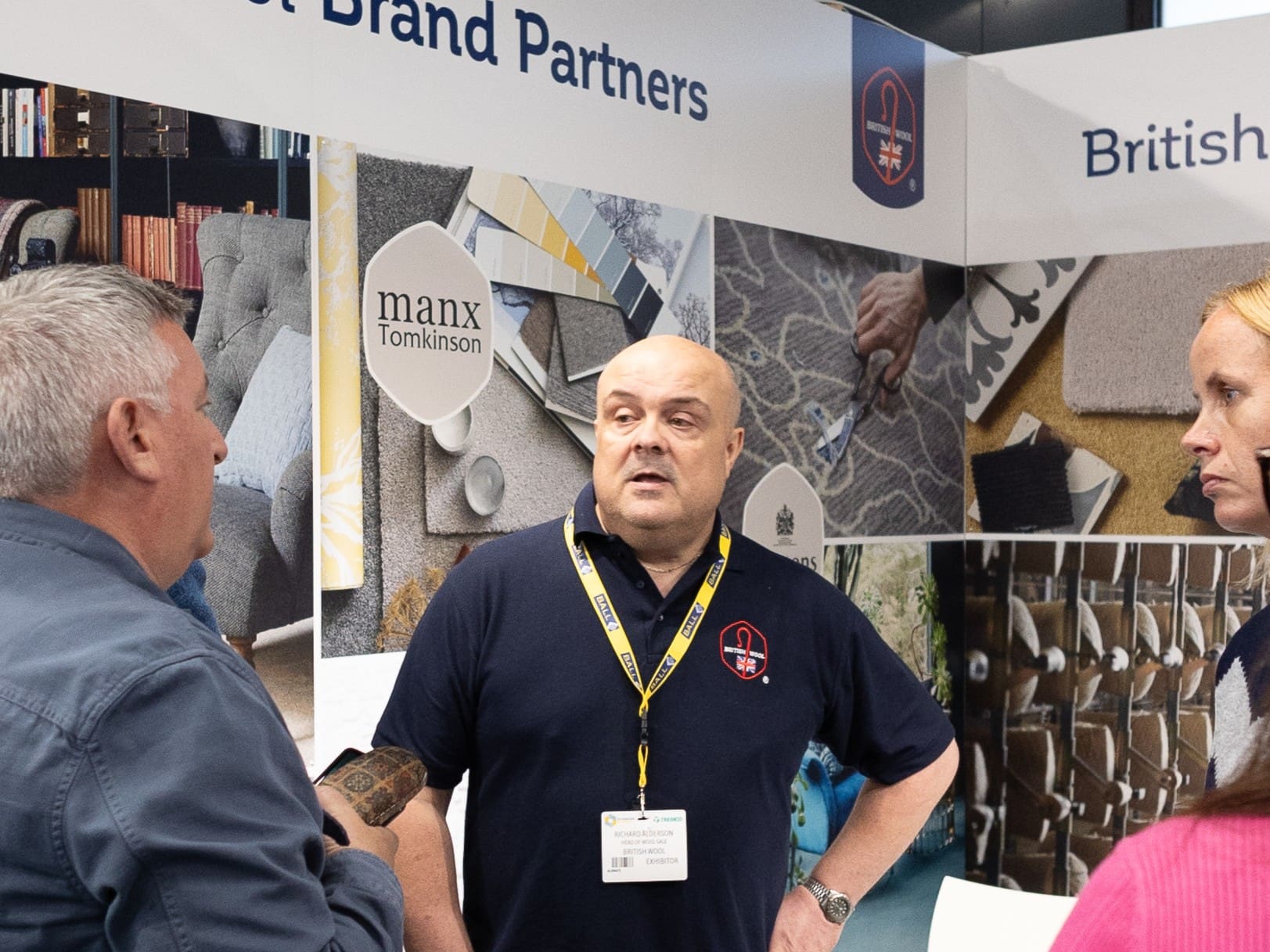
Meet Richard Alderson – Head of Wool Sales
What does your role as Head of Wool Sales entail?
My main role at British Wool is the link between our depots, where the wool is received and graded through to our auction buyers. I work closely with our quality control team to ensure the wool is graded to the high standard expected by the buyers as this is essential to maximise the price achieved. I have regular discussions with both our UK and overseas buyers to ensure the wool they buy meets expected standards and that the flow of wool through our auctions is meeting any demand they may see.
A lot of work goes into preparing the auction from building it through to pricing ready for auction day itself – along with my colleague Jen, we would run the auction. I also work with any potential new buyers explaining our grades and advising which types would fit their specific requirements.
How long have you been at British Wool and worked in the wool industry?
I joined British Wool in 2018 but have worked in the wool industry for 40 years. I spent the first 30 years of my wool journey working for wool merchants and over those years I bought millions of kilos at the very same auctions I now run. I also spent the best part of 18 months working at a scouring plant overseeing production and quality.
How is the current market in terms of prices and demand?
Demand for British wool from the very 1st auction of the season in early July has been fantastic, we have seen virtually full clearances in all 10 auctions held so far in the 2024/25 season. The average price achieved at auction this season has increased by nearly 25%. The nearest comparable market to the UK is New Zealand which historically used to sell at a premium over British but in more recent seasons the price of UK wool has tracked New Zealand wool and vice versa.
We are seeing the highest prices at auction since 2018, why is this?
The simplistic answer would be demand meeting and outstripping supply, and whilst this is the major factor, it’s how demand has increased that has made the difference. British Wool has worked tirelessly with many manufacturers and retailers to encourage them to either increase the amount of British wool they use in the case of manufacturers and for retail to insist that the products they sell are made from or include British wool. This demand then flows back to the auction buyers increasing the competitiveness in the auction and making British wool less of a traded commodity as buyers are committed to using British wool and can’t substitute for cheaper options.
There has also been a shift albeit slow from consumers trying to move away from fast fashion made from planet-damaging man-made fibres onto more sustainable environmentally friendly woollen goods.
I must add that like most of the world, sheep numbers in the UK have fallen, meaning less wool is available and this cannot be ignored as a factor.
How important is the auction system in maximizing the price of wool for our members?
Since the creation of the British Wool Marketing Board in 1950 the wool has always been sold at auction, and this is still the best vehicle for maximising the price of the wool. The auctions have moved from being originally open cry to becoming electronic in the late 90’s and since 2020 and the outbreak of Covid they have been held online. By holding the sale online this takes away the need for the buyers to attend the sale in person at our Head Office in Bradford. It gives them the freedom to log on from, in principle anywhere in the world on a PC, tablet, or even mobile phone. Since going online our registered buyers have attended the auctions remotely which has helped the auctions become much more competitive.
Are there any exciting projects that you’re working on at the moment?
We have projects running all the time and far too many to list, a large number are in the traditional applications where wool has always been used such as carpets, home furnishing and knitwear but we don’t dismiss any ideas put to us no matter how far off the wall they may seem. Wool, particularly British wool is a very versatile fibre and shouldn’t be pigeon-holed into a limited number of applications. My biggest and constantly ongoing project is to increase participants in our auctions which will only help maximise returns to our members.
Educating Consumers on the Wonders of Wool
Increasing consumer awareness is a key part of our marketing strategy. This is all designed to increase front-end demand for British wool rich products and increase the price of our members wool; a key tool to achieving this is PR.
During the past 12 months, we have seen a significant increase in consumer press coverage, with 160 pieces secured across national and regional media.
Graham Clark, Marketing Director, said:
“Over the past three years, British Wool has focused on two main areas: Increasing the number of brands using British wool in their products (through the licensing scheme) and increasing brand awareness amongst consumers.
PR plays a crucial part in this as it allows us to target a wide audience through our activity. During this time, we have secured coverage across many different national publications such as The Guardian, The Telegraph and The Financial Times, as well as great regional press coverage. This is key as we strive to drive more consumer demand for British wool rich products.”
Working with influencers is also key as Graham, added:
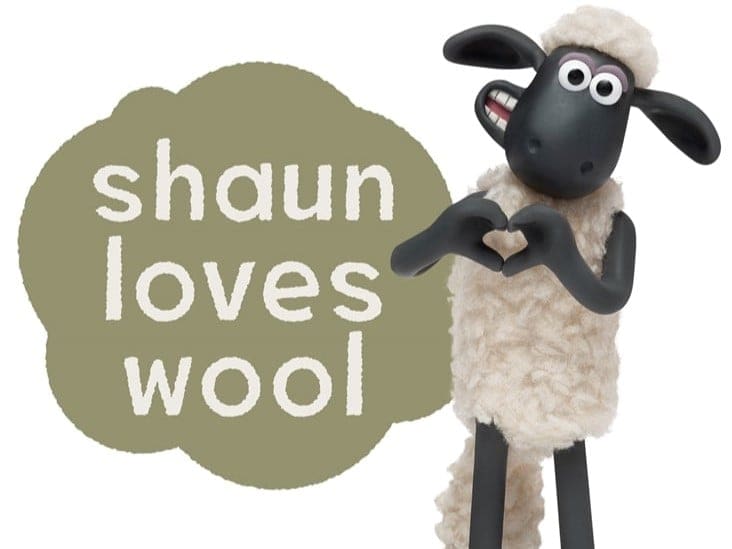
“Working with influencers can boost consumer awareness dramatically and we have been very fortunate to work with three great influencers over the past 12 months; Shaun the Sheep, Patrick Grant (Great British Sewing Bee) and the comedian Joe Lycett.”
Examples of the coverage gained on the back of these partnerships include:
- Over 350,000 views of the first Shaun the Sheep social media collaboration.
- Radio interview with Patrick Grant played 952 times with 120,000 views across social media.
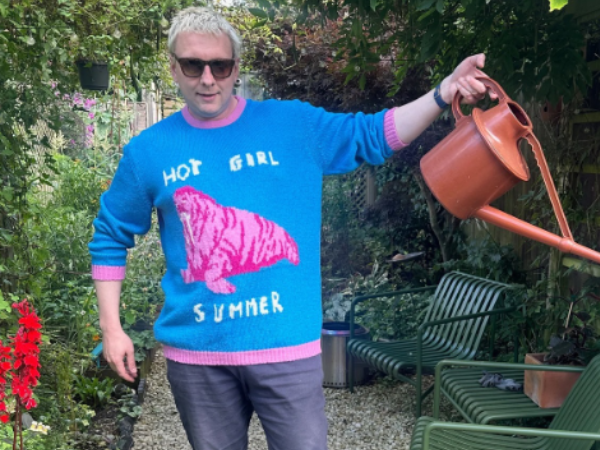
- 36,000 likes on a post by Joe Lycett about a jumper he had made from British wool.
Graham said:
“We don’t just target the consumer through PR, we also use social media (over 110k consumer followers across our channels), exhibitions and events, working with our licensee partners and the British Wool online shop, where sales have increased by 20% during the past 12 months.
It is great to see the amount of coverage secured over the past 12 months through our PR activity and digital channels. This is helping us push the British Wool brand to new audiences who are increasingly looking for more sustainable options when making purchasing decisions.”