Meet Emma Jagger – Shearing Supervisor
Emma Jagger is the Shearing Supervisor and has been with British Wool since January 2019. Along with our Shearing Manager, Richard Schofield, and a small team of Area Admin Instructors, we organise and promote our Shearing Courses.
Tell is more about your role.
This role is logistics-heavy and requires coordination with farms across the UK to provide sheep for shearing, suitable spaces to hold courses, our talented shearing instructors, and a fleet of shearing trailers and machines. These elements ensure the best opportunities for hands-on training.
What are your key responsibilities?
My key responsibilities is managing our booking website, including uploading new courses and monitoring participant numbers. I also provide trainees with detailed information on what to expect during a shearing course and issue certificates upon completion.
Tell us a bit about your experience in shearing.
Recognising the importance of understanding the trainee experience, and not being from a farming background I attended a shearing course. This firsthand experience assisted me in addressing trainee questions and concerns effectively. I am proud to have achieved my Blue Seal with the guidance and patience of my instructors, Roger and Stuart.
If you are interested in attending one of our courses in 2025, they will now be available to book via our website, Book Online.
What other areas do you cover in your role?
Part of my role is attending agricultural shows, where I meet individuals who have benefitted from our training. Hearing about their achievements – from competing and travelling abroad to breaking British and World Records – is truly inspirational.
Tell me a bit about yourself.
Outside of work, I enjoy travelling in my self-built campervan, often to destinations near water where I can (albeit wobbly) paddleboard, or theme parks as I am a massive rollercoaster enthusiast. I love crafting and experimenting with new creative pursuits. My current obsessions include working with polymer clay and using my Cricut machine. Above all, I love spending time with my son and husband.
Shearing Courses go LIVE in February
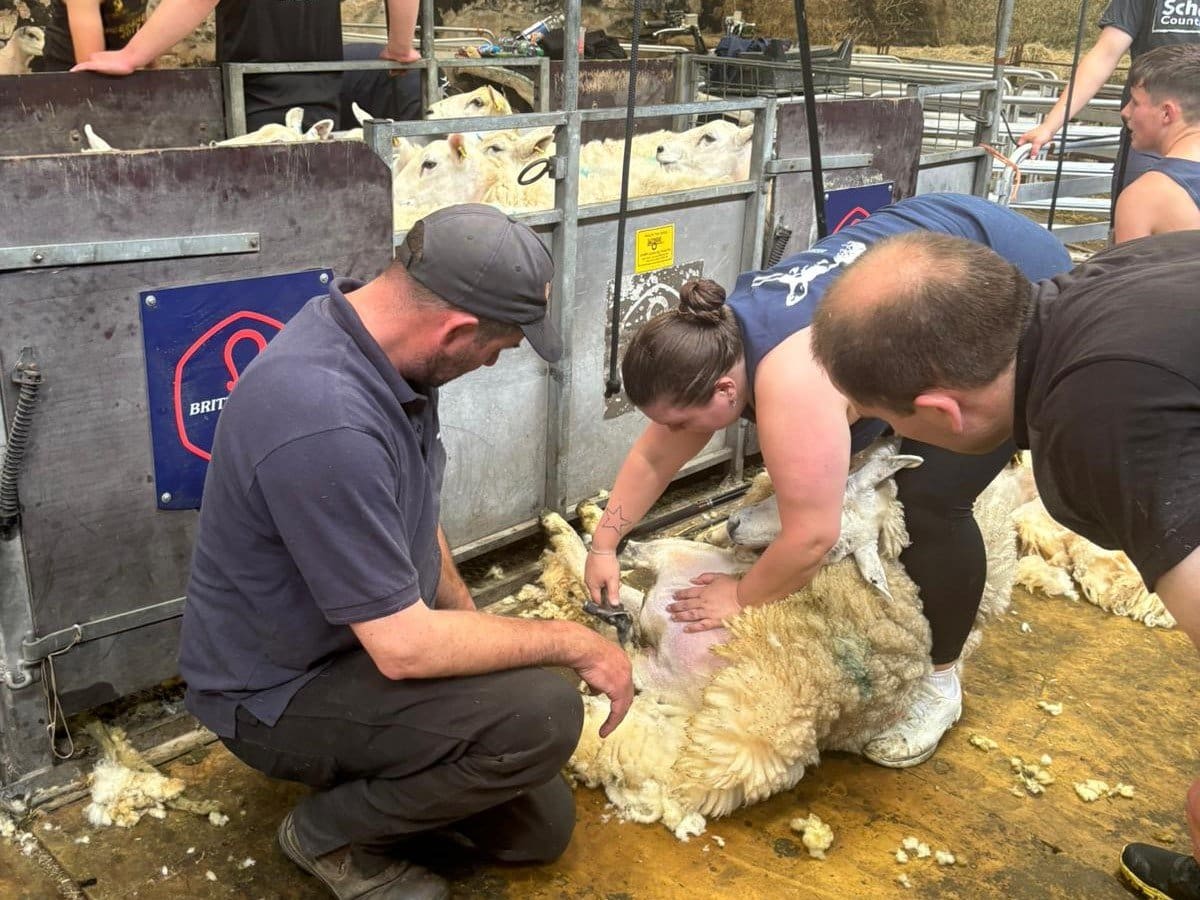
Our shearing team will publishing its list of shearing courses for the 2025 season on the 3rd of February. Our experienced team of instructors will run over 100 courses between April and August this year, offering tuition in machine and blade shearing, and wool handling.
British Wool shearing courses are designed to develop good technique and shearing practice from the outset. Courses cover key topics relating to shearing such as health and safety, the shearing environment, equipment, shearing technique, and care for your wool.
Courses generally last two days, are held on farm and have a high instructor-to-student ratio to ensure you get the best advice. Content is tailored by ability; Beginners can learn the basic technique and work towards a Blue Seal, Intermediate courses will help you improve your technique to either Bronze or Silver Seal standard, and Advanced courses will help those who already have some experience to refine their technique and support the skills required for competitive shearing at the highest level.
British Wool courses are recognised worldwide and our higher-level qualifications are accredited by Highfield Training which helps facilitate your shearing career by being recognised internationally as a professional qualification.
If you wish to find out more or discuss whether you would be suitable to attend an advanced course please contact British Wool’s shearing team by emailing [email protected].
Last year more than 850 people attended one of British Wool’s training courses, to book on a course in 2025 please visit our website from the 3rd of February onwards.
Book online
Alternatively, for more information call
Emma Jagger – 01274 688666
Richard Schofield – 07966 291618
Or email [email protected]
Additional courses will also be publicised on the British Wool Farm Facebook and Instagram page.
Meet Our Shearing Instructor – Andy Barratt
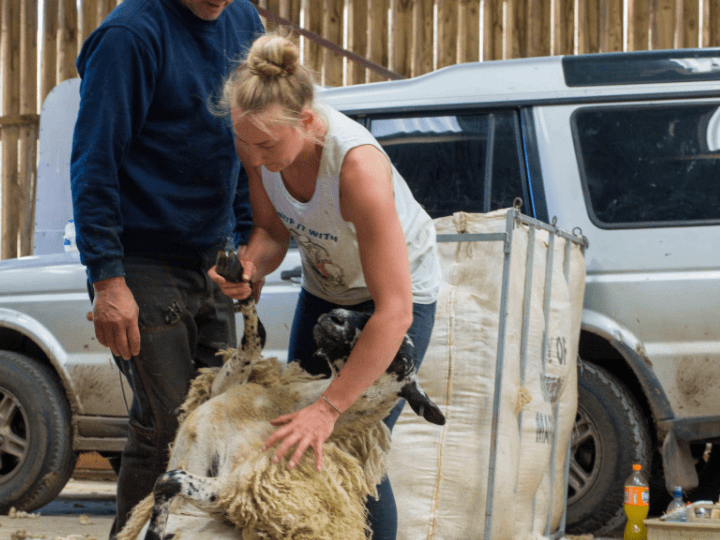
We have over 90 shearing instructors who collectively have over 100 plus years of experience. We spent some time getting to know Andy Barratt from Sailsbury one of our instructors in England.
Details of your farm/shearing/business?
I am an agricultural fencing contractor and shearer.
How long have you been involved in British Wool training?
I started in the year 2000, so a quarter of a decade!
What do you enjoy about your role instructing for British Wool?
I enjoy seeing the trainees progress through the levels and accomplish their goals no matter what they are. Some trainees even go on to represent their country and break records! That’s a great feeling to know you’ve helped them.

What would be your advice to those wanting to learn to shear be?
Go on as many shearing courses as you can and get the basics right especially footwork. If the sheep is in the right position the blow will just happen, speed will come with perseverance.
How important are the shearing and wool handling courses British Wool offers?
British Wool’s shearing and wool handling courses are a fantastic way to learn essential skills and will open opportunities in the field. With the advanced seals now, Highfield accredited they are recognised across all industries worldwide.
We’ve seen in recent years that the UK is leading the way on the competitive shearing stage and records. How important are these in raising awareness and in supporting our shearers?
Competitions are a great way of showing quality shearing and Records are a great way to raise public awareness, showcasing shearers skills and inspiring the next generation into shearing and wool handling.
Why Attend A Shearing Course from Matt Smith
With our Young Farmers discount announced for another year across our shearing courses. We caught up with Shearer and our very own Ambassador, Matt Smith, to discover why he believes shearing courses are so important.
What motivated you to become a Shearer?
“I grew up in New Zealand in the shearing industry, and right from the get-go, I knew I was going to be interested in this.”
At what age did you start Shearing?
“Growing up in the industry, I was fortunate to shear my first sheep at the age of 13.”
Where has shearing taken you in the world?
“I have been lucky to travel the globe. Experiencing shearing in a variety of locations including New Zealand, Australia, the United States, Eastern Europe, the Baltic States, and of course, Great Britain.”

How many shearing courses have you attended and where?
“Up until the age of 17, I attended a shearing course every year. Thanks to my dedication and practice, I was proud to say I could shear an impressive 500 sheep with skill and confidence!”
Would you say that attending these courses has improved your shearing ability?
“It’s easy to fall into bad habits, but attending courses regularly can help you overcome them.”
What seal have you gained?
“I proudly earned a Gold Seal in New Zealand.”
Why would you recommend attending a course to potential new trainees coming into the industry?
“It is important to understand that there is no right or wrong. You can learn from everyone and become more efficient by learning from multiple people.”
Would you say it is important to attend multiple courses?
“It’s impossible to retain and learn everything at once; mastering one area will help the other areas make more sense.”
What would be your top tips for attending a shearing course to get the most out of it?
“Gaining experience can be valuable, even if it differs from what you were shown/expected at the start doesn’t mean it can’t help you.”
Wool Symposium
The National Sheep Association Next Generation Wool Symposium 2024 took place at our Head Office in Bradford on the 14th and 15th of October.
The Wool Symposium is a biennial event organised by NSA Next Generation and ourselves. It offers up to twelve young people aged from 18 to 35 the opportunity to go behind the scenes at our Bradford headquarters and debate the UK wool sector and the role of young people within it.
The symposium is ideal for young sheep farmers and wool enthusiasts to gain a more thorough understanding of this fantastic fibre, the processes involved in taking it from farm to consumer and the role sheep farmers can have in ensuring the best return is achieved.
The journey started at Bradford Headquarters, with Andrew Hogley, the CEO, giving participants an insight into British Wool and the latest trends. This was followed by an insightful tour in our depot, experiencing the wool grading process and preparation of members wool for auction. The day finished with a presentation from Graham Clark, Marketing Director, on end-user marketing and the many initiatives in place and work being done to promote British wool to consumers.
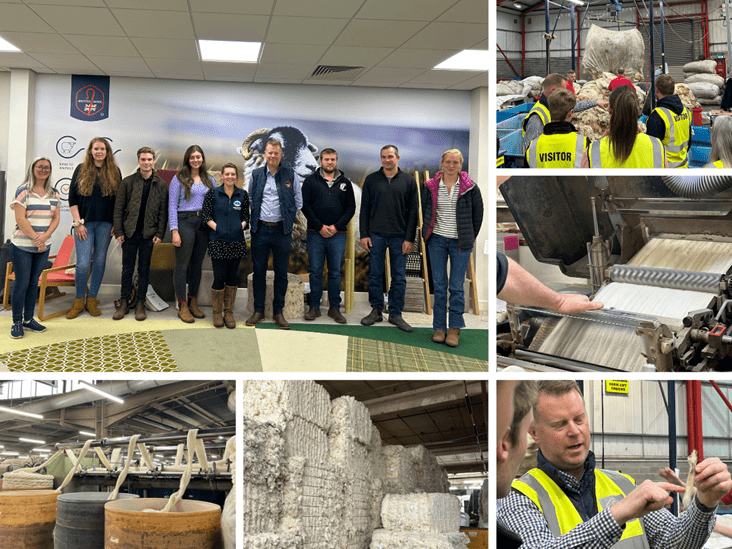
The next day, started off with a demonstration showing the auction process, which included an insight into the type of wool sold and how the auctioneers work to gain the best price for wool. The next stop Haworth Scouring to experience what happens once the wool has been sold, from blending the wool to washing and combing. The final visit was the onsite testing lab to gain knowledge on the types of tests conducted, not just on the wool fibres but the waste too.
Colin Jarvis, Area Manager, and Claire Jenkins, Member Administration Manager, from British Wool were hosts for the visit and Claire commented
“We thoroughly enjoyed out interaction with the members of the Wool Symposium. British Wool are committed to supporting the next generation who are a key group within our industry. Their profound passion for wool was evident and greatly appreciated.”
Nicola Noble, NSA Project Manager, joined the group and commented:
“It was an interesting two-day event filled with open discussion and a fantastic opportunity to engage with a group of passionate, young sheep farmers with the drive to understand, innovate and educate within the wool sector.”
Fiona Parker, NSA who organises the event tells us:
“The Wool Symposium is a joint initiative with British Wool which began in 2022, to give enthusiastic young sheep farmers the opportunity to see first-hand what happens at every step of the wool processing journey, from arrival at a grading depot to transformation at the scouring plant into a pristine fibre and the sale process at a British Wool auction.”
Tilly Abbott who attended the tour commented
“I had seen the wool symposium in previous years and always thought it would be a great educational point for both myself and to take on my shearing rounds. I am often involved within conventions with customers regarding wool and often get asked questions on why the wool value is ‘low’ and what they should do with their wool. I now feel that I am equipped to answer people’s questions and can back the valuable work British wool is doing to market our clips.”
Hannah Richardson one of the attendees tells us:
“I applied for the NSA Wool Symposium after returning to my family farm and seeing the disparity between the effort involved in shearing, wrapping, and sending off our wool compared to the prices we receive. I wanted to better understand the factors behind this decline in value and explore how the industry is addressing it. The symposium also provided a great opportunity to engage with experts and seek ways to improve the profitability and future of wool production. My biggest takeaway from the day was seeing the vast scale of the Bradford depot and the Haworth scouring plant, where I observed the full process from sorting fleeces which have been delivered to creating a mix and carding for specific colour and fibre orders. Additionally, I valued meeting industry experts who work behind the scenes to market and sell wool, which provided valuable insights into the industry’s operations and challenges.”
George Orphin from Kent, says
“As a sheep farmer and shearing our own Romney sheep on the farm the NSA Wool Symposium was a great opportunity to learn and see firsthand what happens to wool once it leaves the farm on its journey to the retailer. Wool is and has been at rock bottom prices so to some it’s not something to get overly excited about but the event made me aware of small things which can be done on the farm to add value to the fleece and I came away with a greater understanding of the grading systems and standards British Wool work to, traceability of wool and what happens in a Scouring plant. Sheep farming and Shearing are both hard jobs, so wool wants to become a valued product rather than a by-product to the meat industry. British Wool are working hard to find new outlets for wool which is beginning to show early sign of increasing its value which will be welcomed by all farmers. I would encourage any farmer young or old to take up the opportunity of visiting a grading depot or scouring plant.”
Haulier Profile: Tommy Middleton
Meet Tommy Middleton, a dedicated haulier with an impressive thirty years of experience in the British Wool family! His incredible journey has allowed him to forge unparalleled relationships with our farmers, creating a strong network of trust and collaboration.
Dive into the engaging interview we’ve conducted with him, where he shares his inspiring background and the passions that drive him.
“Hello! I’m Tommy, and I hail from Holden House in beautiful Carnforth, Lancashire. I come from a big family—I’m the middle child of eight—raised in the straw business that my father started back in 1959.
I’ve been happily married for over 40 years and have two wonderful children and five amazing grandchildren. We live on a smallholding just outside Ingleton, right on the edge of the Yorkshire Dales.
In 1995, I took over a collection centre and became a haulier for British Wool. It seemed like a great addition to my straw business, which I’ve been running since I was 21 after taking it over from my dad. It’s been a rewarding journey, and I’m proud of the success we’ve achieved.
When I first joined British Wool, I was delivering about 8 loads each season to a depot in Clayton. Fast forward to now, and I’m proud to say that I’ve ramped that up to around 45 loads a season!
The improvements in the British Wool warehouse operations over the years have been remarkable, and I’m excited about what the future holds.
I’ve been a haulier for British Wool for 30 years, and I’m not slowing down anytime soon.
One of my favourite parts of the job is meeting all the farmers and sharing a bit of banter. I’ve built a good reputation within the British Wool community, where farmers love to chat about their wool and the future of British Wool. I give my all to both my straw business and my partnership with British Wool—I’m a dedicated supporter and proud ambassador!
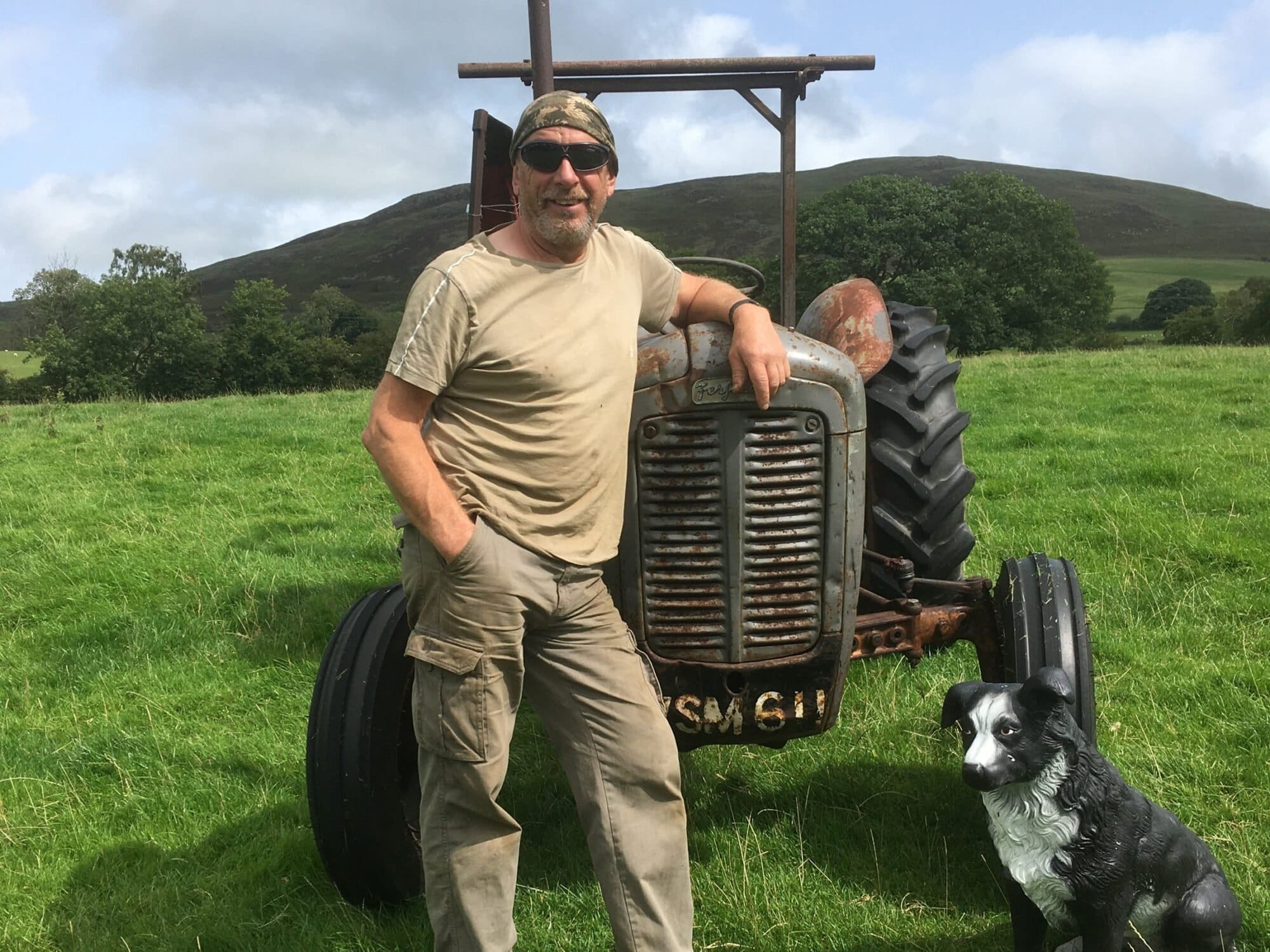
In my free time, you can find me restoring vintage tractors and joining tractor runs across the Dales to raise money for various charities. And of course, I cherish every moment I get to spend with my grandchildren!”

Meet Welsh Shearer: Elgan Roberts
Sheep shearing is a skilled profession carried out by professionals who have been trained to shear carefully and sympathetically. British Wool is the approved provider for shearing and wool handling training in the UK, with a programme designed to support trainees of all abilities.
We caught up with 22-year-old Elgan Roberts a Welsh Shearer from the Llyn Peninsula about why he enjoys shearing and his achievements to date.
Q: What are the details of your farming and shearing business?
A: On my farm I keep cows and sheep, selling sucklers calves and fat lambs. My shearing business started in 2019 when I was 16 years old, and I took over my cousin’s shearing run. I currently cover the Gwynedd area with my shearing business.
Q: What has been your personal and professional achievements?
A: One of my biggest achievements in the shearing industry was winning the intermediate in the Royal Welsh, that was a dream come true. Another achievement I gained this summer was winning the intermediate class in Corwen and qualifying for the final in the senior’s class.
Q: How long have you been a farmer?
A: I was born on a farm and have been farming with my father since I was a young child.
Q: What motivated you to enter a shearing competition?
A: My motivation with the shows was to make new friends and to learn and develop my shearing. There is so much to learn in shearing especially listening to the open shearers talking and giving out tips.
Q: What advice would you give to young up-and-coming shearers?
A: Don’t start too early, and don’t push yourself too young, attend as many courses as you can, watch videos of good shearers on YouTube, and always enjoy it – you must enjoy shearing to get a passion for the job.
At the start of the season, I went on a British Wool course with Gareth Evans in Denbigh – the course was fantastic, and I learned so many tips from Gareth and it improved my shearing in just two days, in my opinion, I wouldn’t have achieved this year’s accomplishments if I hadn’t of been on the course!
Q: Who has been your inspiration?
A: There are a lot of people who inspire me in the shearing industry. One of the biggest is Rodney Sutton, and I had the privilege of shearing for him over in New Zealand last winter!

Gwion Evans – A Summer of Competing
Sheep farmer, shearer, and our Ambassador Gwion Evans farms with his father and brother on a traditional hill farm in Bylchau, North Wales. They run a beef and sheep system with a herd of continental crosses mainly British Blue Cross dairy cows and rear 50 calves on an automatic feeding system. The sheep are split between 1,000 crossbred ewes and 400 pure Welsh Mountain ewes.
Gwion is married with three children and as well as being busy on the farm, Gwion does some shearing contracting in his local area of North Wales.
Shearing runs in the family with his father a shearer, both Gwion and Gareth have enjoyed several successes in shearing over the years. For Gwion, this reached the highest accolade of all last year becoming the Individual Machine Shearing World Champion.
We catch up with Gwion after a busy summer of competing:
How long have you been shearing competitively?
I have been shearing competitively for 21 years and my first competition was at the age of 14 at the Royal Welsh Show. After this, I caught the bug and competed at many local shows and competitions reaching the open shearing level at the age of 19 years old.
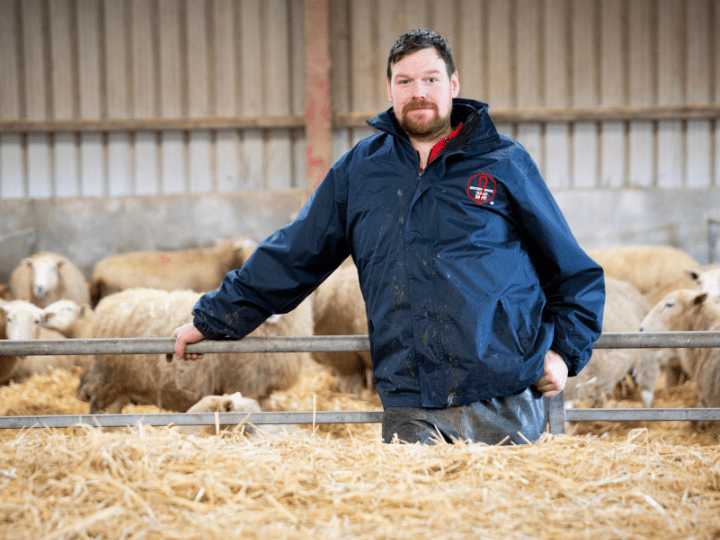
I shorn my first ever sheep at home at 12 years of age. My dad taught me who was always keen on shearing, and I attended British Wool shearing courses.
How do you prepare for the competitive shearing season and the shows you attend?
I try and shear as many sheep as I can before the show season. As we have sheep at home, and I have a shearing run I have plenty of opportunity to get some practice in. You must be fit to shear sheep, but farming and shearing is hard work so work keeps me fit!
How many shows have you completed in this year?
I have competed in 15 shows across the UK this year. I compete in the Welsh Shearing Circuit which is 10 nominated shows located across the UK and you must compete in at least 7 of the 10 shows. The competition and rivalry at these shows are very strong but we are all great friends and always enjoy a pint at the end of a busy show!
What is your favourite show?
The Royal Welsh and Corwen Shears, I can’t separate as both are up there with being the best shows in the world. Both have a fantastic atmosphere and all the main shearers on the circuit including from countries like New Zealand would compete at both. The Wales vs NZ tests are fascinating and passionate occasions, you even get to see the New Zealand Haka.
How has the season gone for you?
The season this year has been a bit up and down but improved as it went on. Next season will be an important season competitively as this will be the qualification season for the team to represent Wales at the 2026 World Shearing Championships.
What has been your highlight to date on the competitive stage?
Without a doubt, it was winning the Machine Shearing World Championship last year. A dream come true – I’ve worked hard to get where I am in Shearing but it’s the enjoyment I get that keeps me motivated and going every year. The atmosphere during the final was amazing and it was great that so many of my family, friends, and shearers had travelled up to Scotland to support me and the Welsh team.
Do you have any advice for the next generation of shearers?
My advice would be to work hard and travel as much as you can, you can learn so much by shearing in countries like New Zealand. Attending courses is always a good way to learn, I attended British Wool courses that were great – my brother Gareth is now an instructor on the British Wool courses.
Wool Sales Update from Andrew Hogley – CEO
Dear Member,
I am pleased to share some positive news regarding the wool market. Since the start of July, we have seen significantly better demand in our auctions, and this has helped sale prices for your wool to reach their highest levels for four years. Relative to this time last year average prices have increased by 17 pence per kilo. This equates to approximately 40 pence per fleece.
Prices have improved for all types with Blackface, Mule, Cheviot Cross and Romney types seeing the strongest uplift. Welsh Mountain and Swaledale types have seen an increase, but yet, this has not been to the same extent.
Demand has been driven by improved conditions in the contract carpet market. Manufacturers we work with in this sector such as Brintons, Haima and Shanhua are seeing an improvement in trade. Each of these companies specify British wool in the carpets that they supply to the leading hotel chains cruise ship industry.
In addition, the British Wool team has been actively working on a number of initiatives to enhance demand and improve pricing.
- To promote wool carpets in the residential sector we have launched a marketing campaign featuring Shaun the Sheep. Over the next few weeks this will be rolled out to 2,000 retailers in the UK. British Wool has worked with several manufacturers on this promotion. Our aim is to increase the market share of wool carpets, and thus drive further demand for your wool.
- Earlier this year we announced a strategic investment in NexGen Tree Shelters which has developed biodegradable tree shelters made from wool. Our investment is helping NexGen to start commercial production and guaranteed that it will source its wool from British Wool’s members. Over the medium term this should provide a much-needed increase in demand for Swaledale and Welsh Mountain wool and help reduce the use of single use plastic in our environment.
- British Wool is now working with more than 160 brands through our licensee scheme. As we head into Wool Month we’ll be showcasing and promoting many of these brands at press events to increase consumer awareness.
We all recognise that prices need to increase further to give you a better return for your wool. The improved demand and success of these initiatives is however an encouraging step in the right direction.
Our depots and drop-off sites remain open. If you still have wool on farm, please contact your local depot to arrange delivery.
Thank you for your continued support.
Best regards,
Andrew
CEO, British Wool

Drop-Off Point Profile: Meet Paul Chuter
Many farmers might have crossed paths with Paul Chuter at the Cockermouth Depot during drop-offs, but we know it’s often a whirlwind of activity and there’s little time for a chat.
At British Wool, we want to help you get to know Paul better. We recently sat down with him for a short interview where he shared some insights about his background and what he loves to do. As the one in charge of storing and processing your wool after you drop it off, Paul makes sure it’s well taken care of before it heads out for grading.
Please read Paul’s response below;
I was born in Hampshire and grew up on my parents’ small dairy farm next to my grandfather’s bigger mixed farm. In 1979, I went to Wye College in Kent, the University of London, and graduated with a degree in Agriculture.
After that, I worked as a truck driver for two years in the UK and Europe, which helped me save money for a house and a few old tractors. It was a good-paying job at the time!
In 1981, I started an agricultural contracting business near Canterbury, Kent. The business grew a lot until 1993, when I sold it to a competitor, and it is still running today.
Then we purchased High Gate Farm Bewaldeth in 1994, which I then farmed while starting an Agricultural Engineering Business. By around 2005, we focused on selling, servicing, and repairing quad bikes mainly for farmers in the North.
In 2019, I sold this business to Carrs-Billington Agriculture, which moved everything to their Cockermouth branch, including me and my 11 staff members.
Now, I work at the Cockermouth drop-off centre for British Wool, and I really enjoy it! I take in and store wool sheets after shearing, label them, do the paperwork, and then send them to Brampton when needed.
There’s no cost for the farmers, and I get to connect with many old and new customers. The job is simple, which I appreciate, and I get along well with Ian, the British Wool lorry driver who picks up the wool. The team at British Wool is easy to work with, and I’ve enjoyed my time there. Overall, it’s a nice little job.
In my spare time, I enjoy gardening, restoring classic tractors and cars, riding my Triumph Bonneville and doing the odd job fixing tractors or welding work for local farmers.