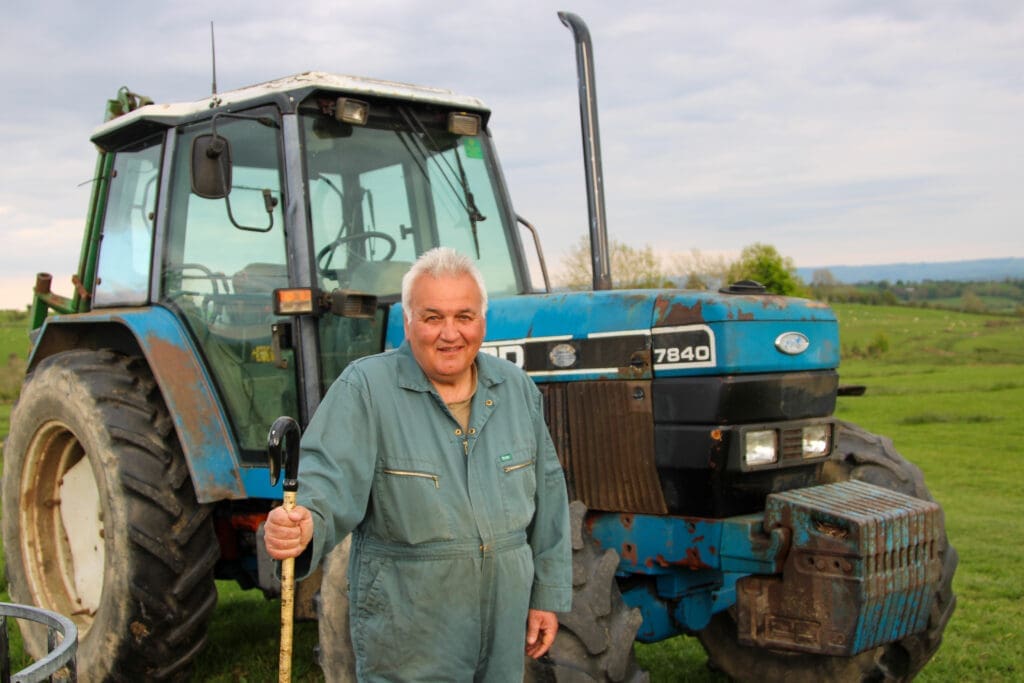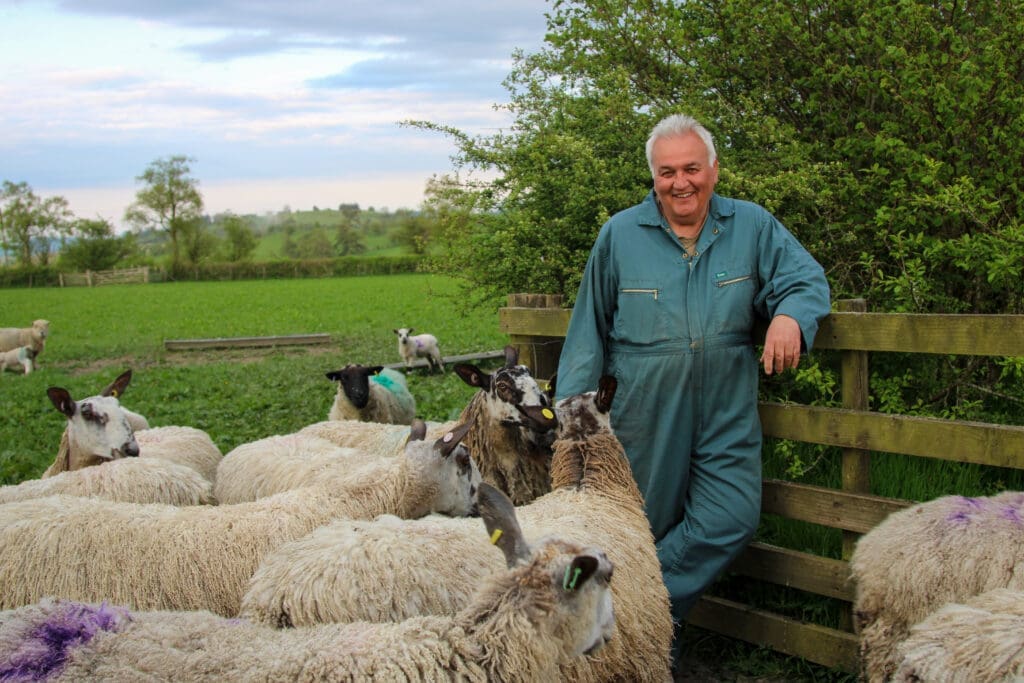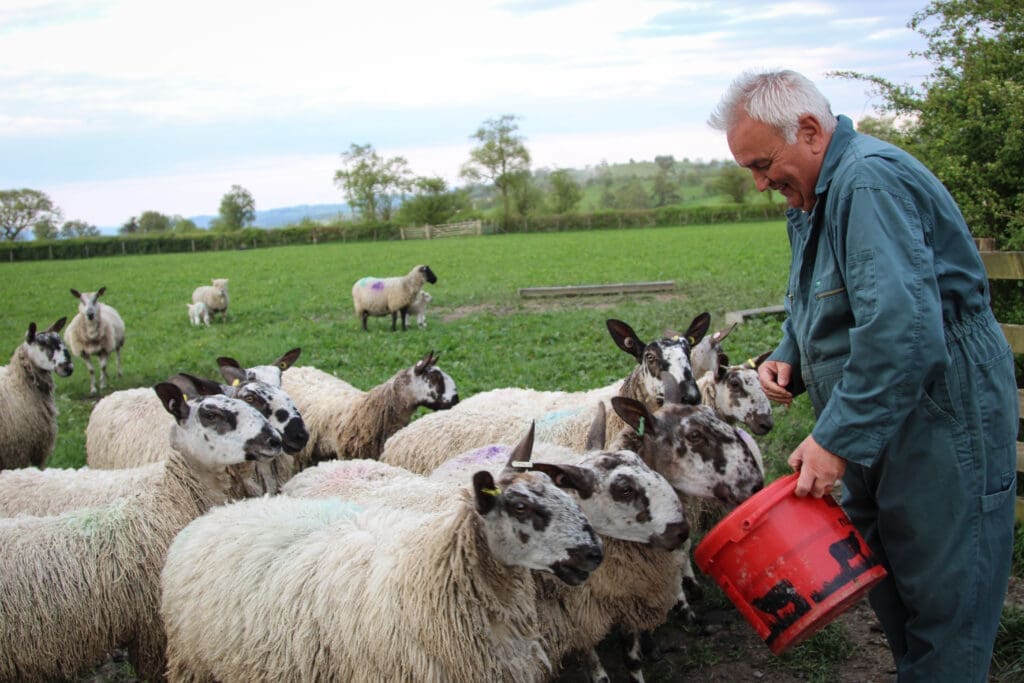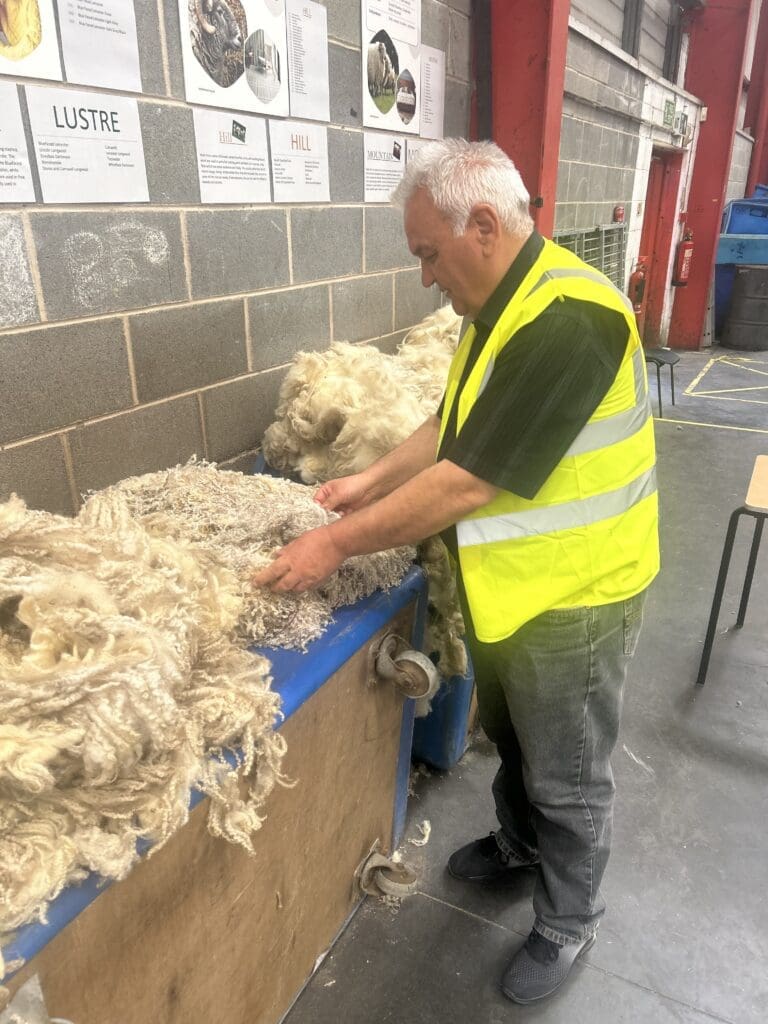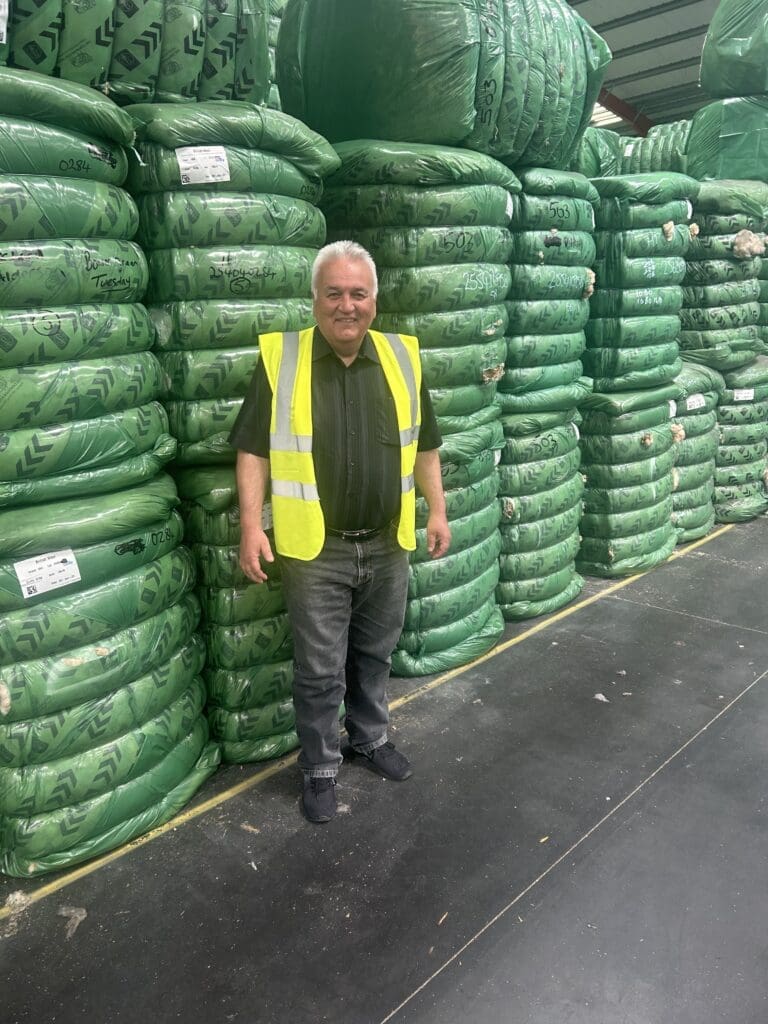
We caught up with newly appointed board member Wyn Williams during his visit to Head Office for his first board meeting. From his farming roots in North Wales to his vision for the future of British wool, Wyn shares his experience, insights, and ambitions for the industry.
From Family Farm to Industry Leadership
Can you tell us about your background in farming and the wool industry?
I started farming with my parents, and in 1988 I secured a 65-acre holding. Since then, my wife Christine and I have built that up to 280 acres. It’s a sheep farm comprising 600 ewes and 150 ewe lambs. We used to keep cattle, but we now focus solely on sheep breeding.
My working background includes 17 years with the Rural Payments Agency. I worked for the Meat and Livestock Commission up until around 1991, doing various subsidies and livestock assessment in markets and classification with dead weight. For the last 20-odd years, I have worked as a livestock buyer, group procurement manager for Dunbia, and I have also worked for ABP.
How did you become involved with British Wool and what led you to join the board?
I’ve always taken my wool to British Wool. Since starting out with my first 50 sheep in 1988, British Wool has had my wool every year.
I’ve also done a lot of political engagement through my involvement with the Farmers’ Union of Wales. British Wool representatives, such as Gareth Jones, often attend FUW county and national meetings, and I’ve always found it interesting hearing about the business side of the organisation, given my background.
I looked at standing for the board about three years ago, but the timing wasn’t quite right. This year, I felt it was the right time. I asked previous board members who represented my area if they honestly thought I’d be capable and if they would support me in standing. They said yes to both, so I thought I’d give it a go.
The Role of a Board Member
What does your role involve day-to-day?
It’s still early days, but I’ve already had a few phone calls from members. One had an issue with his payment, so I was able to signpost him to the relevant department.
I engage with British Wool Farm’s social media daily, sharing posts to my own feed to help get key messages out there. As the show season approaches, I’ll essentially be the face of British Wool for our North Wales members, and I welcome members to come and discuss anything with me.
Wool Industry Outlook
From your perspective, what makes British wool such a special fibre?
British wool is an amazing natural fibre. I’ve always supported wool and strongly believe we need to utilise it more widely – not just in clothing, but also in insulation, carpets, and more.
We know that petrochemical products and synthetic fibres aren’t sustainable, and recent global events, such as the Iran war, have also highlighted their unreliability. What people need to remember is that wool is a quality product with unparalleled longevity compared to the synthetic, throwaway products we see today.
What do you see as the biggest challenges currently facing the industry?
Government policies regarding livestock are a challenge, as there has been a significant reduction in sheep numbers in the UK. We’re talking about up to a 20% reduction, which ultimately means less wool.
At the end of the day, any large business requires volume to cover costs.
Are there particular opportunities you’re excited about for the future of British wool?
I’m excited to see more people appreciating the versatility and durability of wool. We need to continue doing our bit to market it and demonstrate the benefits of using such a great natural product.
Farmer Engagement
How can farmers make the most of British Wool’s services and support?
Farmers can make the most of it through engagement. We don’t want farmers to feel hesitant about speaking to us or asking questions.
Most importantly, if you’re not quite sure what British Wool does, don’t be afraid to ask. You can even book onto one of our depot wool processing tours to see it for yourself.
I also plan to visit some of our members during the autumn period, giving them the opportunity to ask questions and gain a better understanding of what British Wool stands for.
Reflections & Personal Insights
What’s the most rewarding part of being a board member?
The first thing is the welcome I’ve had from all the staff. This is my second day at the Bradford Head Office, and seeing first-hand the friendly, professional team behind the scenes has been great. There’s a really positive outlook across the whole team.
More importantly, the engagement I’ve had with members has been excellent. They’re not afraid to come and speak to me about issues or ask questions about British Wool. It’s also rewarding to see the British Wool Farm social accounts sharing positive stories about what’s happening in the wool industry right now.
What are your hobbies and interests?
I play table tennis competitively for my local team, Caereinion, in the Oswestry and District League. I do play to win, but I also enjoy the social side afterwards!
I enjoy listening to music, particularly rock. I recently went to see Oasis in Cardiff with my daughter, which was great fun. It was funny to see my age group mainly filling the seated areas, while her age group filled the standing area at the front!
I also spend a lot of time with my family. I have three daughters and two grandchildren – a little boy called Oliver and a little girl called Nansi. It’s great as they’re getting to an age where they’re becoming interested in the farm.
How do you juggle your personal life, industry commitments, and your role as a board member?
You have to be organised. Even if it’s not always written down, you need to be constantly planning ahead and considering whether anything might clash.
This week, for example, I knew I would be at Head Office for three days, so I made sure to arrange cover on the farm to support Christine. They also know that if there’s a problem, I’m just at the end of the phone to offer guidance.
In Three Words
How would you sum up British Wool?
Approachable. Reliable. Professional.